Lizzo shares two big lifestyle updates that have her feeling 'in control'
Updated 6 hours ago

John Davidson clarifies involuntary Tourette’s tics after shouting slurs at BAFTAs
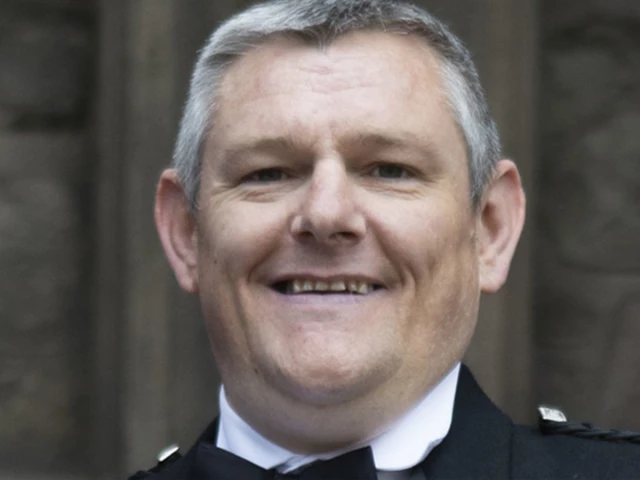
John Davidson, the Scottish activist and real-life inspiration for the film I Swear, opened up about the controversy surrounding his appearance at the 79th BAFTA Awards, where involuntary tics associated with his Tourette’s syndrome led to an outburst that included racial and offensive slurs. In an exclusive interview with Variety, Davidson emphasized that these outbursts were neurological and not reflective of his personal beliefs.
“Many people think Tourette’s is ‘just swearing,’ but my condition—coprolalia—causes involuntary use of offensive language,” Davidson said. “It affects only a minority of people with Tourette’s, and it’s one of the hardest tics to manage. The words I said at BAFTA have absolutely nothing to do with my thoughts or values.”
Davidson described the difficulty of attending the BAFTAs, explaining that the combination of stress and a recent heart operation made his tics more pronounced. “Depending on the severity of the condition, people either have an ability to suppress what they are saying for short periods of time, or they don’t. For me, I have almost no ability to suppress, and when the situation is stressful, I have absolutely no choice but to tic—it simply bursts out of me like a gunshot,” he said.
He also expressed regret over the impact of his tics on others, particularly the “Sinners” cast. “I’ve reached out to Michael B. Jordan, Delroy Lindo, and production designer Hannah Beachler to apologize directly. I never intended to cause upset. Tourette’s can feel spiteful, and sometimes the tics land on the worst possible words,” Davidson said.
Davidson criticized the handling of the broadcast, noting that precautions were insufficient. “I was 40 rows back from the stage, and I assumed nobody could hear me. In hindsight, placing a microphone right in front of me was not wise,” he said. He also requested that media avoid calling the condition a “disability,” preferring phrases like “I have lived with the condition for almost 40 years.”
Despite the public backlash, Davidson described his BAFTA experience as a milestone. “I was thrilled to see everyone cheer my name. It was one of the most memorable moments of my life, even though my tics became visible. I just hope people understand the distinction between involuntary tics and intent,” he said.
Davidson continues to campaign for greater awareness of Tourette’s, stressing that public education remains critical to reducing stigma. “Comments after BAFTA, like people assuming I’m racist deep down, are deeply upsetting. It shows how much more work is needed to understand this complex neurological condition,” he said.
1732434981-0/BeFunky-collage-(10)1732434981-0-208x130.webp "story")

1730286911-0/BeFunky-collage-(87)1730286911-0-208x130.webp "story")











This material may not be published, broadcast, rewritten, redistributed or derived from. Unless otherwise stated, all content is copyrighted © 2026 The Express Tribune.





COMMENTS
Comments are moderated and generally will be posted if they are on-topic and not abusive.
For more information, please see our Comments FAQ