<?xml version="1.0" encoding="UTF-8"?>
<rss version="2.0"
	xmlns:content="http://purl.org/rss/1.0/modules/content/"
	xmlns:wfw="http://wellformedweb.org/CommentAPI/"
	xmlns:dc="http://purl.org/dc/elements/1.1/"
	xmlns:atom="http://www.w3.org/2005/Atom"
	xmlns:sy="http://purl.org/rss/1.0/modules/syndication/"
	xmlns:slash="http://purl.org/rss/1.0/modules/slash/"
	xmlns:media="http://search.yahoo.com/mrss/"
	>

<channel>
	<title>The Express Tribune &#187; Saad Hasan</title>
	<atom:link href="http://tribune.com.pk/author/2504/saad-hasan/feed/" rel="self" type="application/rss+xml" />
	<link>http://tribune.com.pk</link>
	<description>Latest Breaking Pakistan News, Business, Life, Style, Cricket, Videos, Comments</description>
	<lastBuildDate>Sun, 19 May 2013 04:05:24 +0000</lastBuildDate>
	<language></language>
	<sy:updatePeriod>hourly</sy:updatePeriod>
	<sy:updateFrequency>1</sy:updateFrequency>
	<generator>http://wordpress.org/?v=3.5.1</generator>

		<item>
		<title>Readymade garments: Pakistan’s exports to rise as Bangladesh comes under fire </title>
		<link>http://tribune.com.pk/story/549225/readymade-garments-pakistans-exports-to-rise-as-bangladesh-comes-under-fire/</link>
		<pubDate>Tue, 14 May 2013 19:01:14 +0000</pubDate>

		<guid isPermaLink="false">http://tribune.com.pk/?p=549225</guid>

		<description>
		<![CDATA[
			<a href="http://tribune.com.pk/story/549225/readymade-garments-pakistans-exports-to-rise-as-bangladesh-comes-under-fire/">
				<img src="http://i1.tribune.com.pk/wp-content/uploads/2013/05/549225-barcode-1368554270-266-160x120.jpg" width="160" height="120" alt="" />
			</a>
			<p><div><strong class='location'>KARACHI:&nbsp;</strong>
<p><strong>As Bangladesh’s textile industry comes under pressure to improve working conditions, Pakistani garment makers hope to see a rise in exports to global retailers, which increasingly focus on safe factories to place orders.</strong></p>
</div>
<p>“We expect to see some of the business shifting to us,” said Shaikh Shafiq Rafiq, Chairman South Zone of Pakistan Readymade Garments Manufacturers and Exporters Association (PRGMEA). “The same thing happened to us when there was a factory fire in Karachi. The buyers are wary of public backlash.”</p>
<p>Over 1,100 people, many of them women, were killed on April 24 when a Dhaka building housing garment factories collapsed. The disaster sparked angry reaction from international human rights organisations and labour groups to poor working conditions there.</p>
<p>In the last few days, Bangladeshi government has allowed workers to organise labour unions and announced plans to increase wages, which at around $38 a month are the lowest in the world.</p>
<p><img alt="" src="http://pullquotesandexcerpts.files.wordpress.com/2013/05/1-2b.jpg?w=625" /></p>
<p>Some of the leading retailers like H&amp;M, Inditex and Tesco have also become part of a collaboration that plans to fund projects aimed at improving working conditions in factories across Bangladesh.</p>
<p>“They have two advantages over us – one is lower wages and other is duty-free access for their products to European countries,” said Rafiq. “We are catching up on both fronts.”</p>
<p>Pakistan is set to enter the European Union’s GSP Plus programme that will provide garment exports duty-free access to the EU.</p>
<p>According to provisional State Bank of Pakistan (SBP) data, textile exports were slightly lower at $9.59 billion in July-March 2012-13 compared with $9.792 billion in the same period of previous year.</p>
<p>But readymade garments exports jumped to $1.2 billion from $1 billion during the same period. It is hard to say how much increase Pakistani exporters have seen since the Bangladesh crisis.</p>
<p>“I believe Bangladesh is losing its competitive edge. They have same problems as we do in terms of law and order. As a matter of fact they have seen more labour unrest,” said Rafiq.</p>
<p><b>Meeting safety standards</b></p>
<p>PRGMEA ex-chairman Shehzad Salim said many firms complying with safety standards of international retailers were running close to full capacity as flow of orders has increased.</p>
<p>“Good companies are not short of work,” he said. “But what is happening with Bangladesh will have spillover effects on the entire region. And we are prepared for that.”</p>
<p>Pakistan was also in the limelight last year when a fire in a garment factory killed over 250 employees, forcing the industry to impart emergency exit training to thousands of workers.</p>
<p>“Working conditions in our factories are far better than what you will find in a Bangladeshi concern. Conditions are inhumane there,” said Salim, pointing out that minimum wage in Pakistan comes to around $90.</p>
<p>Yet, labour organisations say not all the companies follow rules and regulations. There are thousands of small factories, which operate as outsourcing units.</p>
<p>Large firms dealing with international retailers, contract out work to smaller units where working conditions could be really bad, according to industry officials.</p>
<p>Reduced buying power of customers in Europe has led to cutthroat competition among garment makers to reduce cost. Exporters also complain that retail chains are squeezing their margins.</p>
<p>“There is no doubt that prices have been under pressure,” said Salim. “But companies which have adopted technology and improved operations will easily sail through.”</p>
<p><b>Taking up the challenge</b></p>
<p>Power of international brands can be immense. In the 1990s, Pakistan had to revamp its sport factories in Sialkot where hand-stitched footballs involving child labour triggered a global controversy.</p>
<p>Initially, the industry feared that business will go away to other countries, but through efforts of International Labour Organization, Sialkot Chamber of Commerce and Industry, foreign brands and governments most of the production facilities were updated.</p>
<p>“There was an option before the industry to either bow out or take the responsibility and do everything possible to bring a change,” said Aijaz Ahmed, who works for the Child and Social Development Organization. “Industry opted for change.”</p>
<p>Through effective controls child labour stopped, he said. “We ran rehabilitation programmes and won back confidence of international brands.”</p>
<p><i>Published in The Express Tribune, May 15<sup>th</sup>, 2013.</i></p>
<p><i>Like </i><a href="https://www.facebook.com/ETribuneBusiness"><i>Business on Facebook</i></a><i> to stay informed and join in the conversation.</i></p>
</p>
			<br clear="all"/>
		]]>
		</description>

		<media:content width="424" height="318"
							isDefault="true" medium="image" url="http://i1.tribune.com.pk/wp-content/uploads/2013/05/549225-barcode-1368554270-266-640x480.jpg">
			<media:title>Made in Pakistan, products, exports, barcode</media:title>
			<media:description>Pakistan is set to enter the European Union’s GSP Plus programme that will provide garment exports duty-free access to the EU. PHOTO: CREATIVE COMMONS
</media:description>
			<media:thumbnail url="http://i1.tribune.com.pk/wp-content/uploads/2013/05/549225-barcode-1368554270-266-160x120.jpg" width="160" height="120" />
      </media:content>

		<wfw:commentRss></wfw:commentRss>
		<slash:comments>4</slash:comments>
	</item>
		<item>
		<title>Aviation industry hopes for the best from new govt</title>
		<link>http://tribune.com.pk/story/548763/aviation-industry-hopes-for-the-best-from-new-govt/</link>
		<pubDate>Mon, 13 May 2013 19:51:41 +0000</pubDate>

		<guid isPermaLink="false">http://tribune.com.pk/?p=548763</guid>

		<description>
		<![CDATA[
			<a href="http://tribune.com.pk/story/548763/aviation-industry-hopes-for-the-best-from-new-govt/">
				<img src="http://i1.tribune.com.pk/wp-content/uploads/2013/05/548763-Untitled-1368474546-522-160x120.jpg" width="160" height="120" alt="" />
			</a>
			<p><div><strong class='location'>KARACHI:&nbsp;</strong>
<p><strong>It has always been a love-hate affair between Nawaz Sharif and the aviation industry. To his credit, that country’s skies were first opened to foreign and private carriers during his government in 1993. But the more pressing question now is what he intends to do with Pakistan International Airlines (PIA), the cash-strapped national flag carrier.</strong></p>
</div>
<p>“I am dead sure that Nawaz Sharif will take particular interest in the aviation industry,” said Farooq Omar Bhoja, who worked closely with the former prime minister in the 90s. “And PIA has to be the priority. They need to plug fiscal leakages. “</p>
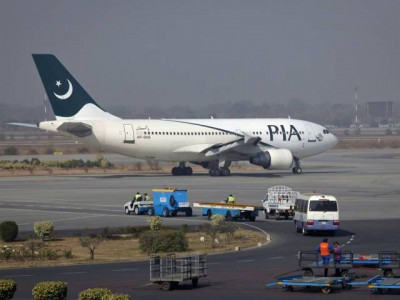
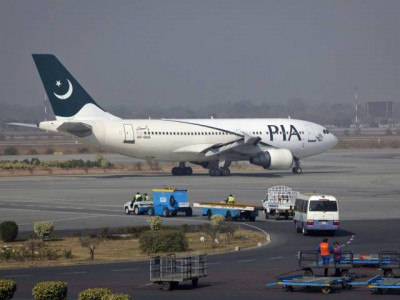
<p>PIA posted a loss of Rs32.4 billion in 2012, up 28% over the previous year, as the airline continued to struggle to contain rising costs while operating an aging fleet of aircraft. The airline’s problems have compounded since then. In the past week, it could use only 17 of its 39 aircraft because the rest were grounded for want of repairs and funds to buy spare parts.</p>
<p>The Civil Aviation Authority (CAA) is currently pursuing a liberal aviation policy, allocating more flights to foreign carriers. This has particularly upset PIA: many past and present executives blame the ‘open skies’ policy for the downfall of the airline.</p>
<p>“We need a level playing field. Gulf-based airlines are backed by their governments, they have resources on their side. How can we compete with them?” a senior PIA official asked.</p>
<p>The strong ties between the Sharif family and rulers in Arab states have also made stakeholders more sceptical. Over the past few months, some Arab carriers have started flights to Sialkot, Multan and Faisalabad. The number of flights operated by foreign airlines has also increased. Emirates alone flies 13 flights from Karachi every day.</p>
<p>“There was demand on these routes and our airlines were not able to fill the gap. PIA can moan all it wants, but the reality remains that the airline has more internal challenges instead of external ones,” a CAA director said.</p>
<p>Revamping the airline will be a challenge. Over the years, the government appointed successful corporate bosses like Tariq Kirmani and Zafar A Khan, but that did not help much. Even Aijaz Haroon, the airline’s powerful managing director and a close aide to President Asif Ali Zardari, had to succumb to relentless union protests although he came from within the organisation.</p>
<p>“The only way to turnaround PIA is to put in place professional management, which is fully backed by the government,” said a former managing director of the airline. “There has to be zero political interference in managerial affairs.”</p>
<p>“A lot of times the management is helpless in taking important decisions, as directions come from the Ministry of Defence. Nawaz Sharif seems to be a politician who can stand up to the bureaucratic pressure of the ministry,” he said.</p>
<p><strong>Private airlines </strong></p>
<p>At the moment, four airlines – Indus Air, Rayyan Air, Vision Air and Fly Pakistan Air are vying to start operations. Half a dozen private airlines launched since 1993 have either gone bankrupt or shut down. The open skies policy might have given passengers options to travel in more foreign airlines, but has not spurred any substantial growth on the domestic front.</p>
<p>“You need deep pockets to run an airline,” said Farooq Bhoja, who was among the prospective sky-preneurs. “People don’t realise that. This business needs a lot of money and offers slim margins. Why would a big business group invest in an airline when it can make better profits elsewhere?”</p>
<p>Yet, he insists that offering incentives or protection will not help domestic carriers.</p>
<p><i>Published in The Express Tribune, May 14<sup>th</sup>, 2013.</i></p>
<p><i>Like </i><a href="https://www.facebook.com/ETribuneBusiness"><i>Business on Facebook</i></a><i> to stay informed and join in the conversation.</i></p>
</p>
			<br clear="all"/>
		]]>
		</description>

		<media:content width="424" height="318"
							isDefault="true" medium="image" url="http://i1.tribune.com.pk/wp-content/uploads/2013/05/548763-Untitled-1368474546-522-640x480.jpg">
			<media:title>PIA</media:title>
			<media:description>PIA posted a loss of Rs32.4 billion in 2012, up 28% over the previous year, as the airline continued to struggle to contain rising costs while operating an aging fleet of aircraft. CREATIVE COMMONS</media:description>
			<media:thumbnail url="http://i1.tribune.com.pk/wp-content/uploads/2013/05/548763-Untitled-1368474546-522-160x120.jpg" width="160" height="120" />
      </media:content>

		<wfw:commentRss></wfw:commentRss>
		<slash:comments>0</slash:comments>
	</item>
		<item>
		<title>Democratic right: Assisting voters, but unable to vote themselves </title>
		<link>http://tribune.com.pk/story/548049/democratic-right-assisting-voters-but-unable-to-vote-themselves/</link>
		<pubDate>Sun, 12 May 2013 06:20:19 +0000</pubDate>

		<guid isPermaLink="false">http://tribune.com.pk/?p=548049</guid>

		<description>
		<![CDATA[
			<a href="http://tribune.com.pk/story/548049/democratic-right-assisting-voters-but-unable-to-vote-themselves/">
				<img src="http://i1.tribune.com.pk/wp-content/uploads/2013/05/548049-votecounting-1368311296-200-160x120.JPG" width="160" height="120" alt="" />
			</a>
			<p><div><strong class='location'>KARACHI / ISLAMABAD:&nbsp;</strong>
<p><strong>Their job is to help others cast their votes, but some 644,970 polling staff members across the country were unable to cast their own votes, having been unable to to avail the facility of a postal ballot.</strong></p>
</div>
<p>Teachers and government officers posted at polling stations were assigned the tasks of ushering voters, locating names in rosters and taking thumbprints. As the voting process culminated, officers were engaged in separating, sorting and counting ballots.</p>
<p>“How can we vote while we are assisting people here?” questioned Humaira, a staff member at an Islamabad polling station.</p>
<p>Though there is the facility of casting a postal ballot, many polling staff members were unaware of it and had therefore failed to submit the requisite application on April 25. The postal ballot allows prisoners, government officials, members of the armed forces, holders of public offices and their wives and children stationed at a place other than the constituency to dispatch their vote by mail.</p>
<p>But a professor at a Karachi polling station, who has worked at various polling stations in his career, said that officials are usually not able to avail the option of a postal ballot owing to lack of time.</p>
<p>“By the time duties are assigned to the polling staff, it is already too late to file the application to the Election Commission of Pakistan for the postal ballot,” he said. “Duties are assigned just two or three days before elections.”</p>
<p>Polling staff were thus unable to exercise their own right to franchise, with many saying that they hoped a better system could be evolved in time for the next elections.<em></em></p>
<p><em>Published in The Express Tribune, May 12<sup>th</sup>, 2013.</em></p>
</p>
			<br clear="all"/>
		]]>
		</description>

		<media:content width="424" height="318"
							isDefault="true" medium="image" url="http://i1.tribune.com.pk/wp-content/uploads/2013/05/548049-votecounting-1368311296-200-640x480.JPG">
			<media:title>vote counting</media:title>
			<media:description>Election workers count ballots after polls closed in Peshawar. PHOTO: AGENCIES</media:description>
			<media:thumbnail url="http://i1.tribune.com.pk/wp-content/uploads/2013/05/548049-votecounting-1368311296-200-160x120.JPG" width="160" height="120" />
      </media:content>

		<wfw:commentRss></wfw:commentRss>
		<slash:comments>0</slash:comments>
	</item>
		<item>
		<title>NA-250: Clifton, Defence voters - tired yet undeterred </title>
		<link>http://tribune.com.pk/story/547911/na-250-clifton-defence-voters-tired-yet-undeterred/</link>
		<pubDate>Sun, 12 May 2013 05:30:32 +0000</pubDate>

		<guid isPermaLink="false">http://tribune.com.pk/?p=547911</guid>

		<description>
		<![CDATA[
			<a href="http://tribune.com.pk/story/547911/na-250-clifton-defence-voters-tired-yet-undeterred/">
				<img src="http://i1.tribune.com.pk/wp-content/uploads/2013/05/547911-pollingdefencephase-1368336541-299-160x120.jpg" width="160" height="120" alt="" />
			</a>
			<p><div><strong>An unprecedented turnout was observed at the polling stations in Karachi’s NA-250 on Saturday. The constituency, which covers parts of Saddar and upscale neighbourhoods of Clifton and Defence Housing Authority, was a hot seat for Muttahida Qaumi Movement, Pakistan Tehreek-e-Insaaf, Jamaat-e-Islami and Pakistan People’s Party.</strong></div>
<p>People turned up in hundreds, some even queuing up at 7am &#8211; an hour before the gates opened.</p>
<p>“I am 50 years old and I have never cast a vote. But I wouldn’t have missed this opportunity for anything,” said M Azam, who was among hundreds lined up near Zamzama Park. “We are all tired. We all want change.”</p>
<p>From DHA Phase-II to Clifton Block 9, there were complaints about absent polling staff and missing ballot boxes. But nothing was enough to discourage thousands of enthusiasts.</p>
<p>“I am voting for the third time at voting and I have never seen this kind of turnout,” said Shahab, who waited six hours for polling to start at the Govt College of Commerce.</p>
<p>Midway during the balloting, the Jamaat-e-Islami announced boycotting the elections, something which did not sit well with its supporters. “You want me to go home without casting my vote after I have waited in the line for five hours? If not Jamaat, then I’ll vote for PTI,” said a man at Bay View Junior School.</p>
<p>As delays prolonged, some people returned but many remained undeterred.  “We have been here since 8am and voting started four hours later,” said Usman, one of hundreds who were standing at the Zaheen Academy at Gizri.</p>
<p>People expressed their displeasure with the Election Commission of Pakistan for mismanagement of the registered votes.</p>
<p>“There are 35 votes in my family. We have been residing in Karachi for years and have voted in the last elections,” said Qabil Shah, a resident of Railway Colony. “I had personally filed the ECP registration forms, yet our votes have been registered at our ancestral village in Haripur, Khyber Pakhtunkhwa.</p>
<p><i>Published in The Express Tribune, May </i><i>12<sup>th</sup>, 2013.</i></p>
</p>
			<br clear="all"/>
		]]>
		</description>

		<media:content width="424" height="318"
							isDefault="true" medium="image" url="http://i1.tribune.com.pk/wp-content/uploads/2013/05/547911-pollingdefencephase-1368336541-299-640x480.jpg">
			<media:title>polling defence phase 4</media:title>
			<media:description>Women wait outside DHA Model School in Phase 4 to exercise their right to vote, but the polling station was not opened at its stipulated time. PHOTO: MOHAMMAD NOMAN/EXPRESS</media:description>
			<media:thumbnail url="http://i1.tribune.com.pk/wp-content/uploads/2013/05/547911-pollingdefencephase-1368336541-299-160x120.jpg" width="160" height="120" />
      </media:content>

		<wfw:commentRss></wfw:commentRss>
		<slash:comments>2</slash:comments>
	</item>
		<item>
		<title>In politicians, businesses find fickle partners at best</title>
		<link>http://tribune.com.pk/story/545787/in-politicians-businesses-find-fickle-partners-at-best/</link>
		<pubDate>Tue, 07 May 2013 20:24:44 +0000</pubDate>

		<guid isPermaLink="false">http://tribune.com.pk/?p=545787</guid>

		<description>
		<![CDATA[
			<a href="http://tribune.com.pk/story/545787/in-politicians-businesses-find-fickle-partners-at-best/">
				<img src="http://i1.tribune.com.pk/wp-content/uploads/2013/05/545787-game-1367951222-611-160x120.JPG" width="160" height="120" alt="" />
			</a>
			<p><div><strong class='location'>KARACHI:&nbsp;</strong>
<p><strong>Businesses around the world lobby so that political parties push the former’s agendas. These agendas have at different times included cuts in corporate taxes, relaxation in labour laws, protections for specific industries or good old cash bailouts. Pakistan is no stranger to similar lobbying by interest groups; however, in the land of the pure, the business-government nexus works in peculiar ways.</strong></p>
</div>
<p>It is difficult to estimate exactly how much money businesspersons have paid to fund the election campaigns of various candidates. Interviews with executives from the oil, textile, power, pharmaceutical and auto sectors suggest that contributions have, indeed, been made – albeit in personal capacities only.</p>
<p>“No one wants to risk their neck,” the CEO of a denim manufacturing company quite candidly observed. “Pakistan’s politicians are vindictive: they come after us if we are seen close to their opponents. The best way, therefore, is to hand out cash to every political party across the spectrum.”</p>
<p>This across-the-board appeasement policy leaves little room for businesses to condition their funding with specific demands. Hidden from public scrutiny, such collaborations might help a few, but the entire industry never gains much from them.</p>
<p>Gulzar Feroz, vice president of the Federation of Pakistan Chambers of Commerce and Industry (FPCCI), says that distrust between industry groups and political parties runs deep, and has its roots in bitter past experiences.</p>
<p>“This is a country where governments reverse sound economic policies and rollback development projects just to settle scores,” he said, with a certain degree of contempt.</p>
<p>He also chided businesspersons for being too scared. “Sooner or later, we have to come together and make our voice heard at the right forums and at the right time. The best way to do this is to use the FPCCI’s platform and make it stronger,” he offered.</p>
<p>His frustration is not misplaced: despite its status as an apex trade body representing over 100 powerful industry associations and chambers, the FPCCI’s role has been limited to hosting lunches for government officials.</p>
<p>Adil Khattak, chairman of the powerful Oil Companies Advisory Committee, which represents oil refineries and petroleum marketing companies, concurs with the fact that it is risky being seen too close to politicians. “But things have changed over the years, reducing the need to be close to them at all,” he said. “Every civilian government since the late 1980s has encouraged the private sector [independently].”</p>
<p>In the past, businesses needed politicians they could rely on because of ideological divides in politics. “When industries were being nationalised in the 1970s, we simply had to find sympathetic politicians. Things are different now,” he observed.</p>
<p>Still, Khattak is very aware of what politicians can do to industry. After the Pakistan Peoples Party (PPP) came to power in 2008, a drive led by senator Rukhsana Zuberi led to a change in the pricing regime for refineries and oil marketing companies. There was unprecedented criticism of the industry’s profit margins.</p>
<p>“All we want is the consistency of policies,” Khattak explained. “And from time to time we have come together to lobby for that. The creation of the Pakistan Business Council (PBC) is an example of our efforts.” Formed in 2005 by the 14 largest Pakistani enterprises, the PBC is an advocacy group which lobbies for broad economic changes, instead of industry-specific issues.</p>
<p>Haroon Qasim, a member of the Pakistan Pharmaceutical Manufacturers Association (PPMA), was of the view that it might take a few more years before industry learns to effectively lobby for its demands.</p>
<p>“Nevertheless, whenever we have tried, the results have been good,” he said, referring to the PPMA’s drive to push the Drug Regulatory Authority bill through parliament. “We lobbied hard for that. We met different politicians over lunch and meetings and told them our point of view. We finally succeeded.”</p>
<p>Many businessmen point out that Asad Umar’s joining of the Pakistan Tehreek-e-Insaaf (PTI) was a positive change. The former head of Engro Corporation is the most high profile corporate boss to throw his hat in the political ring.</p>
<p>“The fact that he is close to PTI chief Imran Khan says a lot about how businesses and politics should work. Our economy needs broad-based changes in agricultural and manufacturing sectors; Umar’s position at the political helm reflects that things might just be moving in that direction,” said an auto industry executive.</p>
<p><i>Published in The Express Tribune, May 8<sup>th</sup>, 2013.</i></p>
<p><i>Like </i><a href="https://www.facebook.com/ETribuneBusiness"><i>Business on Facebook</i></a><i> to stay informed and join in the conversation.</i></p>
</p>
			<br clear="all"/>
		]]>
		</description>

		<media:content width="424" height="318"
							isDefault="true" medium="image" url="http://i1.tribune.com.pk/wp-content/uploads/2013/05/545787-game-1367951222-611-640x480.JPG">
			<media:title>game</media:title>
			<media:description>Lobbyists desist from publicly backing candidates due to fear of reprisals from opponents. DESIGN: KIRAN SHAHID
</media:description>
			<media:thumbnail url="http://i1.tribune.com.pk/wp-content/uploads/2013/05/545787-game-1367951222-611-160x120.JPG" width="160" height="120" />
      </media:content>

		<wfw:commentRss></wfw:commentRss>
		<slash:comments>0</slash:comments>
	</item>
		<item>
		<title>Palm oil imports to drop below $2 billion</title>
		<link>http://tribune.com.pk/story/544481/palm-oil-imports-to-drop-below-2-billion/</link>
		<pubDate>Sat, 04 May 2013 21:20:46 +0000</pubDate>

		<guid isPermaLink="false">http://tribune.com.pk/?p=544481</guid>

		<description>
		<![CDATA[
			<a href="http://tribune.com.pk/story/544481/palm-oil-imports-to-drop-below-2-billion/">
				<img src="http://i1.tribune.com.pk/wp-content/uploads/2013/05/544481-palmoilphotofile-1367688113-204-160x120.JPG" width="160" height="120" alt="" />
			</a>
			<p><div><strong class='location'>KARACHI:&nbsp;</strong>
<p><strong>Pakistan’s edible oil import bill will drop below $2 billion at the end of fiscal year 2012-13 in June following a hefty decline in prices, helping to slow the drain on much-needed foreign exchange reserves, industry officials say.</strong></p>
</div>
<p>Traders said they were importing Malaysian palm oil at an average price of $875 per ton against last year’s $1,250 as international demand for edible oil shrank due to economic slowdown in the developed world.</p>
<p>“I think the full-year bill will be slightly less than $2 billion,” said Rasheed Janmohammad, a member of Edible Oil Refiners Association. “While the price of palm oil has come down, we are also importing more of oilseed.”</p>
<p>Palm oil imports dropped $279 million to $1.53 billion in July-March 2012-13, compared with $1.81 billion recorded in the same period of previous year, according to the State Bank of Pakistan. The country’s full-year oil import bill was $2.395 billion in fiscal year 2011-12.</p>
<p>“But there hasn’t been any significant change in demand for edible oil,” said Khawaja Arif, Chairman of Pakistan Vanaspati Manufacturers Association. “The country’s demand will remain flat at three million tons of edible oil.”</p>
<p>Pakistan meets most of its edible oil demand through imports. Traders said imports would range around two million tons of palm oil in 2012-13.</p>
<p>In its last quarterly review of the economy, the SBP pointed to the improvement in current account on the back of multiple factors, which also included a drop in palm oil import.</p>
<p>Traders said they expected the international price of palm oil to remain under pressure but warned that there could be a spike ahead of Ramazan. The retail price of cooking oil has actually increased despite the decrease in international palm oil rates.</p>
<p><em>Published in The Express Tribune, May 5<sup>th</sup>, 2013. </em></p>
<p><i>Like </i><a href="https://www.facebook.com/ETribuneBusiness"><i>Business on Facebook</i></a><i> to stay informed and join in the conversation.</i></p>
</p>
			<br clear="all"/>
		]]>
		</description>

		<media:content width="424" height="318"
							isDefault="true" medium="image" url="http://i1.tribune.com.pk/wp-content/uploads/2013/05/544481-palmoilphotofile-1367688113-204-640x480.JPG">
			<media:title>palm oil-photo-file</media:title>
			<media:description>Traders said they expected the international price of palm oil to remain under pressure but warned that there could be a spike ahead of Ramazan. PHOTO: FILE</media:description>
			<media:thumbnail url="http://i1.tribune.com.pk/wp-content/uploads/2013/05/544481-palmoilphotofile-1367688113-204-160x120.JPG" width="160" height="120" />
      </media:content>

		<wfw:commentRss></wfw:commentRss>
		<slash:comments>1</slash:comments>
	</item>
		<item>
		<title>NA-254: MQM has been a traditional winner in Korangi constituency</title>
		<link>http://tribune.com.pk/story/544179/na-254-mqm-has-been-a-traditional-winner-in-korangi-constituency/</link>
		<pubDate>Sat, 04 May 2013 02:30:37 +0000</pubDate>

		<guid isPermaLink="false">http://tribune.com.pk/?p=544179</guid>

		<description>
		<![CDATA[
			<a href="http://tribune.com.pk/story/544179/na-254-mqm-has-been-a-traditional-winner-in-korangi-constituency/">
				<img src="http://i1.tribune.com.pk/wp-content/uploads/2013/05/544179-mqm-1367632503-707-160x120.jpg" width="160" height="120" alt="" />
			</a>
			<p><div><strong class='location'>KARACHI:&nbsp;</strong>
<p><strong>If there is one constituency in Karachi where the Muttahida Qaumi Movement (MQM) has an undisputed majority, it is NA-254 where the party has been winning since 1988.</strong></p>
</div>
<p>This constituency comprises nearly two dozen impoverished neighbourhoods in Korangi located along the industrial estate, and dotted by seminaries &#8211; whose presence may tilt the votes this time around. Other political parties have given up on this constituency since long but the new comers in the political arena have their eyes set on this part of the port city.</p>
<p>The presence of the MQM is, as expected, everywhere. Deep inside the town, in the congested lanes of Zia Colony, the walls are filled with party banners and freshly sown party flags adorn every house and shop.</p>
<p><strong>Constituency &amp; Candidates</strong></p>
<p><img alt="" src="http://pullquotesandexcerpts.files.wordpress.com/2013/05/na-253-03.jpg" /></p>
<blockquote><p><strong>Constituent Areas</strong></p>
<p>Mehran Town, Bilal Colony, Korangi Sector 33, Korangi Sector 34, Double Road Area 9000, Gulzar Colony, Nasir Colony, Allahwala Town, Qayyumabad, Zia Colony, Korangi Sector 32-A&amp;C, Chakra Goth, Mustafa Taj Colony, Hashrat Mohani Colony, Korangi Sector-51/L &amp; 51/E, 100 Qrts, Korangi Sector-50/A, 50/C, 48/E and 48/F, Silver Town, Korangi Sector 48/B, Korangi Cantonment.</p></blockquote>
<p>There is, however, a large garbage dump, which has not been cleaned for months. “No one has picked up garbage for six months,” said Asad Abbas, a resident as he took a stroll around the area. “The municipal authorities know we can’t do anything. They know we are sweepers and factory workers by profession, so they simply ignore our requests.”</p>
<p>Similar to the rest of the city, this constituency also has its fair share of broken roads, street crimes, and absence of line water, schools and hospitals. Over the years, poverty and unplanned urbanisation has worsened the situation. These dismal living conditions should have forced the residents to actively seek a massive political change but there is hardly any debate. Most men it seems hardly care about who represents them in the assemblies.</p>
<p><img alt="" src="http://pullquotesandexcerpts.files.wordpress.com/2013/05/na-253-04.jpg" /></p>
<p>“Every time before the elections, various political parties come to seek our vote, but that is the only time we see them on our streets,” admitted a man, huddled on a charpoy with some other neighbours in alNoor Town. “For the next five years, there is filth and sewage all around here.”</p>
<p><i>Published in The Express Tribune, May </i><i>4<sup>th</sup>, 2013.</i></p>
</p>
			<br clear="all"/>
		]]>
		</description>

		<media:content width="421" height="318"
							isDefault="true" medium="image" url="http://i1.tribune.com.pk/wp-content/uploads/2013/05/544179-mqm-1367632503-707-640x480.jpg">
			<media:title>528741-mqm-1364659275</media:title>
			<media:description>Other political parties have given up on this constituency since long but the new comers in the political arena have their eyes set on this part of the port city. PHOTO: FILE</media:description>
			<media:thumbnail url="http://i1.tribune.com.pk/wp-content/uploads/2013/05/544179-mqm-1367632503-707-160x120.jpg" width="160" height="120" />
      </media:content>

		<wfw:commentRss></wfw:commentRss>
		<slash:comments>2</slash:comments>
	</item>
		<item>
		<title>Byco considers listing country’s largest refinery</title>
		<link>http://tribune.com.pk/story/543736/byco-considers-listing-countrys-largest-refinery/</link>
		<pubDate>Thu, 02 May 2013 19:37:20 +0000</pubDate>

		<guid isPermaLink="false">http://tribune.com.pk/?p=543736</guid>

		<description>
		<![CDATA[
			<a href="http://tribune.com.pk/story/543736/byco-considers-listing-countrys-largest-refinery/">
				<img src="http://i1.tribune.com.pk/wp-content/uploads/2013/05/543736-Bycopetroloilrefineryphotobyco-1367522920-767-160x120.jpg" width="160" height="120" alt="" />
			</a>
			<p><p><strong><strong class='location'>KARACHI:&nbsp;</strong>Byco is considering listing its new 120,000-barrels per day (bpd) refinery to raise additional funds to finance the extensive petro-chemical business, a top company official told <i>The Express Tribune</i>.</strong></p>
<p>“The option to list the refinery at the stock exchange is on the cards,” said Asif Saeed Sindhu, group chief financial officer of Byco Industries Incorporated. “We will list the refinery after it has completed two quarters in operation.”</p>
<p>The group has invested over $700 million in the oil refinery and petrochemical units, which will produce paraxylene. Test-run for the refinery has already been completed and actual production is expected later this month.</p>
<p>Sindhu said the company is in talks with banks to finance purchase of crude oil for Pakistan’s largest oil refinery, which has capacity to produce six million tons of petroleum products.</p>
<p><b>Learning from the past </b></p>
<p>Byco already runs a smaller 35,000bpd refinery that has been in financial turmoil since 2008 when its entire equity was wiped off following fluctuations in crude oil prices and depreciation of the rupee.</p>
<p><img alt="" src="http://pullquotesandexcerpts.files.wordpress.com/2013/05/700m.jpg?w=625" /></p>
<p>“Byco was a relatively new entrant having started operations in 2004. The other refineries had built up reserves over the years to sail through the crisis. So we took the hit.”</p>
<p>For the new refinery, the company has decided to keep crude oil stock to meet the need for 20-21 days to avoid inventory losses, he said.</p>
<p>The State Bank of Pakistan (SBP) does not allow petroleum companies to hedge in oil trade. “In any case, there is always risk involved in hedging.”</p>
<p>Byco’s new and old refineries, petroleum marketing company, its terminals and oil trading business are all owned by a holding company Byco Industries Incorporated (BII), which has a 60% shareholding of Byco Busient Incorporated and remaining is held by Abraaj Mauritius Oil and Gas.</p>
<p>Every subsidiary has its own CEO and CFO. Byco Oil Pakistan, which handles the 120,000bpd refinery and the petrochemical business, is headed by Muhammad Qaiser Jamal.</p>
<p>Byco Petroleum Pakistan includes the old refinery and marketing company while Byco Terminals and Byco Middle East are the other businesses.</p>
<p><b>Money matters </b></p>
<p>Sindhu, who has also served as Oil and Gas Development Company’s CFO, said oil refining remains a profitable business despite volatility. “Since its inception, Pakistan Refinery (PRL) has given 100 times more return on equity to the sponsors. Over the last five years, all refineries have declared profits.”</p>
<p>Refining margin, which is the difference between the price of crude oil and petroleum products, depends on market conditions. But its size will clearly give Byco an edge over competitors, he said.</p>
<p>“Refining remains a low-margin and high-volume business. The more you produce, the more the profit.”</p>
<p>The government did not offer Byco any special incentive against its investment in the oil sector. Yet Sindhu said the company was comfortable with the existing pricing regime.</p>
<p>Pakistani refineries enjoy a protection known as 7.5% deemed duty, a tax they collect on sale of high speed diesel. It also serves as an incentive for refineries to invest in making environmental-friendly petroleum products.</p>
<p>Right now the sulphur content in petroleum products stands at 10,000 parts per million (ppm), which the industry has to bring down to Euro-II specification of 500ppm. Once the refineries do that, the deemed duty will increase to 9%.</p>
<p>Byco’s plant already comes with a hydro-desulphurisation unit, giving it an advantage over other refineries. “We will see the benefit of that in the second phase of production that starts in 2014,” Sindhu said.</p>
<p>The company has already signed off-take agreements with companies like Pakistan State Oil, Shell, Karachi Electric Supply Company and Nishat Power.</p>
<p><i>Published in The Express Tribune, May 3<sup>rd</sup>, 2013.</i></p>
<p><i>Like </i><a href="https://www.facebook.com/ETribuneBusiness"><i>Business on Facebook</i></a><i> to stay informed and join in the conversation.</i></p>
<p><em>Correction: In an earlier version of this story, hedging was explained incorrectly. Hedging deals with crude oil futures. It has nothing to do with inventory, which a company maintains. The error is regretted.</em></p>
</p>
			<br clear="all"/>
		]]>
		</description>

		<media:content width="421" height="318"
							isDefault="true" medium="image" url="http://i1.tribune.com.pk/wp-content/uploads/2013/05/543736-Bycopetroloilrefineryphotobyco-1367522920-767-640x480.jpg">
			<media:title>Byco-petrol-oil-refinery-photo-byco</media:title>
			<media:description>Capital Investment: $700m was invested by Byco to build the oil refinery and petrochemical units. PHOTO: BYCO.COM.PK</media:description>
			<media:thumbnail url="http://i1.tribune.com.pk/wp-content/uploads/2013/05/543736-Bycopetroloilrefineryphotobyco-1367522920-767-160x120.jpg" width="160" height="120" />
      </media:content>

		<wfw:commentRss></wfw:commentRss>
		<slash:comments>2</slash:comments>
	</item>
		<item>
		<title>Aviation industry: Three more carriers to take off into Pakistani airspace </title>
		<link>http://tribune.com.pk/story/541002/aviation-industry-three-more-carriers-to-take-off-into-pakistani-airspace/</link>
		<pubDate>Fri, 26 Apr 2013 18:32:04 +0000</pubDate>

		<guid isPermaLink="false">http://tribune.com.pk/?p=541002</guid>

		<description>
		<![CDATA[
			<a href="http://tribune.com.pk/story/541002/aviation-industry-three-more-carriers-to-take-off-into-pakistani-airspace/">
				<img src="http://i1.tribune.com.pk/wp-content/uploads/2013/04/541002-plan-1366999620-353-160x120.jpg" width="160" height="120" alt="" />
			</a>
			<p><div><strong class='location'>KARACHI:&nbsp;</strong>
<p><strong>Undeterred by devastating setbacks faced by private carriers over the past few years, three more business groups have applied for airline licences to start operations in the country, industry officials have told <i>The Express Tribune</i>.</strong></p>
</div>
<p>Rayyan Air, Vision Air and Fly Pakistan Air have decided to enter the market at a time when a shortage of operational aircraft at the state-run Pakistan International Airlines (PIA) has created room for more carriers.</p>
<p>Vision Air International and Fly Pakistan Air have filed requests for regular public transport licences with the Civil Aviation Authority (CAA), while a licence has already been issued to Rayyan Air, officials said.</p>
<p>“All three airlines are in different stages of commencing operations. All of them seem committed, but only time will tell how many will actually survive,” commented a senior CAA official.</p>
<p>These airlines follow in the footsteps of privately-run Bhoja Air and Indus Air, both of which were issued aviation licences last year. Within months of its launch, Bhoja’s maiden flight to Islamabad tragically crashed, killing all 127 persons onboard the aircraft. Since then, its aircraft have been grounded and seized by the CAA as the airline struggles to settle insurance claims.</p>
<p><img alt="" src="http://pullquotesandexcerpts.files.wordpress.com/2013/04/when.jpg?w=625" /></p>
<p>Meanwhile, Indus Air, which is backed by the sponsors of Karakoram Motors, has faced delays in starting its flight services. It had planned to formally take off last year, but has had to set May 1, 2013, as its new launching date.</p>
<p>“Two Boeing 737 aircraft owned by Indus Air have been parked here for over a month. They cannot fly until the company has at least three aircraft in the fleet: this is a regulatory requirement,” the CAA official revealed, while explaining the reasons for the delay.</p>
<p>“But this smacks of poor professionalism as well. Everyone in the aviation business knows how stupid it is to lose revenues simply because your planes are standing idle!”</p>
<p>Among the newcomers, Rayyan Air is already involved in offering chartered plane services. Company official FS Bhatti revealed the airline will commence commercial operations within three months. “We will use turbo-prop 40-seater aircraft initially,” he said.</p>
<p>“There is a lot of space for more airlines,” he continued. “One need only visit the Karachi or Islamabad airports to see that almost every flight is completely booked!”</p>
<p>When Pakistan adopted an ‘open skies’ policy in the 1990s, more than 20 licences were issued to prospective airliners: almost none of them survived, the sole exception being Shaheen Air. Meanwhile, high fuel prices and stiff competition has already eroded the profitability of airlines around the world. However, Rayyan Air says this does not discourage serious investors.</p>
<p>“It is wrong to say those airlines failed because of market conditions. All of them tried to make quick money, losing sight of long-term goals,” said Bhatti.</p>
<p>Vision Air International is a completely new enterprise, put together by retired air vice marshal Aamer Sharif and a former managing director of Bhoja Air. However, it is equally optimistic about its prospects: “Pakistani air traffic is growing by 10-12% every year,” Sharif said. “Middle East-based airlines are flying more and more passengers out of Pakistan. There is a huge market here.”</p>
<p>The lack of serious competition has allowed existing domestic carriers to arbitrarily increase fares, he claimed. “There is room for at least two or three more airlines right now,” he added.</p>
<p>According to our sources, Fly Pakistan Air has many backers; including a son of ex-DG CAA Nadeem Khan Yousufzai, and industry veteran Haider Jalal. Jalal is a former managing director of Aero Asia, yet another airline that went belly-up a couple of years ago. A company official refused to provide any further insights, saying they are still in talks with government officials.</p>
<p>Around 15 million Pakistani passengers use airlines to travel every year, with 8.3 million of them flying to international destinations and the remaining flying to local cities.</p>
<p>Industry officials say running an airline is a capital-intensive business, which needs professionals to manage it properly.</p>
<p><i>Published in The Express Tribune, April 27<sup>th</sup>, 2013.</i></p>
<p><i>Like </i><a href="https://www.facebook.com/ETribuneBusiness"><i>Business on Facebook</i></a><i> to stay informed and join in the conversation.</i></p>
</p>
			<br clear="all"/>
		]]>
		</description>

		<media:content width="424" height="318"
							isDefault="true" medium="image" url="http://i1.tribune.com.pk/wp-content/uploads/2013/04/541002-plan-1366999620-353-640x480.jpg">
			<media:title>plan</media:title>
			<media:description>One licence has already been issued to Rayyan Air, while Vision Air International and Fly Pakistan Air have also applied for theirs. DESIGN: ANAM HALEEM
</media:description>
			<media:thumbnail url="http://i1.tribune.com.pk/wp-content/uploads/2013/04/541002-plan-1366999620-353-160x120.jpg" width="160" height="120" />
      </media:content>

		<wfw:commentRss></wfw:commentRss>
		<slash:comments>7</slash:comments>
	</item>
		<item>
		<title>Sign On The Dotted Line: No silence, no compensation </title>
		<link>http://tribune.com.pk/story/538031/sign-on-the-dotted-line-no-silence-no-compensation/</link>
		<pubDate>Sat, 20 Apr 2013 05:34:55 +0000</pubDate>

		<guid isPermaLink="false">http://tribune.com.pk/?p=538031</guid>

		<description>
		<![CDATA[
			<a href="http://tribune.com.pk/story/538031/sign-on-the-dotted-line-no-silence-no-compensation/">
				<img src="http://i1.tribune.com.pk/wp-content/uploads/2013/04/538031-bhojaaircrashreuters-1366435703-429-160x120.jpg" width="160" height="120" alt="" />
			</a>
			<p><div><strong class='location'>KARACHI:&nbsp;</strong>
<p><strong>Relatives of Bhoja Air crash victims are being coerced into signing a controversial document prior to receiving compensation from the airline, according to a constitutional petition filed in the Sindh High Court on April 16.</strong></p>
</div>
<p>The document titled Final Release and Discharge Agreement bars relatives from taking further legal action against the airline, aircraft maker Boeing, Pakistan&#8217;s Civil Aviation Authority, Pratt and Whitney and other allied companies.</p>
<p>“This is illegal. Bhoja can&#8217;t make the compensation conditional. It has to pay that in any case,&#8221; said Abdul Razzaq, a lawyer assisting the families. &#8220;Relatives of the victims have the right to take their case to international courts, even after they have received insurance money.&#8221;</p>
<p>The petition was filed by Sajida Zaman, who lost her husband and mother-in-law in the crash.</p>
<p>Under the Carriage by Air Act 2012, airlines are liable to pay Rs5 million in compensation for each life lost.</p>
<p>The government has yet to release the investigation report that will determine the reasons and those responsible for accident.</p>
<p>A similar case was filed in the Peshawar High Court following the Air Blue plane crash. The court had declared the airline&#8217;s bid to get signatures on final release and discharge agreement as illegal.</p>
<p>Settlements in aircraft accidents can run into hundreds of millions of dollars. &#8220;The airline, aircraft maker, engine manufacturers and their suppliers will do all they can to settle the matter as cheap as possible,&#8221; Razzaq said.  &#8220;But people who persevere get the reward. Five million Pakistani rupees is nothing compared to what some of the passengers could have earned in their lifetimes.&#8221;</p>
<p>The accident has drawn two large international law firms into the case.</p>
<p>UK-based Irwin Mitchell is representing families of around 30 passengers, while 111Gates and Partners is acting on behalf of the insurer of the airline.</p>
<p>Mahmood Alam of Aviation and Corporate Law Associates is working as Pakistani legal consultant for the airline and its insurer. Affected families told <em>The Express Tribune</em> that he has been coercing them to sign a release agreement in return for assurances that they will receive compensation.</p>
<p>Despite repeated attempts, Alam was not available for comment. Khalil Chaudhry, Bhoja&#8217;s compensation in-charge, said there had been 54 full and final settlements of Rs5 million. &#8220;I cannot say anything more than that,&#8221; he said.</p>
<p>&#8220;Once this process is declared illegal here, we will go to courts in the United States,&#8221; said Razzaq, who himself lost his brother in the PIA Fokker crash of 2006 and has been seeking a higher compensation since then. &#8220;My hopes are very high.&#8221;<em></em></p>
<p><em>Published in The Express Tribune, April 20<sup>th</sup>, 2013. </em></p>
</p>
			<br clear="all"/>
		]]>
		</description>

		<media:content width="424" height="318"
							isDefault="true" medium="image" url="http://i1.tribune.com.pk/wp-content/uploads/2013/04/538031-bhojaaircrashreuters-1366435703-429-640x480.jpg">
			<media:title>bhoja air crash reuters</media:title>
			<media:description>Pilot was given multiple warnings about bad weather but still tried to land the plane, reveal investigations. PHOTO: REUTERS/ FILE</media:description>
			<media:thumbnail url="http://i1.tribune.com.pk/wp-content/uploads/2013/04/538031-bhojaaircrashreuters-1366435703-429-160x120.jpg" width="160" height="120" />
      </media:content>

		<wfw:commentRss></wfw:commentRss>
		<slash:comments>0</slash:comments>
	</item>
	
</channel>
</rss>
<!-- Performance optimized by W3 Total Cache. Learn more: http://www.w3-edge.com/wordpress-plugins/

Page Caching using apc
Database Caching 12/44 queries in 1.681 seconds using memcached
Object Caching 1467/1632 objects using apc

 Served from: tribune.com.pk @ 2013-05-19 09:06:30 by W3 Total Cache -->