Pakistan, China firms sign deals worth $7b
Updated 1 hour ago

DPM Dar and Saudi FM review fraternal relations between Pakistan and Saudi Arabia, and discuss the latest developments
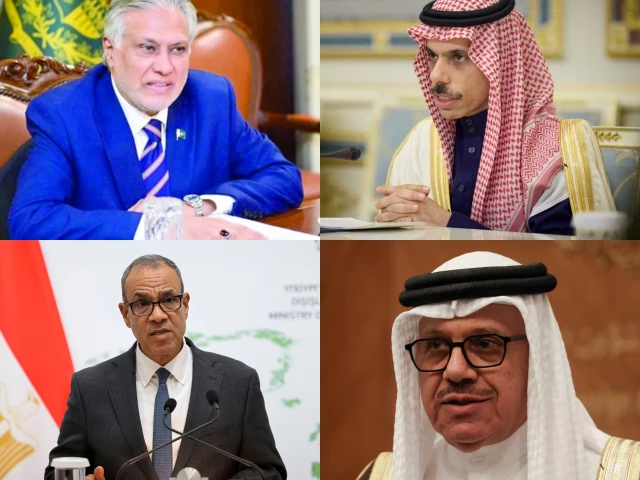
Deputy Prime Minister and Foreign Minister Ishaq Dar held separate telephone conversations with his counterparts from Saudi Arabia, Bahrain and Egypt, discussing bilateral ties and the evolving regional situation.
According to a statement issued by the Foreign Ministry of Saudi Arabia, Saudi FM Faisal bin Farhan bin Abdullah received a phone call from his counterpart Dar.
"During the conversation, the two leaders reviewed fraternal relations between Pakistan and Saudi Arabia and discussed the latest developments, as well as continued coordination and consultation on regional issues." it said.
🇸🇦📞🇵🇰 | Foreign Minister HH Prince @FaisalbinFarhan received a phone call from Deputy Prime Minister and Foreign Minister of Pakistan, Ishaq Dar. pic.twitter.com/HmINdUwMfD
— Foreign Ministry 🇸🇦 (@KSAmofaEN) April 3, 2026
Dar also held a telephone conversation with Egypt’s FM Badr Abdelatty.
According to a statement issued by the Ministry of Foreign Affairs (MOFA) on X, during the call, the two leaders discussed the latest regional developments and ongoing diplomatic efforts, underscoring the importance of dialogue and de-escalation.
Deputy Prime Minister / Foreign Minister Senator Mohammad Ishaq Dar @MIshaqDar50 held a telephone conversation today with the Foreign Minister of Egypt, Badr Abdelatty.
— Ministry of Foreign Affairs - Pakistan (@ForeignOfficePk) April 4, 2026
They discussed the latest regional developments and ongoing diplomatic efforts, underscoring the importance of… pic.twitter.com/mPE8KxE6XW
Separately, Dar also held a telephone conversation with Bahrain’s counterpart, Abdullatif bin Rashid Al Zayani, during which he highlighted the Pakistan–China five-point initiative aimed at promoting peace and stability in the Middle East and the Gulf region.
MOFA said the two leaders discussed the latest regional situation, exchanged views on multilateral efforts, including at the UNSC, and agreed to remain in close contact.
"FM Dar underscored the urgent need for de-escalation and emphasised the importance of dialogue and diplomacy," the statement read.
MOFA said that Dar highlighted the Pakistan–China five-point initiative, aimed at promoting peace and stability in the Middle East and the Gulf region.
"Al Zayani appreciated the efforts being pursued by Pakistan for dialogue and diplomacy towards peace and stability in the region," it added.
Deputy Prime Minister / Foreign Minister Senator Mohammad Ishaq Dar @MIshaqDar50 held a telephone conversation today with the Foreign Minister of Bahrain, Dr. Abdullatif bin Rashid Al Zayani.
— Ministry of Foreign Affairs - Pakistan (@ForeignOfficePk) April 4, 2026
The two leaders discussed the latest regional situation.
DPM/FM underscored the… pic.twitter.com/8JfSOPFRkN
Later, DPM Dar held a telephone conversation with Iranian Foreign Minister Abbas Araghchi on Saturday night, during which both leaders discussed the evolving regional situation.
According to a statement issued by the Ministry of Foreign Affairs, the two sides exchanged views on ongoing developments in the region and emphasised the need for continued engagement.
During the conversation, Dar reiterated Pakistan’s support for all efforts aimed at de-escalation and underscored the importance of resolving issues through dialogue and diplomacy.
Both leaders agreed to remain in close contact in view of the ongoing developments, the statement added.
Pakistan has been actively positioning itself as a neutral facilitator amid escalating tensions between Washington and Tehran, offering Islamabad as a venue for dialogue.
The initiative reflects Islamabad’s broader effort to de-escalate regional tensions, particularly in the wake of heightened hostilities following US and Israeli strikes against Iranian targets.
Earlier in the day, Iranian Foreign Minister Abbas Araghchi expressed gratitude to Pakistan for its mediation efforts amid the ongoing US-Israel war, stating that Tehran had “never refused to go to Islamabad” for talks.
In a post on X, he said Iran’s position was being misrepresented by US media, adding, “What we care about are the terms of a conclusive and lasting end to the illegal war that is imposed on us.”
Reacting to the development, DPM Dar said he appreciated the clarification by his “dear brother Araghchi”.
Meanwhile, security sources said Araghchi’s statement countered what they described as a disinformation campaign driven by select Western and Indian media outlets, as well as their affiliates in Pakistan, regarding Iran’s willingness to engage diplomatically.
They reaffirmed that through constructive engagement with all key stakeholders, Pakistan continued to pursue regional peace and stability, reinforcing its reputation as an honest broker in international diplomacy.
Backchannel peace efforts continue
Backchannel efforts to arrange talks between the United States and Iran are still underway, despite earlier attempts to convene a high-level meeting in Islamabad that could not materialise, sources familiar with the matter said.
Pakistan had quietly facilitated preparations for a possible round of direct engagement involving a US delegation led by Vice President JD Vance and senior Iranian representatives.
The proposed meeting, to be held in Islamabad, was seen as a potential opening for de-escalation amid heightened regional tensions.
However, despite advanced preparations on more than one occasion in recent days, the planned engagements were postponed at the last minute, with both sides requiring additional time for internal consultations, sources said.
"Efforts are ongoing, and there is still a willingness to explore diplomatic options," one source noted, adding that the situation remains fluid given the broader regional dynamics.
These peace efforts come as Pakistan hosted talks with Turkiye, Egypt and Saudi Arabia on Sunday, March 29, as part of its efforts to broker an end to the Iran war.
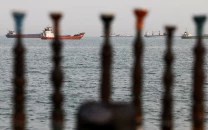
Initial discussions focused on proposals to reopen the Strait of Hormuz to shipping, sources familiar with the matter said.
Foreign ministers from the three regional powers landed in Islamabad last week for talks as Iran warned the US against launching a ground attack, and global oil prices surged amid continued fighting between Iran, the US and Israel.
At the time, the countries meeting in Pakistan had floated proposals to Washington tied to maritime traffic and reopening the Strait of Hormuz, five sources familiar with the matter told Reuters, as part of wider efforts to stabilise shipping flows.
A day ahead of these talks, DPM/FM Dar had spoken with FM Araghchi, urging diplomacy and dialogue as the sole path to peace.




This material may not be published, broadcast, rewritten, redistributed or derived from. Unless otherwise stated, all content is copyrighted © 2026 The Express Tribune.











COMMENTS
Comments are moderated and generally will be posted if they are on-topic and not abusive.
For more information, please see our Comments FAQ