Gold prices rise in local, global markets
Updated 1 hour ago

BISP budget hiked by 22% to Rs845b, provinces told to generate Rs1.65tr surplus
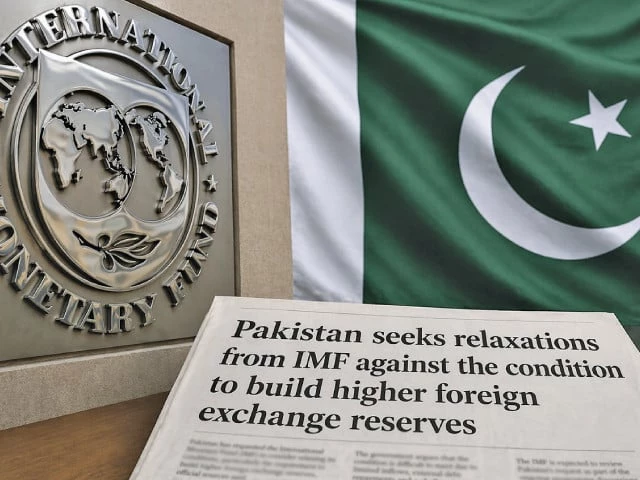
Pakistan has agreed with the International Monetary Fund (IMF) to walk a fiscally tight path and show a primary budget surplus of Rs2.8 trillion in the new budget and increase net foreign exchange reserves by $5.6 billion to end the vicious cycle of negative reserves, according to official sources.
To offset the impacts of the tight budget in the midst of higher inflation, the cash disbursement budget of the Benazir Income Support Programme (BISP) would be increased by 22% to Rs845 billion for the fiscal year 2026-27. The sources said that as per the understanding reached with the IMF for the release of the next loan tranche, the provinces would also be required to generate cumulative cash surpluses of Rs1.65 trillion.
The agreement was reached with the IMF staff as part of the third review talks, and the executive board of the IMF would give a formal endorsement of the agreement in the first week of May, the sources added. Considering the staff-level agreement, Pakistan has requested the IMF executive board to modify the end-June 2026 net international reserves target to negative $4.1 billion.
For end-June 2027, the central bank and the federal government have committed to the IMF that their net foreign exchange reserves would be equal to their foreign exchange liabilities, the sources added. This means that for the first time in many years, the foreign exchange reserves held by the central bank would not be negative. For end-March 2026, the IMF had given a negative $5.6 billion net international reserves target. To achieve equilibrium, Pakistan will have to add at least $5.6 billion to its foreign exchange reserves to pay off its liabilities.
Pakistan's current gross foreign exchange reserves of $15 billion are the result of loans from Saudi Arabia and China. After excluding these loans and other short-term liabilities, the reserves stand on a negative trajectory, compelling the authorities to keep knocking on the doors of friendly countries or buying dollars from the local market. However, the sources said that the central bank's short-term exposure in the shape of foreign currency swaps would still be $1 billion by June next year. But central bank authorities said that despite a challenging external environment due to the ongoing Middle East conflict, the bank had overperformed, and the floor on the net international reserves target remained at negative $5.6 billion, compared with the end-December 2025 target of negative $7 billion.
Budget agreement
The sources said that although the IMF budget mission is arriving next month, a broader agreement on the overall size and the primary budget surplus targets has been reached. The primary budget surplus target for the next fiscal year could be Rs2.8 trillion, or 2% of GDP. This is lower than this fiscal year's Rs3.4 trillion due to an end to the windfall profits of the central bank.
There was a strong lobby within the federal cabinet that wanted to ease fiscal and monetary policies and try to target higher economic growth. However, Finance Minister Muhammad Aurangzeb was against ending the path of fiscal consolidation – a view that seems to be prevailing in the next budget. Because of this and the impact of the Middle East conflict, the IMF is projecting 3.5% economic growth for the next fiscal year, which is lower than the government's ambition of 5.1%, the sources added.
The BISP budget is planned to be increased from Rs694 billion to Rs845 billion, excluding the cost of running the programme. The 22% (Rs151 billion) increase is aimed at enhancing the quarterly stipend to Rs19,500 from January next year and adding more beneficiaries. The sources said that the IMF has also asked that all governments should cumulatively spend Rs4.3 trillion on health and education in the next fiscal year, compared with Rs3.5 trillion this fiscal.
The provincial cash surplus target is being set at Rs1.643 trillion for the next fiscal year, although the final figure would depend on whether the provinces achieve this year's target of Rs1.464 trillion. For FY2026-27, provinces' net revenue targets are proposed at Rs1.8 trillion.
The revenue collection target for the Federal Board of Revenue (FBR) is being considered at Rs15.564 trillion, equal to 11% of the next fiscal year's projected size of the economy. The sources said the government wanted the FBR revenue targets to be consistent with further revenue mobilisation. A further increase in the tax revenue-to-GDP ratio of 0.3 percentage points could be achieved primarily through reducing GST exemptions on fuel, introducing an asset-based SME tax regime, and applying the recently adopted net billing regulation to existing consumers.
The FBR will also be required to add another one million new income tax return filers who must not have submitted nil tax returns. Only those filers who pay any amount in income tax would be counted for the IMF programme's purposes, the sources added. The IMF has asked Pakistan that the impact of any potential revenue-reducing tax simplification policies in the new budget should be offset by new permanent tax policy measures with equivalent revenue yield. The IMF has also limited the increase in circular debt flow to Rs300 billion for the next fiscal year, compared with the demand for Rs430 billion.











This material may not be published, broadcast, rewritten, redistributed or derived from. Unless otherwise stated, all content is copyrighted © 2026 The Express Tribune.








COMMENTS (2)
Comments are moderated and generally will be posted if they are on-topic and not abusive.
For more information, please see our Comments FAQ