The dinner table test
Updated 14 hours ago

PTI today is not a movement charting the future but a party caught in confusion
Every now and then, a political movement in Pakistan captures the imagination of a generation. It challenges entrenched power, speaks of justice and promises to upend the status quo. PTI was one such movement. At its core was a simple but powerful ideal: a Pakistan governed by the rule of law, where economic, social and political justice prevails. It attracted millions, inspired the youth, and for a moment, felt like the country's moral centre of gravity had shifted.
And yet, within a few years, that momentum has all but vanished. PTI today is not a movement charting the future but a party caught in confusion, bereft of leadership, direction or institutional coherence. While much of this collapse is attributed to state repression and political engineering, the rot is deeper and more self-inflicted than we often admit. The PTI saga reveals something far more troubling: the structural and cultural incapacity of our political parties - and by extension, our society - to build enduring institutions out of popular movements.
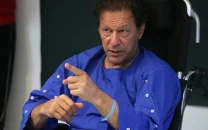
Imran Khan, for all his charisma, failed to turn PTI into a functional political party. It remained a movement, driven by emotion, rallying cries and a cult of personality. There was no sustained attempt to develop internal democracy, clear procedures for leadership transitions, or a robust mechanism for accountability and ideological training. The result is what we see today: a party that has millions of voters but no coherent leadership, strategy or organisational backbone.
But to focus solely on Khan's failures is to miss the larger cultural pattern. Pakistan's political culture is deeply personalised. Loyalty to individuals takes precedence over commitment to processes. Parties are built around leaders, not systems. The idea of a political institution outlasting its founder remains alien to us. PTI's failure, then, is not an anomaly; it is a symptom of a deeper dysfunction.
Our movements routinely falter because they rely on charisma over structure, emotion over strategy, and confrontation over coalition-building. PTI had the opportunity to institutionalise itself, to train ideological cadres, and to build a knowledge base that could refine and propagate its message across changing political landscapes. Instead, it outsourced its identity to a single figure and sidelined dissent, internal debate and intellectual development.
Even those who surrounded Khan rarely offered a competing vision or helped shape one. The second-tier leadership was weak, opportunistic, and often uninterested in building institutions. With Khan's incarceration and the decapitation of the party's top ranks, what remains are voices that reflect anger but not insight, defiance but not direction.
There's also a societal dimension to this. In a culture where power is revered more than process, and where politics is seen as a zero-sum game, the long, patient work of institution-building rarely finds champions. Party workers want quick wins; leaders crave personal loyalty; the establishment manipulates this fragility. In such a climate, no party - no matter how noble its message - can survive without developing internal resilience. PTI never did.
Yet its ideological core still resonates. The desire for justice, the rage against elite impunity, and the yearning for a different kind of politics are not dead. But without institutional form, these emotions become easy prey for demagogues or fizzle into apathy. PTI has exposed both the limits of populism and the vacuum that lies beneath unstructured idealism.
The challenge now is not just to rescue one party but to reimagine what political organisation means in Pakistan. Can we build parties that outlive their founders? Can we create cultures where internal democracy, ideological training and long-term strategy matter more than proximity to power? Can we admit that slogans alone do not transform societies - institutions do?
Until we confront these structural and cultural deficiencies, our political history will continue to repeat itself. Movements will rise and fall. Hope will flicker and fade. And the same power elite, armed not with legitimacy but with patience, will wait for the storm to pass - as it always does. And Pakistan will never come out of the quagmire!







This material may not be published, broadcast, rewritten, redistributed or derived from. Unless otherwise stated, all content is copyrighted © 2026 The Express Tribune.


COMMENTS (4)
Comments are moderated and generally will be posted if they are on-topic and not abusive.
For more information, please see our Comments FAQ