Dar, UN chief discuss regional conflicts, UN reform in New York
Updated 1 hour ago

Night shortfall tied to LNG shortages, says Power Division
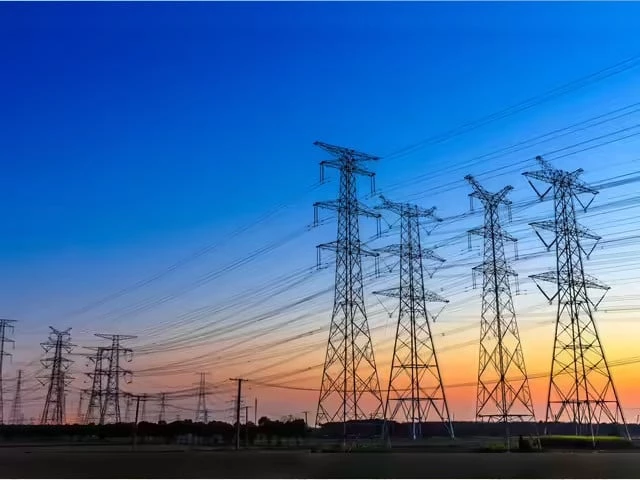
As the country grapples with rising heat, the Power Division on Friday said that electricity demand increased nationwide, while hydropower generation improved during peak hours due to enhanced water releases from Tarbela Dam.
According to a spokesperson, total hydel generation reached around 5,800 megawatts during last night's peak hours, compared to the installed capacity of about 11,500 megawatts.
He said that increased water outflows from Tarbela Dam helped boost electricity generation, which also contributed to improved stability of the national grid.
The spokesperson added that an additional 500 megawatts of electricity from the southern region was transmitted to the central grid, including an increase of 100 megawatts compared to April 22.
Despite improved generation, power distribution companies carried out up to two hours of load management during peak hours last night.
He clarified that economic load management on high-loss feeders was being implemented as per policy and had no connection with peak-hour load management.
The spokesperson further said that power plants with a combined capacity of 5,500 megawatts operating on liquefied natural gas (LNG) were not generating electricity due to global supply constraints.
He added that the availability of LNG, along with increased water releases, would help eliminate the power shortfall during night hours.
Reservoir levels stable
Meanwhile, in a related development, major rivers and reservoirs witnessed moderate inflows and controlled outflows, with combined live storage standing at nearly 3.97 million acre-feet, according to the Water and Power Development Authority (WAPDA).
A WAPDA spokesperson said water inflows and discharges at key river points showed varying trends.
At Tarbela, inflow in the Indus River was recorded at 30,700 cusecs, while outflow stood at 40,000 cusecs.
At Mangla, inflow in the Jhelum River was 31,500 cusecs and outflow 35,000 cusecs, while at Chashma Barrage, inflow was 56,700 cusecs against an outflow of 67,000 cusecs.
At Head Marala, inflow in the Chenab River was recorded at 13,700 cusecs with an outflow of 6,300 cusecs, while at Nowshera, both inflow and outflow in the Kabul River stood at 33,600 cusecs.
The spokesperson said water levels and storage at major reservoirs remained stable. At Tarbela, the water level stood at 1,466.54 feet with a storage of 1.557 million acre-feet.
Mangla reservoir recorded a level of 1,160.95 feet with storage of 2.163 million acre-feet, while Chashma reservoir stood at 647.90 feet with storage of 253,000 acre-feet.
The total usable water storage in Tarbela, Mangla and Chashma reservoirs combined was recorded at 3.973 million acre-feet.
WAPDA clarified that inflow and outflow figures for the Indus at Tarbela and Chashma, the Kabul River at Nowshera, and the Jhelum at Mangla represent average flows over the past 24 hours.










This material may not be published, broadcast, rewritten, redistributed or derived from. Unless otherwise stated, all content is copyrighted © 2026 The Express Tribune.










COMMENTS
Comments are moderated and generally will be posted if they are on-topic and not abusive.
For more information, please see our Comments FAQ