Tariff protection hurts consumers
Updated 1 hour ago

Formal sector and salaried class pay high taxes because they are visible, while undocumented and big fish remain comfo
I run the kind of business Pakistan says it wants and needs. I produce goods, employ people, file my returns and try to operate formally. Yet the more formal and visible a business becomes, the more the government comes after it. I am told that the IMF programme has stabilised the economy, the fiscal numbers are improving and Pakistan is making progress. But if that is so, why does it feel harder each month to stay afloat?
This is what it feels like to be in the formal economy of Pakistan. Most formal businesses are not asking for favours or subsidies; they want a stable environment in which they can do what they do best.
They want to pay the taxes they legally owe, but do not want arbitrary demands or delayed refunds to finance the state while they scramble for working capital at exorbitant interest rates. They want to grow and employ people, but higher fuel, transport and food costs quickly lead to wage pressure, higher input costs and declining profit margins.
The recent IMF report talks about fiscal discipline, primary surplus, reserve building, energy cost recovery and broadening the tax base. All these things are very important and Pakistan does need stability. But the question is who is paying for this stabilisation and whether the productive economy is being weakened in the process.
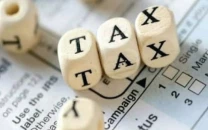
As the budget takes shape, the conversation remains fixated on the tax-to-GDP ratio and low tax collection. But Pakistan also has a bigger problem: it taxes the wrong things and the wrong people, not just too little. The poor pay taxes through fuel, utilities, GST and inflation. The formal sector and salaried class pay because they are visible, while the undocumented, big fish and politically protected sectors remain comfortable.
The imbalance is no longer just a feeling. Recent newspaper reports based on FBR data show that salaried individuals paid around Rs550 billion in income tax in FY 2024-25; far more than retailers and exporters combined. The trend appears to be continuing this year, with salaried taxpayers reportedly paying more than Rs315 billion in the first seven months of FY 2025-26. This does not mean that all businesses are undertaxed; many formal businesses, banks, importers and manufacturers pay heavily. But it shows the real problem with our tax system: Pakistan taxes what is visible far more easily than what is powerful, undocumented or politically difficult.
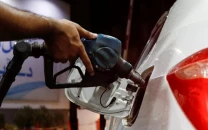
The IMF report itself points to the same imbalance from another angle. Petroleum products carry an effective tax rate of 166%, while agriculture contributes 24.6% of value added but has an effective tax rate of only 0.3%. This is why a simple tax-to-GDP target does not tell the full story. Taxing petrol and salaries is not the same as taxing wealth and income from those who are powerful enough to avoid the system.
When the state delays a refund, it is not just an accounting issue. It is using a business's working capital. On paper, the business may have a sizeable refund due from FBR, but suppliers, banks, workers and utility companies do not accept "refund receivable from FBR" as payment. A refund delayed by six months is not just a delayed payment. It is an involuntary loan from business to government.
Whether or not Pakistan's electricity tariffs are among the highest in the world is debatable, but they are certainly high enough to make many businesses uncompetitive. Years of wrong political decisions, capacity payments and sector inefficiencies are now passed to bill-paying consumers and industry in the name of cost recovery. Cost recovery is not reform if system inefficiencies are simply passed on to consumers and industry. A foreign buyer does not care why Pakistani utilities are high. He only compares price, reliability and delivery.
The IMF report also talks about not introducing any new Export Processing Zones and phasing out existing ones. In general, EPZ facilitation is not a freebie; it prevents exporters from first paying taxes and duties that would later have to be refunded – an expensive proposition under the normal regime. The IMF appears to justify this as "levelling the playing field". But if the national business environment itself is broken, then removing export-zone facilitation may not create fairness. It may remove one of the few spaces where exporters can operate without their working capital being blocked.
It would be unfair to blame the IMF alone. The IMF did not create our weak tax machinery, circular debt, untaxed real estate, delayed refunds or protected sectors. These are Pakistani failures. But the IMF programme matters because it defines what success is measured by. When success is measured mainly through primary surpluses, revenue targets, reserve accumulation and energy cost recovery, the state naturally chooses the easiest route to meet those targets.
In Pakistan, that easiest route is usually not the fairest route. It means taxing fuel, electricity, salaried income and formal businesses because they are visible, delaying refunds and passing the cost of energy-sector failures to paying consumers and industry because consumers and businesses have less power than the state. This may help the government meet its targets, but it can weaken the businesses expected to invest, hire and export.
The upcoming budget should not be judged by its revenue total but by where that revenue comes from. Pakistan can meet IMF targets and still fail the test of growth. The real question is not whether the state can produce a primary surplus. The real question is whether, when the adjustment is over, enough people will still have the confidence to invest, produce, hire and export.
The writer is a retired civil servant




This material may not be published, broadcast, rewritten, redistributed or derived from. Unless otherwise stated, all content is copyrighted © 2026 The Express Tribune.






COMMENTS
Comments are moderated and generally will be posted if they are on-topic and not abusive.
For more information, please see our Comments FAQ