Pakistan's consistent support for Palestine in a divided world
Updated May 16, 2026

The real risk is not that Pakistan fails to see the shock, but that it fails to understand it
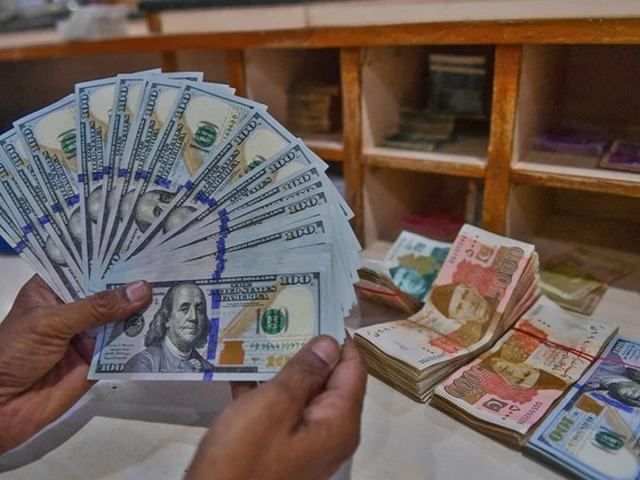
Pakistan is not at war, but its economy already has been for several years now, with dwindling macro indicators and close encounters with financial defaults.
This time, however, there is a clear recognition across government and its core advisors that regional conflict will not remain contained and will impact the economic stabilisation and growth pathway seriously and possibly undo recent efforts. Oil prices are rising, and resultantly freight and insurance costs are increasing, creating supply shocks.
Risks to remittances, exports, and foreign exchange are already in focus. This is not a case of surprise. However, proactive awareness is not the same as readiness. The real risk is not that Pakistan fails to see the shock, but that it fails to understand it.
Beyond the visible price movements in energy lies a more complex geopolitical economy: China is quietly securing energy and insulating supply chains; Russia is benefiting from elevated prices despite sanctions; Japan is deploying strategic reserves with precision; and global trading houses and financial actors are profiting from volatility itself.
Even in the United States, where oil reserves are relatively strong, the narrative of crisis often exceeds physical shortage, because volatility creates winners. The shock is not neutral, and it is redistributing gains globally, even as it transmits pain unevenly. Pakistan needs to move more towards the gains and less towards the pain.
It needs to manage the external side with Import bills increasing in value, not quantity, and save remittances from softening, ensuring foreign exchange risks are managed. If the rupee comes under pressure, the shock spreads across the system, making fuel, food, and all imported inputs more expensive.
At current oil levels, the economy can manage the stress if FX inflows hold mainly through remittances. With inflation rising by around three percentage points, growth may slow modestly, and industry may weaken earlier than the broader economy. But this margin is thin.
At $125 oil, inflation rises closer to five percentage points, and growth slows more visibly. At $150 oil, the system moves into a full stress zone, where inflation rises by more than seven percentage points, growth weakens by more than one percentage point, and industrial contraction becomes pronounced.
These are not distant scenarios, and as of now, there seems to be little progress towards a stable resolution of the conflict. These scenarios are within a modest range of what current geopolitical developments are already signalling.
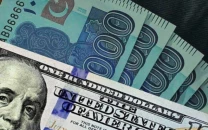
Once remittances are layered into this, the dynamics shift sharply for Pakistan. A 10% decline in remittances (possibly as close to 54% remittences to Pakistan come from GCC) can add several percentage points to inflation and significantly intensify pressure on the rupee. This is where shocks stop being incremental and start becoming exponentially self-reinforcing.
For ordinary Pakistanis, none of this appears as macroeconomic transmission. It appears as a steady, unavoidable squeeze. It began with petrol, then transport fares increased over the Eid, and now food prices are following the same trend, with March-end inflation already edging towards 9%. Electricity bills adjust with a lag, but will remain elevated longer.
Over time, the stronger effects become visible. Job security weakens with working hours reduced, and SME businesses further struggle to absorb rising costs. The shock is not evenly distributed. Lower and middle-income households absorb it first and hardest, because they spend a larger share of their income on essentials. When those prices rise, there is no margin left.
For policymakers, the challenge is not one problem but four at once: controlling inflation, protecting growth, maintaining external stability, and managing fiscal limits. These objectives do not move together. Lower fuel prices for the public can ease immediate inflation but increase fiscal stress. Higher interest rates can stabilise inflation but slow growth.
Defending the exchange rate can anchor expectations but deplete reserves. Every decision involves trade-offs. And in such moments, the risk is not inaction; it is mis-sequencing by solving for the visible problem while deepening the underlying one. The costliest policy errors are usually the ones that feel most reasonable or politically wise at the time.
This tension is most visible in the fuel subsidy debate. The instinct to shield citizens from rising prices is understandable. But the question is not whether relief should be provided. It is how a broad fuel subsidy does not remove the shock. It transfers it from the consumer to the state, which is detrimental for a state that is already constrained.
Fiscal pressures are elevated with revenues below target and external buffers remaining limited or shrinking. So when the prime minister announces that he has refused the advice for increasing fuel prices, he needs to be advised that Pakistan has paid a price for this exact dynamic before.
In 2022, fuel prices were kept artificially low while global oil prices surged. The immediate pressure eased, but the cost accumulated in the system, returning later through a sharp exchange-rate adjustment, higher inflation, and a far more painful stabilisation. That experience is instructive: suppressing prices does not eliminate the shock—it displaces it.
And displaced shocks have a habit of returning with interest. In this case, the interest cost will be both financial and political. Moreover, 2022 was an oil market shock, which is a global conflict with some impacts reaching the magnitude of the COVID times.
The response, therefore, must be disciplined. The exchange rate must be managed to ensure orderly adjustment, not artificially fixed at unsustainable levels. Remittance inflows must be protected, because they are not just household income but a central stabiliser of the system.
Energy pricing must be smoothed transparently over time, not suppressed through blanket subsidies that create hidden liabilities. At the same time, protection must be targeted, towards agriculture, exporters, and vulnerable households, rather than spread thinly across the entire economy. This is not the moment for broad ‘popular’ relief but a moment for precision.
There is also a dimension that is often overlooked. Economic resilience is not built by policy alone but is shaped by behaviour. In moments like this, panic buying, hoarding, speculative actions, and most importantly, self-centred, irresponsible actions amplify instability.
Energy and fuel consumption matter in an import-dependent economy. Formal remittance channels, compliance, and consumption restraint strengthen the system’s ability to absorb shocks. This is not about shifting responsibility to citizens; it is about recognising that resilience is collective.
An economy under stress is not only managed by policy, but it is also revealed by the behaviour of the nation. And how citizens behave and manage their micro-decisions will determine the macro-outcomes. The citizens need to stand with the government to curtail the use of energy and fuel and avoid lavish behaviour.
The schools and universities need to remain open, but this will mean more discipline in our habits. One needs to question if the midnight eatries, leisurely drives, and commercial markets beyond working hours are ‘essential’ or things that can be temporarily avoided. The suggestion is not to impose responsibility but to recognise that resilience is shared, but one sees little evidence of that on the streets and in loud restaurants.
In Pakistan, both the government and the public have seen the shock coming. That is not the issue. The issue is whether they understand how the shock will evolve. Because this is not a moment defined by oil prices alone. It is defined by the interaction between oil, remittances, exchange rates, policy response, and careful resilience behaviour.
The difference between stability and crisis will not be determined by external events. It will be determined by how Pakistanis respond to them. Because in the end, the most dangerous shocks are not the ones we fail to see, but the ones we assume we cannot influence.
The writer is an Economist and Director of Technology for the People Initiative Centre at LUMS.

1710998259-0/pti-(1)1710998259-0-208x130.webp "story")




This material may not be published, broadcast, rewritten, redistributed or derived from. Unless otherwise stated, all content is copyrighted © 2026 The Express Tribune.






COMMENTS (1)
Comments are moderated and generally will be posted if they are on-topic and not abusive.
For more information, please see our Comments FAQ