RWMC staff protests non-regularisation
Updated 21 hours ago

Over 200 interviewed for BISE chairperson posts
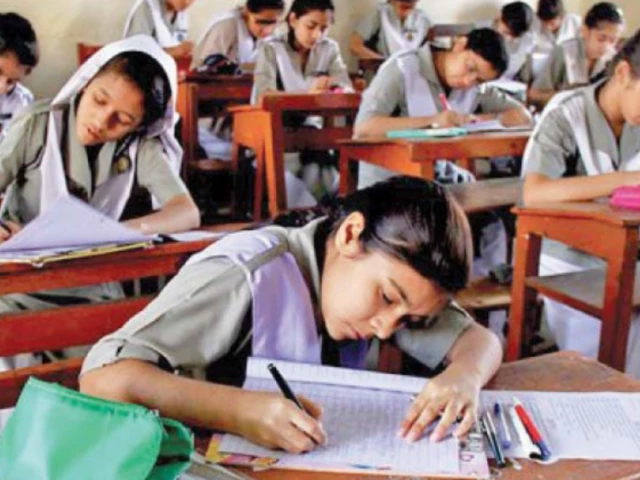
The process to appoint permanent chairpersons of the Boards of Intermediate and Secondary Education (BISE) across Punjab has been initiated but there is also a shortage of officials serving at other top administrative posts of the boards.
The continued absence of permanent controllers of examinations and secretaries in several boards has affected their administrative structure. The leadership and administrative gap has raised questions about the efficiency of the province's examination system.
According to sources, Punjab School Education Minister Rana Sikandar Hayat is supervising the recruitment process and conducting interviews.
The sources said more than 250 candidates had applied for the posts of chairperson and over 200 of them had been interviewed.
The process is expected to conclude after a second round of interviews of shortlisted candidates.
Punjab has nine education boards of Lahore, Rawalpindi, Faisalabad, Multan, Gujranwala, Sargodha, Bahawalpur, Dera Ghazi Khan and Sahiwal.
However, five of them have been operating without permanent chairpersons for the past several months.
In most cases, temporary assignments or additional charges have been assigned, limiting the boards' ability to take long-term policy decisions.
Compounding the issue is the lack of permanent controllers of examinations and secretaries, two of the most crucial operational roles in any education board.
The sources said the posts of controller were vacant in four boards and the responsibilities are being managed on an acting basis. Similarly, several boards are functioning without full-time secretaries, leading to administrative bottlenecks and delays in official processes. The absence of permanent controllers has had an impact on examination management. The controllers are responsible for organising exams, supervising answer sheet checking and finalising results.
Without stable leadership in these roles, inconsistencies in marking, delays in result compilation and lack of accountability have become challenges. On the other hand, secretaries are essential for policy implementation, coordination and maintaining official records, making their absence equally problematic.
During the ongoing interviews, the candidates are being evaluated on their administrative expertise, understanding of examination systems, and ability to implement modern reforms.
Minister Rana Sikandar emphasised the need for digital transformation, including the adoption of artificial intelligence, biometric attendance systems, digital monitoring, and on-screen marking to ensure transparency.
Applicants are also being asked to present their vision for reform, including short and long-term strategies to improve efficiency. Questions related to ensuring transparency, curbing cheating practices and enhancing institutional autonomy are central to the selection process.
Around 2.5 million students appear in matriculation and intermediate examinations in the province annually.
In recent years, delays in result announcements, errors in marking and slow rechecking procedures have caused widespread frustration.











This material may not be published, broadcast, rewritten, redistributed or derived from. Unless otherwise stated, all content is copyrighted © 2026 The Express Tribune.





COMMENTS
Comments are moderated and generally will be posted if they are on-topic and not abusive.
For more information, please see our Comments FAQ