First step towards school autonomy in Sindh
Updated 20 hours ago

Once driven to return, a teacher now questions urging students to stay
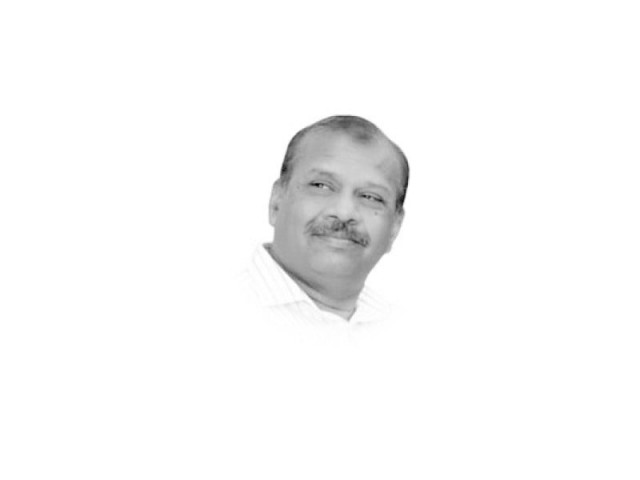
Nearly two decades ago, upon completing my PhD in Sweden and defending my dissertation, I was asked a question that seemed simple at the time: "Why do you want to go back to Pakistan?" The assumption behind the question was clear. Many professionals from developing countries prefer to stay abroad, where systems are efficient, research funding is abundant, and merit is not perpetually negotiating with influence.
I replied without hesitation, and with genuine enthusiasm: "There may be many like me here, but Pakistan needs me."
I believed it. I believed that returning home was not merely a personal decision but a moral one. A country struggling with educational gaps, institutional fragility and intellectual dependency required its trained minds to come back and build.
I returned with hope, armed with degrees, research exposure, and a conviction that classrooms could be transformed, that students could be mentored into confident thinkers, that institutions could slowly evolve through persistence and integrity.
For years, I invested myself in teaching, supervising research and encouraging students to believe that merit and hard work would eventually find space in our national landscape. I often told them that change is incremental; that nations are not built by escape but by commitment.
But something unsettling has changed over the years.
Today, when my students walk into my office seeking recommendation letters for graduate studies (often with a quiet but unmistakable resolve not to return) or for jobs abroad, I feel a subtle pause within myself, a moment of reflection that words seldom capture.
Outwardly, I smile and say, "Of course, you should apply." And I write strong letters - because they deserve an opportunity. Because talent should not be caged by geography. Because I cannot, in good conscience, ask them to sacrifice their future for an abstract ideal.
Yet inwardly, my thoughts are no longer as simple as they once were.
I see in them the same spark I once carried, i.e. the desire to contribute, to innovate, to serve. But I also see their fatigue. They speak of limited research funding, shrinking academic positions, delayed recruitments, opaque selection processes, and a job market that undervalues intellectual labour.
Many of them have watched seniors struggle for years despite impressive qualifications. For them, migration is no longer an adventure; it is risk management.
This is how brain drain becomes normalised, not through disloyalty, but through accumulated disillusionment.
It would be dishonest to romanticise the situation. When educated youth repeatedly encounter barriers unrelated to merit, when institutional inertia suffocates initiative, and when economic uncertainty overshadows aspiration, departure begins to look rational.
A country cannot rely solely on emotional appeals to retain its brightest minds; it must offer them dignity, structure, and a predictable professional path.
As a university teacher, I now stand at a moral crossroads. Two decades ago, I returned because I felt needed. Today, when my students seek my endorsement to leave, I feel conflicted. I want them to stay and build. I also want them to thrive.
The deeper tragedy is not that they want to leave. It is that I can no longer confidently promise them that staying will reward their talent.
Patriotism should not demand professional stagnation. Commitment to one's homeland should not require surrendering ambition. If Pakistan truly needs its educated youth, as I once declared with conviction, then it must create an environment where staying is not an act of sacrifice but a viable choice.
I still believe in this country. I still enter my classroom with hope. But hope, to survive, must be matched by reform. Otherwise, the day may come when even the most enthusiastic among us struggle to answer Sweden's question with the same certainty.
And that would be a loss far greater than migration statistics can measure.
Ye ek ishara hai aafat-e nagahani ka
Kissi jagha se parindon ka kooch kar jana





This material may not be published, broadcast, rewritten, redistributed or derived from. Unless otherwise stated, all content is copyrighted © 2026 The Express Tribune.






COMMENTS (3)
Comments are moderated and generally will be posted if they are on-topic and not abusive.
For more information, please see our Comments FAQ