Education without character cannot build a nation
Updated 4 hours ago

Peace holds as long as war costs outweigh gains, echoing Clausewitz’s theory
Securing a fragile peace in the Iran war can be more readily understood through the lens of Carl von Clausewitz, who conceptualised war and peace as part of a continuous political process rather than separate conditions. From his perspective, the current ceasefire is not a definitive end to hostilities but a recalibration of strategy by both sides.
Peace, in this sense, emerges when the use of force no longer serves the political objectives of the actors involved. For both Iran and the US, the continuation of war carries escalating economic, military and reputational costs without guaranteeing decisive outcomes. Thus, the shift toward de-escalation reflects a rational reassessment of means and ends.
However, because this peace is rooted in cost-benefit calculations, regionally and internationally, rather than genuine resolution of disputes - such as nuclear ambitions, sanctions and regional influence - it remains inherently unstable. Clausewitz would describe this as a peace in making, where conflict is suspended, but underlying hostility persists.
The fragility of this peace is further illuminated by Clausewitz's concept of the paradoxical trinity, which emphasises the dynamic interaction between the government, the military and the people. A stable peace requires alignment among these three forces, yet in the Iran war context, such alignment is incomplete and contested.
Political leadership on both sides may see value in avoiding escalation, but regional pressures complicate compromise. In Iran, nationalist sentiment and resistance narratives shape public expectations, while in the US, political divisions and alliance commitments influence decision-making.
Militaries on both sides also maintain readiness and strategic caution, aware that premature concessions may weaken deterrence. This imbalance within the trinity sustains a latent tension beneath the surface of the ceasefire.
Even if formal negotiations progress, spoilers' actions or military alliances can quickly derail them. Hence, peace is not secured solely through agreements, but through the synchronisation of political will, military posture and social acceptance.
Another key Clausewitzian idea relevant to securing fragile peace is the notion of the centre of gravity - the source of an adversary's strength and resilience. In the Iran war, neither side has successfully neutralised the other's centre of gravity.
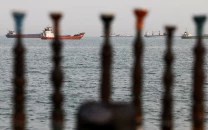
Iran retains its regional influence through allied networks and its strategic position in vital waterways, while the US continues to wield overwhelming technological, economic and alliance-based power. This mutual resilience reinforces a deterrence-based equilibrium, but it also prevents the emergence of decisive outcomes that could solidify peace.
Instead, the conflict settles into a condition of strategic stalemate, where neither victory nor defeat compels a lasting settlement. Clausewitz would argue that in such circumstances, peace is provisional - sustained not by trust, but by the recognition that further hostility would be inconclusive or excessively costly.
Ultimately, securing a durable peace requires moving beyond this Clausewitzian stalemate toward a political equilibrium in which war ceases to be a viable instrument of policy. For Iran, this may involve gaining credible assurances of sovereignty, economic relief from sanctions and recognition of its regional role. For the US, it necessitates verifiable limits on Iran's nuclear programme and constraints on activities perceived as destabilising the region.
Achieving this balance demands gradual CBMs, effective third-party mediation and incremental agreements that reduce mistrust over time. Clausewitzian theory suggests that peace becomes durable only when both sides adjust their political objectives to align with reality, abandoning maximalist goals that cannot be achieved at an acceptable cost.
The positive thing is that the majority of countries across the globe want this conflict to cease permanently to ease public suffering. A peace broker or a key mediator, therefore, has an extra responsibility on its shoulders to fuse regional public expectations with a gradual reduction in global human suffering for durable stability. Pakistan can seize this historic moment to change the regional dynamics permanently.










This material may not be published, broadcast, rewritten, redistributed or derived from. Unless otherwise stated, all content is copyrighted © 2026 The Express Tribune.

COMMENTS
Comments are moderated and generally will be posted if they are on-topic and not abusive.
For more information, please see our Comments FAQ