PSX surges 4% in holiday-shortened week
Updated 18 hours ago

With LNG disruption, local firms can raise output to bridge gap, boost revenue
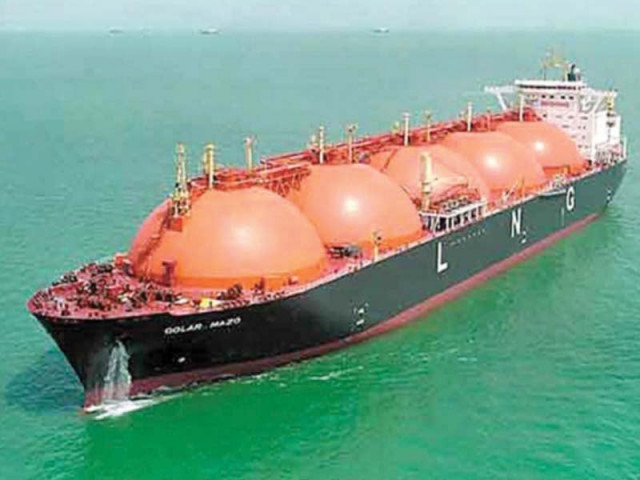
Higher international oil prices stemming from the devastating Middle East war, coupled with disruptions in liquefied natural gas (LNG) supply chains, have created a favourable opportunity as well as provided a catalyst for Pakistan's exploration and production (E&P) companies to fill the vacuum and meet the country's energy requirement.
At present, the global energy market is going through a period of volatility following the military conflict involving the US, Israel and Iran, where both sides have attacked each other's energy installations.
Also, the Strait of Hormuz, a critical maritime checkpoint, which facilitates nearly 20% of global oil and LNG trade, has faced significant disruptions, sending crude prices soaring and tightening energy supply chains, said a research report prepared by Insight Securities.
The evolving situation has pushed Arab Light crude to $120 per barrel, while diesel and petrol prices have surged to $190 and $140 per barrel, respectively. "While this environment poses macroeconomic challenges to Pakistan through a higher import bill and inflationary pressures, it simultaneously creates a strong tailwind for the domestic E&P sector," it said.
"Higher global oil prices directly translate into stronger revenues for E&P companies as local pricing remains linked to international benchmarks. An uptick in oil revenues is expected to materialise almost immediately, while gas revenues may follow with a lag," Asim Hassan, investment analyst at Insight Securities, told The Express Tribune.
Beyond the rally in oil prices, regional hostilities have disrupted LNG supply logistics, including the shutdown of Qatar's Ras Laffan export terminal and restrictions on vessel movements through the Strait of Hormuz, constraining a significant proportion of LNG shipments. For Pakistan, which relies on imported LNG to bridge its gas deficit, the tightening supply environment has triggered a shift in gas supply management.
In recent months, the local E&P companies faced forced curtailments due to excess LNG in the system as weak demand from power and industrial consumers led Sui companies to restrict offtake from domestic fields while prioritising imported LNG under take-or-pay commitments. With LNG supply now constrained, the previously curtailed domestic gas output estimated at around 350 million cubic feet per day (mmcfd) could gradually be restored, supporting higher production for E&P companies, the report said.
However, even after ending forced curtailments, Pakistan could continue to face gas shortfall because the country imports an average of around 900 mmcfd of LNG, which could still impact gas supply to LNG-dependent plants.
In recent quarters, the government has undertaken necessary steps to ensure full recovery of the cost of gas, which has translated into significant improvement in the recovery rates of E&Ps. Keeping in view the current situation, according to the report, the outlook for the E&P sector remains supportive as the recent decline in LNG imports could lead to a relatively lower weighted average cost of gas (WACOG), given the higher cost of LNG compared to the domestic gas.
This, in turn, provides some buffer to Sui companies, potentially supporting smoother settlement of E&P receivables in the near term. However, if the war prolongs and necessitates gas price revisions, any delay or partial pass-through by the government could bring pressure on the circular debt. In such a scenario, the trade receivables of E&P companies may begin to accumulate again.
Hassan, who has authored the report, mentioned that the current surge in international oil prices could eventually put significant pressure on Pakistan's external account. Higher energy import costs tend to widen the country's trade deficit, which historically leads to currency depreciation over time.
"In such a scenario, the E&P sector stands as a natural beneficiary since domestic oil and gas pricing formulas are largely indexed to international benchmarks and denominated in US dollars," he said.
The sharp increase in international energy prices has already translated into a notable rise in domestic fuel costs, with petrol and diesel prices increasing by Rs55 per litre. While this development is broadly negative for the wider economy, it provides a silver lining for the E&P universe.











This material may not be published, broadcast, rewritten, redistributed or derived from. Unless otherwise stated, all content is copyrighted © 2026 The Express Tribune.









COMMENTS
Comments are moderated and generally will be posted if they are on-topic and not abusive.
For more information, please see our Comments FAQ