PSX closes nearly flat above 180,100 points
Updated 3 hours ago

Pilot salary payments, healthcare disbursements using e-CNY; incentivises banks to boost usage
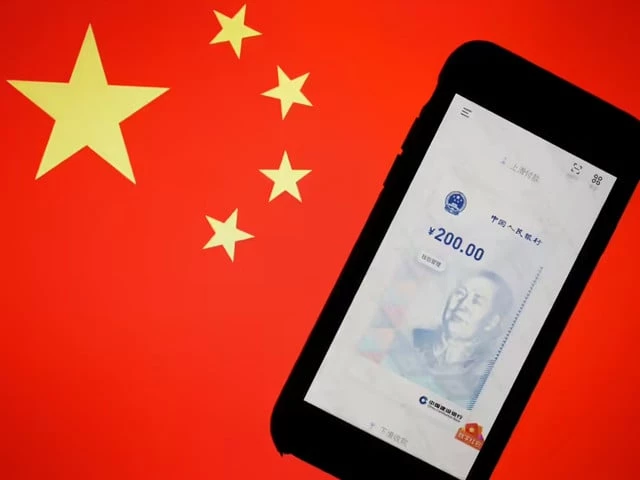
China's central bank is making a broad push to increase the use of digital yuan at home and abroad, several industry sources said, setting Beijing on a different – and potentially competing – path from the United States in shaping the future of money.
In a series of measures, many revealed here for the first time, the People's Bank of China (PBOC) is giving banks policy incentives and behind-the-scenes directives to expand the use of digital yuan, also known as e-CNY, in areas ranging from lottery draws to green electricity charges and fiscal spending.
Banks are also being pressed to grow digital yuan use in cross-border transactions, particularly along Belt and Road Initiative routes, with lenders racing to develop compatible products including loans, letters of credit and bills, the sources said.
All the sources declined to be named as they were not authorised to speak to the media. China's bet on the digital yuan is in stark contrast with the US, where President Donald Trump has embraced stablecoins while banning domestic circulation of central bank digital currencies.
Some of the industry sources said Beijing's move is partly driven by a desire to reduce its dependence on a global payments system dominated by Western institutions and anchored to the dollar as the world's reserve currency. "The war has exposed the risks of dollar weaponisation, highlighting the urgent need for de-dollarisation among Middle East oil producers," brokerage China Securities Co wrote in a report, saying the Iran conflict is accelerating yuan internationalisation.
As a result, the yuan's global influence could expand "from trade into the realm of geopolitics," it wrote.
To be sure, the digital yuan is starting from a low base and faces structural limits on how far it can expand.
Cumulative digital yuan transactions had reached 16.7 trillion yuan ($2.47 trillion) as of November since its 2019 debut, according to the latest official data, compared with 279 trillion yuan in China's UnionPay card transactions in 2025 alone. In cross-border digital payment, "China and the US are the two engines for the global economy and they're both pushing their own standards," said Xin Yan, CEO of Sign, which builds digital infrastructure for governments and institutions.
China's digital yuan is more compatible with the banking system but "it is not friendly for foreigners," Xin added.
Pilots include lottery draws, prepaid cards, government fiscal spending and supply chain financing, the industry sources said. Authorities are also testing the digital yuan to curb medical insurance fraud and track green electricity consumption, leveraging its ability to trace money flows with precision, said the sources.
The digital yuan is unlikely to disrupt retail payment behaviour dominated by Alipay and WeChat Pay, with its ultimate purpose focused on international settlement between enterprises, the industry sources said. However, expanding abroad poses even greater challenges.













This material may not be published, broadcast, rewritten, redistributed or derived from. Unless otherwise stated, all content is copyrighted © 2026 The Express Tribune.






COMMENTS
Comments are moderated and generally will be posted if they are on-topic and not abusive.
For more information, please see our Comments FAQ