Alphabet's SpaceX bet grows to $94b
Updated 7 hours ago

Current policy focuses on structural reforms, greater utilisation of local resources, less reliance on external chains

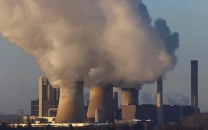
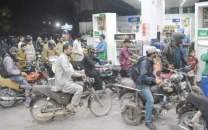
Pakistan's increasing dependence on imported fossil fuels is exposing the economy to mounting fiscal and energy security risks amid declining domestic gas reserves and rising industrial demand.
A detailed report and SWOT analysis released by the Institute of Cost and Management Accountants of Pakistan (ICMA) highlighted that Pakistan's energy mix continues to rely heavily on oil, gas and coal, alongside contributions from nuclear and renewable energy sources including hydropower, wind and solar. However, shrinking indigenous reserves and the country's dependence on imported oil and liquefied natural gas (LNG) are creating significant challenges for sustainable economic growth, industrial productivity and urban expansion.
The report noted that successive governments have attempted to address these concerns through policy initiatives such as Vision 2025 and the Medium-Term Development Framework, aimed at improving energy efficiency, modernising infrastructure, encouraging private sector participation and promoting long-term sustainability in the energy sector. According to the analysis, Pakistan's energy landscape has undergone major structural changes over the decades, marked by key gas discoveries, regulatory reforms and increased foreign investment between 1947 and 2025. Current policy direction, it said, is focused on structural reforms, greater utilisation of indigenous resources and long-term planning to reduce dependence on external energy supply chains.
The institute observed that Pakistan's reliance on imported energy has intensified in recent years due to declining domestic gas production and rising industrial consumption. Since LNG imports began in 2015, consumption has fallen from 8.2 million tons in 2021 to an estimated 6.1 million tons by 2025, primarily because of elevated import costs and the rapid expansion of distributed solar energy.
ICMA stated that distributed solar generation in Pakistan reached nearly 34 gigawatts by 2025, while the country imported approximately 50 gigawatts of solar panels between 2017 and 2025, almost equivalent to the national grid's installed capacity.
The report also cautioned that the import-dependent energy structure has increased vulnerability to global geopolitical tensions, supply chain disruptions and international price volatility. It pointed to structural imbalances in the LNG sector arising from long-term supply contracts signed during periods of higher demand projections, contributing to growing financial pressure and circular debt estimated at Rs1.889 trillion. The analysis identified strengths such as stable fuel supply infrastructure and existing generation capacity, but flagged major weaknesses including excessive import dependence, rising energy costs and financial inefficiencies within the energy chain.
At the same time, it highlighted opportunities in renewable energy expansion and local resource exploration, while warning that global commodity price fluctuations and geopolitical instability continue to pose serious threats to Pakistan's energy security.
The report noted that Pakistan's long-term energy transition strategy targets 60% clean electricity generation by 2030, though fossil fuels are expected to remain a critical transitional component of the energy mix for the foreseeable future. It stressed that energy security would require comprehensive structural reforms, improved demand management, modernised infrastructure, flexible fuel procurement mechanisms and accelerated investment in renewable and indigenous energy resources.













This material may not be published, broadcast, rewritten, redistributed or derived from. Unless otherwise stated, all content is copyrighted © 2026 The Express Tribune.



1727268465-0/Untitled-design-(42)1727268465-0-208x130.webp "independence 2 0")



COMMENTS
Comments are moderated and generally will be posted if they are on-topic and not abusive.
For more information, please see our Comments FAQ