3 Pakistanis among four killed after Houthi attack on commercial vessel in Bab al-Mandeb: Yemen ministry
Updated 51 minutes ago

Iran warns any military vessel interfering in the Strait of Hormuz will be targeted by its armed forces
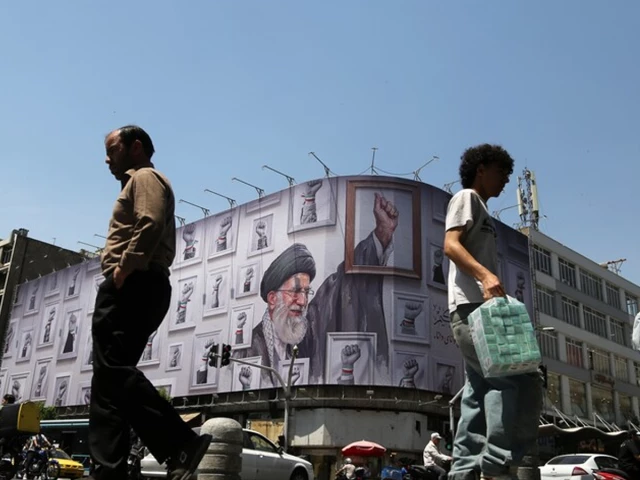
Saeed Ajorlou, a member of Iran’s negotiating team’s media committee, said on Saturday that Tehran has yet to approve the final draft of a proposed agreement with the United States and could withdraw from the deal if the other side fails to uphold its commitments.
Ajorlou told Iranian state television that, to his knowledge, the final text had not been approved as of Friday night, although only limited differences remained between the parties.
“If the final text is approved, we will enter a 60-day process of discussions on the details,” he said, adding that each of the agreement’s 14 articles contains annexes requiring further negotiations.
Read: Trump's Iran deal tease puts world on edge
Ajorlou stressed that implementation mechanisms would be more important than the text itself, particularly regarding access to Iranian assets and the other side's fulfillment of commitments.
According to Ajorlou, the proposed agreement includes provisions allowing Iran to withdraw if commitments are not met.
He said Tehran could exit the deal if violations occur, including breaches of the ceasefire, failure to provide access to Iranian funds, or failure to lift a maritime blockade.
“If they do not lift the maritime blockade, we can leave the agreement. If they do not make those funds available to us, we can leave the agreement,” he said.
Ajorlou described the mechanism as a new form of “snapback” provision that would operate in Iran’s favor if the other side fails to uphold its obligations.
He added that any failure to implement commitments during the initial phase would prompt Tehran to reconsider participation in the planned 60-day talks.
“The agreement is entirely based on implementation and objective guarantees,” he said.
Iran warns foreign military over Hormuz interference
Iran warned on Saturday that any military vessel attempting to interfere in the management of the Strait of Hormuz or disrupt maritime traffic would be targeted by the country’s armed forces.
According to Iran’s state broadcaster IRIB, the statement was issued by Iran’s Khatam al-Anbiya Central Headquarters, the country’s highest joint military command coordinating operations between the armed forces and the Islamic Revolutionary Guard Corps (IRGC).
The headquarters said management of the strategic waterway is being controlled “with full authority” by the armed forces of the Islamic Republic of Iran.
Also Read: US Congress quietly moving to integrate American and Israeli military forces: report
It said all commercial vessels, ships, and oil tankers are required to transit through designated routes and obtain authorization from the IRGC Navy.
The statement warned that any violation of the regulations could seriously jeopardize the security of vessels.
It also warned foreign military vessels against interfering in Iran’s management of the Strait of Hormuz or disrupting navigation in the waterway.
“Any attempt by military vessels to interfere in the management of the Strait of Hormuz or disrupt navigation will be targeted by the armed forces of the Islamic Republic of Iran,” the statement said.
The Strait of Hormuz, located between Iran and Oman, is one of the world’s most important maritime chokepoints, carrying a significant share of global oil and liquefied natural gas shipments.
Earlier Saturday, US Defense Secretary Pete Hegseth rejected Iran’s assertion that it controls the Strait of Hormuz, saying: “They want to say that they control the strait, but we do.” He added that developments behind the scenes and the course of negotiations show that the United States remains in control of the strategic waterway.
US military attacks Iran-bound ship with Hellfire missile
The US Central Command (CENTCOM) says forces have “disabled” a Gambia-flagged ship attempting to sail towards an Iranian port.
Posting on X, CENTCOM said forces “observed M/V Lian Star transiting international waters toward an Iranian port on the Gulf of Oman and issued more than 20 warnings while informing the vessel it was in violation of the US blockade”.
— U.S. Central Command (@CENTCOM) May 30, 2026
“A US aircraft disabled the vessel by firing a Hellfire missile into the ship’s engine room after Lian Star’s crew failed to comply. The ship is no longer transiting to Iran.”
US forces have disabled five commercial vessels and redirected 116 to fully enforce the blockade, CENTCOM said.
Blockade of Iranian ports still in place despite Trump's announcement
The United States naval blockade of Iranian ports remains in place, Iran's semi-official news agency Tasnim reported on Saturday, citing Iranian seafarers.
"The naval blockade is still in place, and ships are receiving stop warnings and denial of passage from CENTCOM," the report cited the seafarers as saying.
For his part, a top military advisor to Iran’s supreme leader accused Washington of “betraying diplomacy”.
“As expected, the US president is betraying diplomacy for the third time.
"By continuing the naval blockade and making excessive demands in negotiations, he has further proven that he is not willing to engage in talks and is pursuing other objectives," Mohsen Rezaei wrote on X.
Mohsen Rezaei, senior advisor to Iran's Leader:
— Press TV 🔻 (@PressTV) May 30, 2026
As predicted, the US President is betraying diplomacy for the 3rd time. By continuing naval blockade & making excessive demands in negotiations, he has once again proven he is not serious about talks and pursues other objectives." pic.twitter.com/4axPUhT1H1
In a Friday post on his social media platform Truth Social, US President Donald Trump said Iran would be required to remove any remaining mines in the Strait of Hormuz, while the US would lift its naval blockade on ships entering or leaving Iranian ports.
“Ships caught in the Strait due to our amazing and unprecedented Naval Blockade, which will now be lifted, may start the process of 'heading home!'”
Regional tensions have escalated since the US and Israel launched strikes against Iran in February. Tehran retaliated with strikes targeting Israel as well as US allies in the Gulf, along with the closure of the Strait of Hormuz.
A ceasefire took effect on April 8 through Pakistani mediation and was later extended by Trump indefinitely.
Following stalled negotiations mediated by Islamabad, the US has imposed a blockade on Iranian ports since April 13, including those located along the strategic Strait of Hormuz.
Mediation efforts are ongoing to put an end to the conflict between the parties.
Pentagon chief says US ready to restart strikes on Iran if no deal
The US is ready to restart attacks on Iran if a deal cannot be reached, Defence Secretary Pete Hegseth said on Saturday, as negotiators from Washington and Tehran worked to bridge major differences blocking an agreement.
"Our ability to recommence if necessary...we are more than capable," Hegseth said in Singapore.
"Our stockpiles are more than suited for that, both there and around the globe, so we're in a very good place," he added.
Hegseth, speaking at the Shangri-La Dialogue, Asia's premier forum for defence leaders, militaries and diplomats, said the US has not "turned its back" on the Asia-Pacific region despite being engaged in conflict with Iran.
"We can do two things at one time. We're super-charging our defence industrial base so that we're building 2X, 3X, 4X the munitions very soon to ensure that all of our (operations) plans are properly funded throughout the world," he said.
US Navy warns mariners to avoid Strait of Hormuz due to mine threat
The US Navy Central Command issued an urgent maritime advisory, warning ship owners, operators and mariners about dangerous military operations underway in the Strait of Hormuz north of Oman's Musandam Peninsula.
The Joint Maritime Information Centre advisory, dated May 29, rated the regional threat level as "CRITICAL," citing Iranian attempts to illegally control the strategic waterway through what it described as dangerous and illegal mining that endangers ships and crews.
All mariners were advised to avoid the Strait's Traffic Separation Scheme and instead coordinate their passage with US Naval Cooperation and Guidance for Shipping.
It also urged vessels to remain in constant radio contact with naval authorities and comply immediately with instructions from US forces.
The advisory noted a sharp warning that any vessel observed engaged in or supporting mine-laying activities would be targeted by US forces in self-defence.
Trump 'will only make a deal that is good for America' with Iran: White House
A White House official said on Friday that US President Donald Trump would only pursue an Iran nuclear agreement on American terms, following a lengthy meeting in the Situation Room.
"President Trump will only make a deal that is good for America and satisfies his redlines," the official told Anadolu.
The official said the high-level meeting lasted approximately two hours and reaffirmed the administration's firm stance on Tehran's nuclear ambitions.
"Iran can never possess a nuclear weapon," the official added.
It came amid US-Iran nuclear negotiations, with Washington maintaining that any agreement must meet strict conditions set by the president.
Trump wrote earlier on his Truth Social platform that he would meet officials at the White House to make a "final determination" on a proposed deal to end the war with Iran.
He outlined several elements he said were included in the proposal, including an Iranian commitment to never obtain a nuclear weapon and the reopening of the Strait of Hormuz to unrestricted commercial shipping.










This material may not be published, broadcast, rewritten, redistributed or derived from. Unless otherwise stated, all content is copyrighted © 2026 The Express Tribune.






COMMENTS (1)
Comments are moderated and generally will be posted if they are on-topic and not abusive.
For more information, please see our Comments FAQ