Houthis and the spreading conflict in the Middle East
Updated 15 hours ago

Top-down approach is evident from frequent design and route changes in the Lahore Ring Road

The ubiquitous growth of new highways all over the world is perceived as a symbol of economic success. The overarching policy belief that new roads inherently promote economic growth and productivity heavily relies on quantitative tools while ignoring the contextual details of roading projects. Similar inchoate trends can be witnessed in Pakistan as well. Pakistan's Budget 2026-27, for instance, proposes huge allocation for highways, motorways and other connectivity projects in the name of economic growth and development. The National Highway Authority, per media reports, secured the single largest allocation at Rs264 billion under the development program. Other major allocations reportedly accommodate the government's coalition partners and the ruling party's lawmakers at Rs87 billion and Rs70 billion respectively.
In this perspective, the rudimentary question is how arguments for economic growth are perceived and advanced to promote road investments in Pakistan? The Politics of Road Expansion, a book by this writer recently published by Routledge, argues that traditional tools used to measure the economic benefits of roads have limitations in incorporating the effects of economic, social, environmental and social externalities. These inane tools, such as benefit-cost ratio (BCR) and other similar metrics, have the tendency to ignore the contextual challenges involved in the advancement of new road projects. Based on six case studies from New Zealand, Britain, the US, Pakistan, Brazil and Kenya, the book also observes that the politicians and governments have their own political, economic, technological and aesthetic motives to initiate big road projects. Plagued by avarice, these motives may float desultory visions which then create dubious planning practices in linking roads investment with economic growth and development. These practices, known for their chicanery and mostly revolving around higher BCR value, are then used as policy and planning justifications for securing huge government funds from the taxpayers' money. It is, therefore, necessary to undermine such doctrinaire practices to effectively use taxpayers' money and ensure economic development by advancing new roading projects.
The conceptual flaws in the traditional measurability tools are evident from the division of knowledge into the virtues of episteme, techne and phronesis as advocated by Aristotle in Book VI of his Nicomachean Ethics. Episteme, or epistemology, is scientific knowledge while techne, or technology, is an art and craft. One may observe that the traditional measurability tools revolve around episteme and techne only while ignoring the third component phronesis which refers to practical wisdom or common sense. As a result, despite huge investments, most roading projects are unable to aggrandise economic growth in developing countries such as Pakistan. The fundamental problem is the policy and planning assertions and unjust use of authority by the powerful stakeholders in justifying and advancing massive highways infrastructure without necessary research. The policy assertions in roads planning are so egregious that they ignore contextual issues and stakes of the powerless stakeholders forgetting that their feedback carries practical wisdom that can make roading projects a big success.
In terms of misleading quantitative figures, flawed tools for measuring economic benefits of roading projects further empower the powerful class through a top-down planning approach. As a result, new highways remain delinquent in effectively connecting new roading projects with economic growth and enhanced productivity. This suggests that a complete reliance on context-based knowledge in planning is necessary to achieve economic growth from highways investment. The astute approach of context-based planning is usually bottom-up, embedded in community and stakeholders' tacit knowledge, as opposed to the context-independent knowledge following a top-down approach through the exercise of political and technical power.
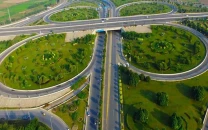
The top-down approach is evident from frequent design and route changes in the Lahore Ring Road, for example, over the past seven decades. The idea of Lahore Ring Road was originally conceived during the preparation of Master Plan for Greater Lahore in 1960s while its route alignment was identified in a study sponsored by the Swedish Government in 1980. However, frequent political interventions and dictatorial planning practices delayed the completion of the project under various governments alongside changing its economic, social and environmental justifications linking it with increased economic development. Completed in 2024, the project has still not meaningfully optimised industrial productivity, product supply chain management or economic growth in and around Lahore. As the road is primarily meant for cars, instead of aggrandising economic growth for common people, it has become merely a means of better connectivity, largely for car owners, thus benefiting the influential housing societies in Southern Lahore. Similar policy and planning trends may also be witnessed in many other highway projects in Pakistan. So far, the National Transport Policy 2018 could not sufficiently provide the requisite policy guidelines to the provinces. As a result, the provinces are making their own strategic contexts, transport policies, programmes and projects without holistically deeper research. The inability of planning processes to meaningfully engage affected stakeholders in the decision-making processes is also keeping the highways from significantly contributing to economic growth and productivity despite continuing investments.
As a way forward, the Ministry of Planning, Development & Special Initiatives needs to devise new planning processes in Pakistan's peculiar context in which road projects could effectively, honestly and meaningfully be consulted with all stakeholders at the four stages of initiation, preparation, participation and continuation. The start-up or the initiation stage is the most crucial dialogue-led step in meaningfully consulting the stakeholders rather than imposing the project on them by unjust use of power. This is one way of incorporating phronesis or practical wisdom in highways planning and policy processes. The Ministry of Planning also needs to meaningfully incorporate context-based knowledge in planning processes capable of identifying the tension points before initiating a roading project. That means the planning for the highways to be constructed in fiscal years 2029-2030, 2028-2029 and 2027-2028, for example, must start now by following the new bottom-up processes. Under the current planning framework in Pakistan, economic growth is a niche created and advanced by the powerful elite. The same needs to be reversed before expecting economic development from new highways.




1727268465-0/Untitled-design-(42)1727268465-0-208x130.webp "story")




This material may not be published, broadcast, rewritten, redistributed or derived from. Unless otherwise stated, all content is copyrighted © 2026 The Express Tribune.


COMMENTS
Comments are moderated and generally will be posted if they are on-topic and not abusive.
For more information, please see our Comments FAQ