Alphabet's SpaceX bet grows to $94b
Updated 7 hours ago

Chinese brands lead as nine full EVs, 11 plug-in hybrids prepare for launch
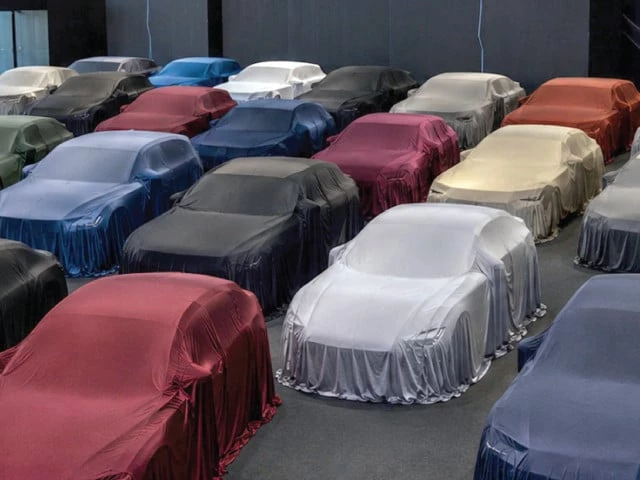
Despite persistent scepticism over whether electric vehicles (EVs) can gain meaningful traction in Pakistan amid infrastructure constraints, high upfront costs and concerns over power availability, the country's automobile sector appears set for its most significant transformation in decades.
Industry data compiled by Arif Habib Limited (AHL) indicates that around 23 new vehicle models are expected to enter the Pakistani market between June and December 2026, with electrified vehicles overwhelmingly dominating the pipeline. Of the planned launches, nine are fully electric vehicles (EVs), 11 are plug-in hybrid electric vehicles (PHEVs) or range-extended electric vehicles (REEVs), while only three are conventional internal combustion engine (ICE) models.
"In the listed space, recent launches include GAC's Aion V and Aion UT, while upcoming models ... underscore sustained new launches across multiple segments and price points," noted AHL.
The figures suggest that nearly 87% of upcoming launches will feature some form of electrified powertrain, highlighting a structural shift in the country's automotive landscape and underscoring the growing influence of Chinese manufacturers, which are leading the transition.
The upcoming lineup includes a mix of premium SUVs, crossovers, sedans, hatchbacks and pickup trucks. Industry observers say the breadth of offerings reflects increasing confidence among automakers that Pakistan is ready to embrace new-energy vehicles, even as overall automobile sales remain below their historical peaks.
The launch calendar begins with a busy June, when seven vehicles are expected to enter the market. These include the petrol-powered Changan UNI-S, Jetour T1 and Jetour T2, alongside the GWM Cannon Alpha and Omoda C7 plug-in hybrids. MG is also expected to introduce two fully electric vehicles, the IM5 and IM6.
July is set to feature four electrified launches, including the Jaecoo J8 PHEV, Nevo Q05 REEV, Deepal G318 REEV and the all-electric Nevo A06. August will bring the Ora 03 EV, Deepal Hunter K50 REEV and Avatr 11 EV, while September is expected to see the arrival of the Chery QQ3 electric hatchback and Deepal S09 REEV.
Another electric model, the Changan Lumin, is scheduled for October. Although no launches are expected in November, the year will conclude with a strong December lineup featuring six vehicles, including the Denza B5, BYD Sealion 6, Denza B8 and Nevo Q07 hybrids, as well as the Avatr 07 and Aion ES electric vehicles.
Analysts note that Chinese brands have emerged as the primary force behind Pakistan's EV transition. Companies such as BYD, GAC, Changan, Deepal, Avatr, Denza, Ora, Omoda and Jaecoo are rapidly expanding their presence through partnerships with local assemblers and distributors.
Recent launches in the listed space have further reinforced China's growing footprint in the market. Upcoming additions such as the Aion ES, Hyptec HT, Omoda C7, Jaecoo J8, Cannon Alpha, Sealion 6 and Denza series demonstrate the breadth of Chinese participation across multiple vehicle categories and price segments.
"The world-renowned and globally famous Chinese EV titans are entering Pakistan in high-profile joint ventures," said automobile industry expert and consultant Shafiq Ahmed Shaikh. He believes the transition is being driven by policy reforms and changing investment priorities.
Pakistan's automotive sector is undergoing a massive structural shift that began under the Auto Industry Development and Export Policy (AIDEP) 2021-26 and is expected to accelerate under the forthcoming Auto Policy 2026-31, according to him.
He said both existing and new automakers are reallocating investment from traditional petrol-powered vehicles toward EVs, PHEVs, REEVs, battery electric vehicles and hybrid technologies. Chinese manufacturers are establishing local assembly operations to support long-term growth.
Shaikh argued that the government's electrification strategy is also linked to broader economic objectives. Pakistan spends an estimated $10-15 billion annually on crude oil and liquefied natural gas imports, prompting policymakers to pursue measures aimed at reducing dependence on imported fuels.
The government's target is to save around $4.5 billion through the gradual electrification of the transport sector. Current incentives include a 1% customs duty on EV-specific, completely knocked-down (CKD) parts and a reduced 1% sales tax on locally manufactured EVs equipped with batteries below 50 kilowatt-hours.
Industry stakeholders also expect greater localisation as production volumes increase.
"The sector hopes to expand domestic vehicle manufacturing beyond 500,000 units annually by the end of the decade, while generating up to $1 billion in automotive exports through locally assembled right-hand-drive vehicles," Shaikh said.
Challenges remain, however. Limited charging infrastructure, affordability concerns and consumer hesitation continue to pose hurdles to widespread EV adoption. To address these issues, automakers and their partners are planning extensive charging networks and financing solutions aimed at making electric mobility more accessible.









This material may not be published, broadcast, rewritten, redistributed or derived from. Unless otherwise stated, all content is copyrighted © 2026 The Express Tribune.

1727268465-0/Untitled-design-(42)1727268465-0-208x130.webp "independence 2 0")


COMMENTS (1)
Comments are moderated and generally will be posted if they are on-topic and not abusive.
For more information, please see our Comments FAQ