Student kills 4 in Turkiye's second school shooting in two days
Updated 1 hour ago

Iran’s Revolutionary Guards said they would target US-linked industries, urging evacuations

United States President Donald Trump said on Monday that over 7,000 Iranian targets were hit as the conflict between the two countries drags on.
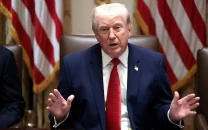
Trump was briefing reporters on the latest on Iran ahead of a lunch meeting with board members of the Trump Kennedy Centre. He said the US military operations in Iran had continued "in full force" over the past few days, adding that the US had stuck more than 7,000 targets across Iran.
"They have been literally obliterated," the US president said.
"Since the beginning of the conflict, we've struck more than 7000 targets across Iran. And these have been mostly commercial and military targets. We've achieved a 90% reduction in their ballistic missile launches and a 95% reduction in drone attacks."
He added that the US military hit three missile and drone manufacturing sites on Monday.
Meanwhile, Iran's Revolutionary Guards said they would target US industries in the region in the coming hours, asking people to evacuate nearby areas, Tasnim news agency reported.
"We warn the failed American regime to evacuate all American industries in the region, and we call on the people of the areas surrounding the industrial plants in which the Americans are shareholders to evacuate those areas so that no harm comes to them. These industries will be attacked and hit in the coming hours," the Guards said in a statement carried by the state media.
We warn "the defeated American regime" of the necessity to evacuate all American industries in the region, and we request that residents in areas surrounding industrial plants in which the United States holds shares leave them, for their own safety.
— True Promise - الوعد الصادق ✪🇮🇷 (@IRTruePromise) March 16, 2026
Within the coming hours, these…
Saudi Arabia dismisses media report about prolonged war
A Saudi Arabian source on Monday dismissed an alleged report by The New York Times about the kingdom's leadership encouraging the United States for a drawn out prolonged war with Iran, Al Arabiya reported.
NYT claimed in a report a day ago that Saudi Crown Prince Mohammed bin Salman was advising US President Donald Trump “to keep hitting the Iranians hard".
However, Al Arabiya reported that a "Saudi source" told the outlet today on Monday that the NYT report was "false".
A Saudi source tells Al Arabiya that a report by The New York Times claiming that the Kingdom’s leadership is encouraging a prolonged war with Iran is false. pic.twitter.com/YTRfv8Za0W
— Al Arabiya English (@AlArabiya_Eng) March 16, 2026
Iran FM demands prompt clarity
Earlier, Iranian Foreign Minister Abbas Araghchi demanded immediate clarity over what he said were reports of neighbouring countries "actively encouraging" attacks by the United States on his country.
In a post on X, he said: "Hundreds of Iranian civilians have been killed in Israel-US bombings, including over 200 children.
"Reports claim that some neighbouring states which host US forces and permit attacks on Iran are also actively encouraging this slaughter. Stances should be promptly clarified."
Hundreds of Iranian civilians have been killed in Israel-U.S. bombings, including over 200 children.
— Seyed Abbas Araghchi (@araghchi) March 16, 2026
Reports claim that some neighboring states which host U.S. forces and permit attacks on Iran are also actively encouraging this slaughter. Stances should be promptly clarified.
Iran has maritime borders with the Gulf states, which also host US bases.
Earlier, Iran vowed at the United Nations that it would not submit to "lawless aggression", and said its citizens were in "grave danger" from US and Israeli strikes.
At the UN Human Rights Council in Geneva, where countries were discussing the rights situation in Iran -- notably following its deadly crackdown on protesters in recent months -- Tehran said the focus instead should be on the Middle East war.
"The most urgent and fundamental human rights issue concerning Iran is the imminent threat to the lives of 90 million people whose lives are in immediate and grave danger under the shadow of reckless military aggression," said Ali Bahreini, Iran's ambassador to the UN in Geneva.
He called it "an aggression that is carried out by some of the most lawless and unscrupulous actors on the international stage".
Bahreini said that if such "reckless militarism" was met with indifference, "Iran will most certainly not be the last country to suffer such treatment".
During a session on Iran's record, Bahreini urged the UN's top rights body to instead discuss the Iranian cultural heritage under "indiscriminate" attack and "the innocent children massacred at their school desks".
The ambassador said more than 1,300 people had been killed in Iran and more than 7,000 injured since the US-Israeli strikes began.
"Under such circumstances, what exactly is Iran expected to do?" he asked, stating: "Iran is not a nation that submits to coercion, intimidation or lawless aggression."
Iran FM says ready to take war with Israel, US 'as far as' necessary
Iran's Foreign Minister Abbas Araghchi said on Monday that Tehran had shown it was ready to take the war with Israel and the United States as far as necessary.
"I think by now they have learned a good lesson and understood what kind of nation they are dealing with, one that does not hesitate to defend itself and is ready to continue the war wherever it may lead, and take it as far as necessary," said Araghchi during a weekly foreign ministry briefing.
Strait of Hormuz cannot be used to strike Iran: Esmaeil Baghaei
Iran’s Foreign Ministry spokesperson Esmaeil Baghaei on Monday said the Strait of Hormuz will not be open to any country seeking to strike Iran, adding that Iran’s armed forces control the passage and no country can use it to launch attacks on Iran.
He said the passage of ships through the strait would take place under special conditions due to insecurity created by Israel and the US in the region, Al Jazeera reported.
Baghaei said that Iran, as a coastal country, has the right to take necessary measures in the Strait of Hormuz to ensure national security and prevent what he described as aggressors from misusing the waterway.
He stated that Iran has historically been the guardian of safe passage through the strait but blamed the US and Israel for creating the current conditions.
According to Al Jazeera, Baghaei further said Iran never trusted the US during their talks. The spokesperson said that negotiations with the US had been conducted with Tehran’s eyes wide open and with absolute distrust of the other side.
He added that Iran had shown it does not hesitate to engage in talks despite what he described as US crimes being a stain on history.
Drone attack causes building fire in a northern emirate of UAE: statement
A drone attack caused a fire in a building in the north of the UAE on Monday, authorities said, amid a slew of nationwide attacks that disrupted Dubai's airport, hit an oil hub and killed a civilian.
"A building in the emirate of Umm Al Quwain was targeted by a drone, causing a fire but resulting in no injuries," the Umm Al Quwain Government Media Office said in a statement published by the official WAM news agency, without naming the building.
EU announces $525m in humanitarian aid for Middle East
The European Union has announced €458 million in humanitarian aid for the Middle East, Al Jazeera reported.
The aid comes in response to the conflicts in the region including the US-Israeli war with Iran and the Israeli attacks in Lebanon.
“In a war-torn Middle East, the European Union is stepping up while others step back,” said Hadja Lahbib, the EU’s commissioner in charge of humanitarian crises.
Iran needs to stop attacks: Qatar’s FM spokesperson
Qatar’s Foreign Ministry spokesman Majed al-Ansari told reporters in Doha that Iran needs to “stop the attacks” on the country, Al Jazeera reported.
Al-Ansari stated that Qatar’s coordination with Egypt and other Arab countries is part of broader Arab coordination and should not be interpreted as coordination under the framework of the Joint Arab Defence Agreement.
Qatar’s Foreign Ministry spokesman, Majed al-Ansari, has told reporters in Doha that Iran needs to “stop the attacks” on the country.
— Al Jazeera English (@AJEnglish) March 16, 2026
🔴Live updates: https://t.co/dZOxgiP3sK pic.twitter.com/gPG19pbzif
According to Al Jazeera, the spokesman said that Qatar had distanced itself from the Iran war, but clarified that it retains the right to respond to the Iranian attacks on the Gulf country if necessary.
Al-Ansari noted that early Saturday morning, a missile targeting a residential area was intercepted, prompting authorities to begin evacuating residents as precaution. He added that an Iranian media outlet stated that economic and civilian sites would be targeted, saying that Qatar takes such statements very seriously.
The spokesman further stated that there is currently no active mediation between the US and Iran, but emphasised the need for de-escalation, according to the Qatari news agency. Al-Ansari stressed that all parties must work collectively to reduce tension and allow wisdom to prevail, Al Jazeera reported.
Britain working with allies on plan to reopen Strait of Hormuz, Starmer says
Britain is working with its allies on a collective plan to reopen the Strait of Hormuz and restore freedom of navigation in the Middle East, British Prime Minister Keir Starmer said on Monday.
“Ultimately, we have to reopen the Strait of Hormuz to ensure stability in the oil market. That is not a simple task,” Starmer told reporters.
“We’re working with all of our allies, including our European partners, to bring together a viable collective plan that can restore freedom of navigation in the region as quickly as possible and ease the economic impact,” he added.
Mideast war 'nothing to do with NATO': German govt
The war in the Middle East started by US-Israeli strikes on Iran has "nothing to do with NATO" and is "not NATO's war", German Chancellor Friedrich Merz's spokesman said Monday.
"NATO is an alliance for the defence of territory" and "the mandate to deploy NATO is lacking" in the current situation, Merz's spokesman Stefan Kornelius told a regular press briefing.
Germany needed to know from Israel and the United States "at what point the military objectives in Iran will have been achieved", a foreign ministry spokesman said at the same briefing.
Merz said on Friday that the Middle East war must end "as soon as possible" as the conflict "benefits no-one and harms many economically, including us".
German Defense Minister Boris Pistorius rejected US President Donald Trump's call for military support in the war against Iran, stressing Germany's focus on diplomacy. Pistorius also downplayed concerns over NATO unity https://t.co/CDrJOd9Aqr pic.twitter.com/0gTGvLoAhL
— Reuters (@Reuters) March 16, 2026
At a separate briefing on Monday, Defence Minister Boris Pistorius said Germany wanted all those involved to prevent "further military escalation".
"There will be no military participation" from Germany but Berlin is prepared to support diplomatic efforts to "to ensure safe passage through the Strait of Hormuz", he said. "We have a situation which we did not provoke... This war started without any consultations," he added.
Germany's main responsibility is "for the eastern flank and the high north", Pistorius said, and "we stay committed to that but we can't be anywhere in the world".
"What does Donald Trump expect from a handful of European frigates in the Strait of Hormuz that the mighty US navy cannot manage alone? This is the question I find myself asking," he added.
Japan, Australia reject Trump demand to send warships to secure Hormuz
US President Donald Trump's demands for a coalition to help reopen the Strait of Hormuz appeared to fall on deaf ears on Monday as allies Japan and Australia said they were not planning to send navy vessels to the Middle East to escort ships through the vital waterway.
With the US-Israeli war on Iran creating turmoil across the Middle East and shaking up global energy markets in its third week, Trump on Sunday insisted that nations relying heavily on oil from the Gulf have a responsibility to protect the strait through which 20% of the world's energy transits.
Markets in Asia reacted cautiously, with Brent crude rising more than 1% above $104.50 and regional share markets mostly weaker amid concerns about the risk to Middle East oil facilities and after Trump's request for allies to get more involved.
"I’m demanding that these countries come in and protect their own territory because it is their territory," Trump told reporters aboard Air Force One on the way from Florida to Washington. "It’s the place from which they get their energy."
Trump said his administration has already contacted seven countries, but did not identify the countries. In a weekend social media post, he hoped China, France, Japan, South Korea, Britain and others would participate.
Japanese Prime Minister Sanae Takaichi, a staunch Trump supporter, said on Monday her country, constrained by its war-renouncing constitution, has no plan to dispatch naval vessels to escort ships in the Middle East from where it gets 95% of its oil.
🚨 TRUMP ISSUES NATO THREAT. 🇯🇵
— OSN - Observer Security Network (@OSN_Reports) March 16, 2026
TRUMP warned of a 'VERY BAD' future for NATO if allies don't secure the Strait of Hormuz. Japan stated NO immediate plans to dispatch forces, prioritizing de-escalation & legal review.#StraitOfHormuz #NATO
"We have not made any decisions whatsoever about dispatching escort ships. We are continuing to examine what Japan can do independently and what can be done within the legal framework," Takaichi told parliament.
Australia, another key Indo-Pacific security ally to the US that also relies heavily on fuels made with Middle Eastern crude, said it will not send naval ships to assist in reopening the strait either.
"We know how incredibly important that is, but that's not something that we've been asked or that we're contributing to," Catherine King, a member of Prime Minister Anthony Albanese's cabinet, said in an interview with state broadcaster ABC.
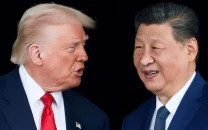
Trump told the Financial Times on Sunday he was expecting China to help unblock the strait before his scheduled meeting with Chinese President Xi Jinping in Beijing at the end of this month and might postpone his trip if it did not provide assistance.
“I think China should help too because China gets 90% of its oil from the Straits,” Trump said. “We may delay," he said in reference to his visit if China did not offer support in the Gulf.
The Chinese foreign ministry did not immediately respond to a Reuters request for comment.
Trump also ratcheted up pressure on European allies to help protect the strait, warning that NATO faces a “very bad” future if its members fail to come to Washington’s aid.
European Union foreign ministers will discuss on Monday bolstering a small naval mission in the Middle East but are not expected to decide on extending its role to the choked-off Strait of Hormuz, diplomats and officials say.
British Prime Minister Keir Starmer discussed the need to reopen the Strait with Trump, and with Canadian Prime Minister Mark Carney, a Downing Street spokeswoman said on Sunday, while South Korea has said it would carefully review Trump's request.
Global air travel remains severely disrupted due to the Iran war, which has closed or restricted key Middle Eastern hubs including Dubai, Doha and Abu Dhabi, forcing airlines to cancel thousands of flights and stranding tens of thousands of passengers.
Supplies of jet fuel are also becoming a concern, with authorities in Vietnam warning the country's aviation industry to prepare for potential flight reductions from April after China and Thailand halted exports of jet fuel due to the Iran war.
The disruption to energy markets caused by the Iran war is an "abject lesson" in the risks of relying on fossil fuels, according to the UN climate secretary.
"Fossil fuel dependency is ripping away national security and sovereignty, and replacing it with subservience and rising costs," Simon Stiell, Executive Secretary of the UN climate change arm UNFCCC, will tell EU officials and government ministers at an event in Brussels on Monday.
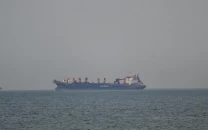
Although some Iranian vessels have continued to pass and a few ships from other countries have successfully made the crossing, the passage has been effectively closed for most of the world's tanker traffic since the United States and Israel attacked Iran on February 28.
Israel continued to launch strikes on Iran as well as Lebanon and Gaza, targeting militants from the Iran-backed Hezbollah and Hamas. The Israeli military said on Monday its troops had begun limited ground operations against positions in southern Lebanon held by Hezbollah.
Despite repeated claims from US authorities to have destroyed Iran's military capabilities, drone attacks continued to threaten Gulf states on Monday.
Dubai authorities said they had contained a fire but temporarily suspended flights at the airport after a drone attack hit a fuel tank. Saudi Arabia intercepted 34 drones in its eastern region in one hour, state media said. No injuries were reported in either incident.
US officials responding to economic uncertainty over high oil prices predicted on Sunday that the war with Iran would end within weeks and that a drop in energy costs would follow, despite Iran's assertion that it remains "stable and strong" and ready to defend itself.
Trump, who threatened more strikes on Iran's main oil export hub, Kharg Island, over the weekend, has said previously that Iran wants to negotiate and that the US was talking to Iran, but Iranian Foreign Minister Abbas Araqchi earlier on Sunday disputed that claim.
“We have never asked for a ceasefire, and we have never asked even for negotiations," Araqchi told CBS's "Face the Nation" program. "We are ready to defend ourselves for as long as it takes.”
Araghchi posted on his X account on Monday how Israel's attacks on oil depots are considered ecocide under international law, citing the long-term impacts on residents' health.
Israel's bombings of fuel depots in Tehran violate international law and constitute ecocide.
— Seyed Abbas Araghchi (@araghchi) March 16, 2026
Residents face long-term damage to their health and well-being. Contamination of soil and groundwater could have generational impacts.
Israel must be punished for its war crimes. pic.twitter.com/K9bU57ZBTC
Trump, who on Friday said the US Navy would "soon" start escorting oil tankers, has said previously that Iran wants to negotiate, but Araghchi earlier on Sunday disputed that claim.
School attacked in Iran’s Khomein city
Iran’s Fars news agency reported what it described as a US-Israeli attack on the Shahid Khomeini Boys’ School at dawn on Monday, publishing photos showing significant damage to a building.
The Mehr news agency later quoted a deputy governor of Iran’s Markazi province as saying a school in the city of Khomein had been attacked without causing casualties, though several nearby houses were damaged.
In a post on Telegram, the Iranian Red Crescent Society shared the same photos earlier published by Fars, with a caption reading: “Airstrike on a school in Khomein.”







This material may not be published, broadcast, rewritten, redistributed or derived from. Unless otherwise stated, all content is copyrighted © 2026 The Express Tribune.






COMMENTS (1)
Comments are moderated and generally will be posted if they are on-topic and not abusive.
For more information, please see our Comments FAQ