Founder of viral Indian Gen Z account alleges crackdown, threats
Updated 1 hour ago

Press Secretary Leavitt hails Pakistan’s role, says it has been an 'incredible mediator' throughout the process
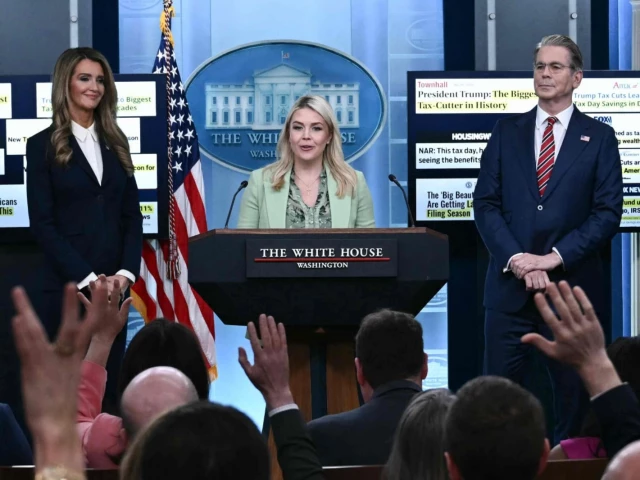
The United States is discussing holding a second round of peace talks with Iran in Pakistan and is optimistic about reaching a deal, the White House said on Wednesday.
"Those discussions are being had", and "we feel good about the prospects of a deal," Press Secretary Karoline Leavitt told reporters, adding that further talks "would very likely" be in Islamabad.
Commenting on reports regarding a US request for an extension of the ceasefire, Leavitt called them “bad reporting,” saying they were not true at this time.
“We remain very engaged in these negotiations, in these talks. You heard from the vice president directly and the president this week that these conversations are productive, and that’s where we are right now,” she said.
The press secretary also hailed Pakistan and its leadership for their role in the mediation.
“I just want to make one point that is important to the president: Pakistan has been an incredible mediator throughout this process, and we really appreciate their friendship and their efforts to bring this deal to a close. They are the only mediators in these negotiations,” she said.
She added that many countries had offered to help, but President Trump believed it was important to "continue and streamline communication" through Pakistan.
PRESS SEC on U.S.-Iran negotiations: The Pakistanis have been incredible mediators and we really appreciate their friendship and efforts to bring this deal to a close.
— Department of State (@StateDept) April 15, 2026
The President feels it's important to continue to streamline this communication through the Pakistanis. pic.twitter.com/3iIeF0oUpn
Trump says China agreed not to supply weapons to Iran
Meanwhile, United States President Donald Trump said that Beijing has agreed not to supply weapons to Iran, vowing to permanently reopen the Strait of Hormuz.
“China is very happy that I am permanently opening the Strait of Hormuz. I am doing it for them, also, and the world. This situation will never happen again,” Trump wrote on his Truth Social platform.
Trump said that China has "agreed not to send weapons to Iran”, adding that “President Xi [Jinping] will give me a big, fat, hug when I get there in a few weeks.”
His remarks came as Trump is set to travel to Beijing from May 14-15 for a meeting with President Xi Jinping, marking the US president’s first visit to China in his second term.
“We are working together smartly, and very well! Doesn’t that beat fighting? But remember, we are very good at fighting, if we have to — far better than anyone else,” he said.
After US-Iran talks in Islamabad seeking to end the conflict in the Middle East hit an impasse on early Sunday, Trump announced a naval blockade of the Strait of Hormuz, which took effect at 1400GMT Monday.
Iran says US message exchange via Pakistan continues as Pezeshkian insists Tehran 'does not seek war'
Meanwhile, Iranian Foreign Ministry spokesperson Esmaeil Baghaei said a Pakistani delegation might arrive in Iran today, while President Masoud Pezeshkian insisted that "Iran does not seek war or instability."
A Pakistani delegation will probably arrive in Iran on Wednesday and pass on messages from the US in a continuation of talks between Tehran and Washington, spokesperson Baghaei said in a weekly press conference carried by state media.
Exchanges of messages continued after the Iranian delegation returned home from US-Iranian talks that were hosted by Pakistan on Saturday, he added.
Earlier, President Pezeshkian said that Iran did not seek war but dialogue, and that any attempt by the US to impose its will or force Iran to surrender will fail, according to IRNA.
“Iran does not seek war or instability” and has emphasised dialogue and constructive engagement with other countries, Pezeshkian said. He went on to add that “any attempt to impose will or force the country into submission is doomed to fail, and the Iranian nation will never accept such an approach”.
According to the IRNA, he criticised the double standards in international conduct. “What justification is there in targeting civilians, elites, children and destroying vital centres, including schools and hospitals, within the framework of international law and humanitarian principles?”
Trump says war 'very close to over' as US shuts down Iran's maritime trade
Trump, in an interview to be aired today, said the US-Israeli war on Iran is "close to over”.
"I think it's close to over, yeah. I mean, I view it as very close to over," Trump told Fox Business anchor Maria Bartiromo when asked if the war is "over".
A video excerpt of the interview was shared on X.
US President Donald Trump says the war with Iran is "close to over."
— Aditya Raj Kaul (@AdityaRajKaul) April 15, 2026
pic.twitter.com/VCt6OC9Ata
"You know what, if I pulled up stakes right now, it would take them 20 years to rebuild that country, and we're not finished. We'll see what happens. I think they want to make a deal very badly," Trump added.
Earlier, Bartiromo said in a video on Instagram that Trump repeatedly referred to the Iran war in the past tense during their interview, prompting her to ask directly: "Is it over?"
"He said: ‘It’s over,’" Bartiromo said, describing the exchange.
Naval blockade will trigger retaliation
According to Iran's semi-official Tasnim News Agency, the Commander of Iran’s Khatam al-Anbia Central Headquarters warned the US that the naval blockade violates the ceasefire, saying if the blockade continues, Iran will prevent all export and import processes in the Persian Gulf, the Sea of Oman, and the Red Sea.
"If the aggressive and terrorist US continues its illegal action in enforcing a maritime blockade in the region and creating insecurity for Iranian commercial vessels and oil tankers, this action by the US will be a precursor of violation of the ceasefire, and the powerful Armed Forces of Iran will not allow any exports or imports in the Persian Gulf region, the Sea of Oman, and the Red Sea to continue," Major General Ali Abdollahi said in a statement released on Wednesday.
"Iran will take decisive action to defend its national sovereignty and interests,” he said.
Trade halted amidst fragile optimism
The US said its military had completely halted trade going in and out of Iran by sea, even though Trump said talks with Tehran on ending the war could resume this week.
Trump said he is not considering extending the current ceasefire with Iran, ABC News reporter Jonathan Karl said on Tuesday.
Trump does not think the extension will be necessary, Karl said on X.
"I think you’re going to be watching an amazing two days ahead," Trump said. "I really do."
President Trump told me today he isn't thinking about extending the ceasefire. He doesn't think it will be necessary.
— Jonathan Karl (@jonkarl) April 15, 2026
"I think you’re going to be watching an amazing two days ahead," he said. "I really do."
I asked if the war ends with a deal, or "do you just say, look, we…
According to Karl, Trump indicated that the conflict could conclude either through a negotiated settlement or through military action that eliminates Iran’s capabilities.
"It could end either way, but I think a deal is preferable because then they can rebuild. They really do have a different regime now. No matter what, we took out the radicals. They’re gone, no longer with us," Trump was quoted as saying.
Trump made "this extraordinary claim" about his role on the global stage, said Karl.
"If I weren’t president, the world would be torn to pieces," he cited him as saying.
Trump said negotiations between US and Iranian officials could resume in Pakistan in the next two days, and Vice President JD Vance, who led weekend talks that ended without a breakthrough, said he felt positive about where things stood.
Officials from Pakistan, Iran and the Gulf also said negotiating teams from the US and Iran could return to Pakistan later this week, although one senior Iranian source said no date had been set.
Read: Pakistan moves toward quad framework
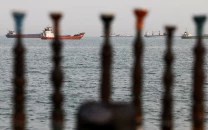
Despite the optimistic note, more vessels were being turned back under the US blockade on Iranian ports, including a US-sanctioned and Chinese-owned tanker Rich Starry that was making its way back to the Strait of Hormuz on Wednesday after exiting the Persian Gulf.
Admiral Brad Cooper, the head of the US Central Command, said American forces had completely halted economic trade going in and out of Iran by sea, which he said fuels 90% of Iran's economy.
"In less than 36 hours since the blockade was implemented, US forces have completely halted economic trade going into and out of Iran by sea," Cooper said in a post on X.
Statement from Adm. Brad Cooper, CENTCOM commander: pic.twitter.com/dJxKJcEcmO
— U.S. Central Command (@CENTCOM) April 15, 2026
Earlier, the US military said it had intercepted eight Iran-linked oil tankers since the start of the blockade on Monday, according to the Wall Street Journal.
Return to Islamabad
Trump, speaking to the New York Post on Tuesday, said his negotiators are likely to be back, thanks largely to the "great job" Field Marshal Asim Munir was doing to moderate the talks.
Later on Tuesday, at an event in Georgia, Vance said Trump wanted to make a "grand bargain" with Iran, but there was a lot of mistrust between the two countries.
"You are not going to solve that problem overnight," he said.
Read More: Trump and Modi stress need to keep Strait of Hormuz open in call
The signs of diplomatic engagement to end the conflict that began on February 28 helped calm oil markets, pressing benchmark prices down for a second day on Wednesday. Asian stocks rose while the safe-haven dollar stabilised after falling for a seventh straight session overnight.
The war has prompted Iran to effectively shut the Strait of Hormuz, a crucial global waterway for crude and gas transport and cut shipments from the Gulf to global buyers, particularly in Asia and Europe.
About 5,000 people have died in the hostilities, including about 3,000 in Iran and 2,000 in Lebanon.
Sticking points
Iran's nuclear ambitions were a key sticking point at the weekend talks. The US had proposed a 20-year suspension of all nuclear activity by Iran, while Tehran had suggested a halt of three to five years, according to people familiar with the proposals.
Speaking in Seoul, the head of the International Atomic Energy Agency, Rafael Grossi, said the length of any moratorium on Iranian uranium enrichment was a political decision, and it was possible Tehran might accept a compromise as a confidence-building act.
Also Read: China's Xi puts forward 4-point proposal on promoting Middle East peace, stability
The US has also pressed for any enriched nuclear material to be removed from Iran, while Tehran has demanded that international sanctions against it be removed.
One source involved in the negotiations in Pakistan said back-channel talks since the weekend had produced progress in closing that gap, bringing the two sides closer to a deal that could be put forward at a new round of talks.
However, in a major complication for peace prospects, Israel has continued to attack Lebanon as it targets Hezbollah, an Iran-backed militant group. Israel and the US say that the campaign is not covered by the ceasefire, while Iran insists it is.
On Tuesday, the UK, Canada, Japan and seven other countries condemned the killings of UN peacekeepers in Lebanon and called for "an urgent end to hostilities".
The statement comes after the deaths of three Indonesian peacekeepers last month. The countries welcomed the ceasefire agreed between the US, Israel and Iran.





This material may not be published, broadcast, rewritten, redistributed or derived from. Unless otherwise stated, all content is copyrighted © 2026 The Express Tribune.








COMMENTS (1)
Comments are moderated and generally will be posted if they are on-topic and not abusive.
For more information, please see our Comments FAQ