Three die in British navy helicopter crash
Updated 48 minutes ago

Saudi Arabia agreed to ship about 50 million barrels of crude oil already allocated to South Korean companies
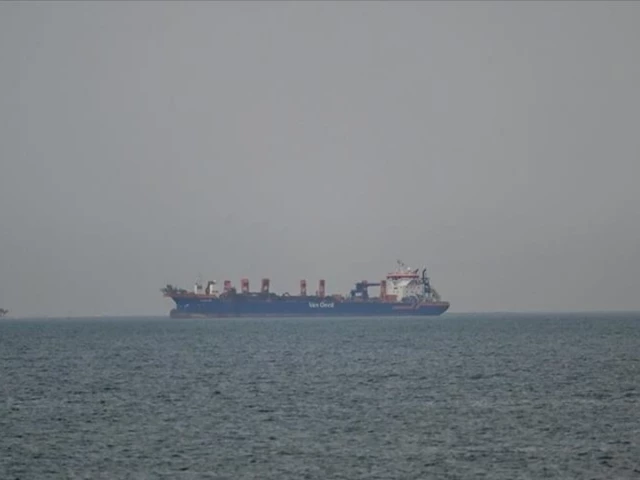
South Korea secured 273 million barrels of crude oil from the Middle East and Kazakhstan through the end of the year, with supplies routed outside the Strait of Hormuz, presidential chief of staff Kang Hoon-sik said on Wednesday.
Asia's fourth-largest economy has also secured 2.1 million metric tons of naphtha over the same period, Kang said at a press briefing following his visit as a special presidential envoy to Kazakhstan, Oman, Saudi Arabia and Qatar over the past week.
"In particular, the crude oil and naphtha secured this time will be sourced through alternative supply routes unrelated to the closure of the Strait of Hormuz, and will therefore make a direct and tangible contribution to stabilising domestic supply," Kang said.
Read: Trump says Iran war is ‘close to over’ amid optimism about next round of talks in Islamabad
Saudi Arabia had agreed to ship about 50 million barrels of crude oil already allocated to South Korean companies, using alternative ports near the Red Sea in April and May, Kang said.
Riyadh had also pledged to prioritise South Korean companies in allocating and shipping 200 million barrels of crude oil between June and the end of the year, and promised to supply as much naphtha as possible through year-end, including 500,000 tons requested by South Korea's government, he said.
Kang said Kazakhstan would supply 18 million barrels of crude oil, while Oman has promised 5 million barrels of crude oil and 1.6 million tons of naphtha.
He said the secured crude oil would be sufficient to power the economy for more than three months under normal conditions based on last year’s usage, while the naphtha volumes were equivalent to about one month of imports.
Kang said the oil and naphtha would be sourced from alternative supply routes not affected by a potential closure of the Strait of Hormuz.
He described his trip as driven by the urgent need to secure key energy supplies amid what he called an economic emergency triggered by the conflict in the Middle East.
South Korea relied on the Strait of Hormuz for 61% of its crude oil imports and 54% of its naphtha imports last year, Kang said, adding the government could not afford to wait passively for the regional situation to improve.
President Lee Jae Myung conveyed deep concern over the prolonged Middle East conflict in letters sent to the leaders of the countries visited, expressing solidarity and calling for joint efforts to address the energy security crisis, Kang said.
South Korea also held discussions with oil producers, including Saudi Arabia and Oman on cooperation in areas such as constructing bypass pipelines and building oil storage facilities outside the Strait of Hormuz to mitigate risks from a potential blockade.
With additional funding allocated to expand domestic storage facilities, Kang said joint stockpiling with major oil producers could be expanded, helping secure stable supplies.









This material may not be published, broadcast, rewritten, redistributed or derived from. Unless otherwise stated, all content is copyrighted © 2026 The Express Tribune.






COMMENTS
Comments are moderated and generally will be posted if they are on-topic and not abusive.
For more information, please see our Comments FAQ