Three die in British navy helicopter crash
Updated 3 hours ago

Says Iran calls on brotherly neighbours to expel foreign aggressors
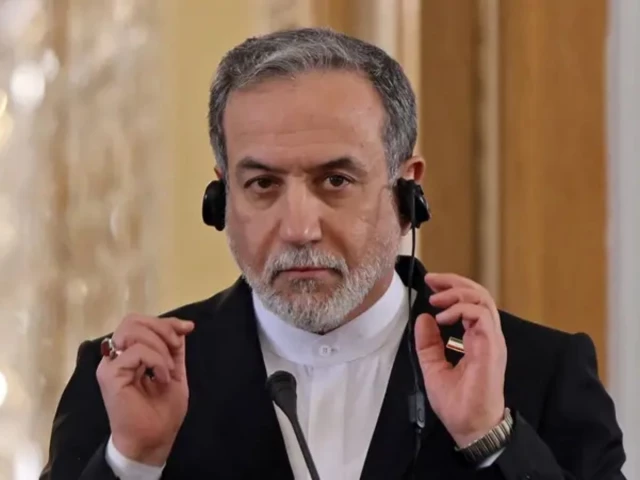
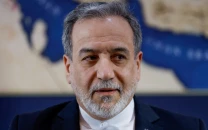
Iranian Foreign Minister Abbas Araghchi mocked the United States on Saturday, claiming that it was now "begging others" to make the Strait of Hormuz safe again.
In a post on X, he said: "Touted US security umbrella has proven to be full of holes and inviting rather than deterring trouble. US is now begging others, even China, to help it make Hormuz safe. Iran calls on brotherly neighbours to expel foreign aggressors, especially as their only concern is Israel."
Touted US security umbrella has proven to be full of holes and inviting rather than deterring trouble. US is now begging others, even China, to help it make Hormuz safe.
— Seyed Abbas Araghchi (@araghchi) March 14, 2026
Iran calls on brotherly neighbors to expel foreign aggressors, especially as their only concern is Israel.
Similarly, Alireza Tangsiri, naval commander of the Islamic Revolutionary Guard Corps (IRGC), said: "The Americans falsely claimed to have destroyed Iran's navy. Then they falsely claimed to be escorting oil tankers. Now they are asking others for reinforcements. Of course, we remind that the Strait of Hormuz has not yet been militarily closed — it is merely being controlled."
Commander of IRGC Navy Alireza Tangsiri:
— True Promise - الوعد الصادق ✪🇮🇷 (@IRTruePromise) March 14, 2026
The Americans falsely claimed to have destroyed Iran's navy. Then they falsely claimed to be escorting oil tankers. Now they are asking others for reinforcements. Of course, we remind that the Strait of Hormuz has not yet been militarily… pic.twitter.com/c8oKDNs4ll
Araghchi also separately said that US attacks on Kharg island on Friday made it "crystal clear that they are using the territory of our neighbours to attack us by this kind of rockets, and this is absolutely unacceptable".
He said the attacks were tracked by Iranian forces. "Now it is clear that they are fired from the UAE — from two locations in the UAE — from Ras Al Khaimah and from a location very close to the city of Dubai. And it is very dangerous that they use highly populated areas to launch rockets against us," Araghchi added.
Iran's Foreign Minister Abbas Araghchi:
— Clash Report (@clashreport) March 14, 2026
Last night, they have attacked Kharg Island and Abu Musa Island with the artillery rocket system, HIMARS as they call it, which is a low-range rocket system.
And they have done it from the soil of our neighbors. This is crystal clear that… pic.twitter.com/P7LblrSMV1
Earlier, President Masoud Pezeshkian vowed to rebuild everything destroyed in air strikes by Israel and the US even better than before as the conflict in the Middle East grinds on.
In a post on X, he said: "Fifteen days have passed since the imposed and unjust war, and despite the transportation, communication, and other challenges, thanks to our colleagues in the government, no serious disruption in service delivery to the people has occurred. With the companionship of you noble people of Iran, we will overcome these conditions and rebuild everything they have destroyed even better than before."
با گذشت ۱۵ روز از جنگ تحمیلی ظالمانه علیرغم مشکلات حمل و نقل، ارتباطات و ... به لطف همکاران ما در دولت وقفه جدی در خدمت رسانی به مردم ایجاد نشده است. با همراهی شما مردم نجیب ایران این شرایط را سپری خواهیم کرد و هرچه را که ویران کردهاند بهتر از قبل خواهیم ساخت. #دولت_پای_کار_مردم
— Masoud Pezeshkian (@drpezeshkian) March 14, 2026
The comments came after US President Donald Trump said that warships from the American military and other countries were on their way to ensure the Strait of Hormuz remained "open and safe" for traffic.
He also said the US would continue to bomb the Iranian shoreline and the country's boats and ships.
"One way or the other, we will soon get the Hormuz Strait OPEN, SAFE, and FREE!" - President DONALD J. TRUMP pic.twitter.com/8XzG2aTmQT
— The White House (@WhiteHouse) March 14, 2026
He earlier threatened to strike the oil infrastructure of Iran's Kharg Island hub unless Tehran stopped attacking vessels in the Strait of Hormuz, a warning that could further roil markets coping with a historic supply disruption.
Trump paired his Friday ultimatum with a social media post saying the U.S. had "totally obliterated" military targets on the island, the export terminal for 90% of Iran's oil shipments, which lies about 500 kilometres northwest of the strait.
US President Donald Trump said Iran has been “totally defeated” in the ongoing US-Israeli military campaign, claiming Tehran had sought a deal he would not accept even as Iranian officials vowed to continue attacks.
“The Fake News Media hates to report how well the United States Military has done against Iran, which is totally defeated and wants a deal – But not a deal that I would accept!” Trump wrote on Truth Social.
His remarks came after reports of heavy US strikes on Iran’s key oil hub, Kharg Island. Trump described the operation as “one of the most powerful bombing raids in the History of the Middle East.”
He also warned Iran against disrupting shipping in the strategic Strait of Hormuz.
“However, should Iran, or anyone else, do anything to interfere with the Free and Safe Passage of Ships through the Strait of Hormuz, I will immediately reconsider this decision,” Trump said.
Trump added that the US Navy would begin escorting oil tankers through the Strait of Hormuz “very soon” in a bid to ensure the safe movement of energy supplies.
The escalation comes amid widening regional tensions. The US Embassy in the Iraqi capital Baghdad was hit in a missile attack on Saturday, Iraqi security sources told Reuters.
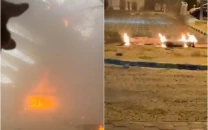
Smoke rises from US embassy in Baghdad following air strikes
— Press TV 🔻 (@PressTV) March 14, 2026
Follow: https://t.co/mLGcUTS2ei pic.twitter.com/XWU5uvHubd
The strike caused smoke to rise from the embassy building, the sources said, without providing details on the extent of the damage.
مصدر أمني عراقي للجزيرة: الهجوم على السفارة الأمريكية ببغداد تسبب بتدمير منظومة الدفاع الجوي فيها#الأخبار pic.twitter.com/dDwL06kzlM
— قناة الجزيرة (@AJArabic) March 14, 2026
An Iraqi security source told Al Jazeera that the attack destroyed the embassy’s air defence system.
Meanwhile, Iran said it had shot down five drones over its airspace, bringing the total number of US and Israeli drones it claims to have downed during the war to 114, according to Iranian state television.
Earlier, Trump had threatened to order strikes on the petroleum infrastructure of Kharg Island if Iran did not halt attacks on vessels passing through the Strait of Hormuz, a vital shipping lane for global energy supplies.
In a social media post, Trump said US forces had “totally obliterated” military targets on the island, which serves as the export terminal for about 90% of Iran’s oil shipments and lies roughly 300 miles (483 kilometres) northwest of the strait.
US President Trump released video showing U.S. forces bombing Iran’s Kharg Island, which handles roughly 90 % of the country’s oil exports. pic.twitter.com/KcM20PpR38
— Defence Index (@Defence_Index) March 14, 2026
US strikes did not target Kharg's oil infrastructure, but "should Iran, or anyone else, do anything to interfere with the Free and Safe Passage of Ships through the Strait of Hormuz, I will immediately reconsider this decision," Trump wrote.
The US attacked Kharg Island, where Iran handles 85–90% of its oil exports. Trump claims he "totally obliterated" the military infrastructure on the island. If the US destroys the energy facilities on Kharg Island, Iran's predictable response will be to attack all energy… pic.twitter.com/jhIJ9r1tex
— Glenn Diesen (@Glenn_Diesen) March 14, 2026
Iran had no ability to defend against US attacks, the president added. "Iran’s Military, and all others involved with this Terrorist Regime, would be wise to lay down their arms, and save what’s left of their country, which isn’t much!" he posted on Truth Social.
Iran's armed forces responded on Saturday by saying any strike on their country's oil and energy infrastructure would lead to strikes on facilities owned by oil companies cooperating with the United States in the region, Iranian media reported.
Read More: Trump adviser urges US to ‘declare victory and exit’ Iran war
Iran's semi-official Fars news agency reported, citing sources, that more than 15 explosions were heard on Kharg Island during the US attacks. The sources said the attacks targeted air defences, a naval base, and airport facilities, but caused no damage to oil infrastructure.
Markets were watching for any sign that US strikes had damaged the island's intricate network of pipelines, terminals and storage tanks. Even minor disruptions could further tighten global supply, adding pressure to an already volatile market.
In other strikes across the region, Iran's Revolutionary Guard said early Saturday that it had carried out additional attacks on Israel with Lebanon's Hezbollah militia, Iran's Tasnim news agency reported.
Moment Iran's IRGC aerospace launched swarm of drones at US-Israeli positions
— Press TV 🔻 (@PressTV) March 14, 2026
Follow: https://t.co/mLGcUTS2ei pic.twitter.com/Kl841Jjq41
On Friday, the Israeli military said its air force had struck more than 200 targets in western and central Iran over the past day, including ballistic missile launchers, air-defence systems and weapons production sites.
US forces have suffered casualties. The US military on Friday confirmed that all six crew members aboard a refuelling aircraft that crashed in western Iraq were dead.
Five US Air Force tankers at a base in Saudi Arabia had been damaged by an Iranian missile strike and were being repaired, reported The Wall Street Journal, citing US officials.
Read: Pakistani forces intercept Afghan Taliban drones, vow firm response to cross-border terrorism
Oil prices have swung sharply on Trump's changing comments about the likely duration of the war, which began on February 28 with massive US and Israeli bombardments of Iran and quickly spread into a regional conflict with broad consequences for worldwide energy and stock markets.
Lebanon became an escalating flashpoint in the war, with Israel's military and Hezbollah forces exchanging strikes in and around Beirut.
In addition to Iran's missile and aerial drone attacks on Israel and Gulf state allies of the US, Iran's Islamic Revolutionary Guard Corps has sought to disrupt shipping through the Strait of Hormuz, a conduit for 20% of the world's fossil energy supplies.
Trump told reporters on Friday the US Navy will "soon" start escorting tankers through the waterway.
Although he has previously said the war would last only weeks, Trump on Friday declined to publicly project an end date for the conflict.
"I can't tell you that," he said to reporters. "I mean, I have my own idea, but what good does it do? It'll be as long as it's necessary."
Iran continued to export crude oil while other producers in the Gulf halted their shipments for fear of Iranian attacks.
Multiple very large crude oil tankers were loading at Kharg on Wednesday, according to satellite imagery reviewed by TankerTrackers.com. Iran exported between 1.1 million barrels per day and 1.5 million bpd from February 28 to Wednesday.
Bob McNally, president of Rapidan Energy Group, said Trump's comments on Friday "will focus the market's mind on pathways that this energy disruption, already history's largest, could expand and last longer."
Some energy industry observers expressed doubts that Kharg's oil facilities would stay intact.
“Bombing Kharg Island but not the oil infrastructure is like going to McDonald's and getting a hamburger with no meat,” said Josh Young, chief investment officer at Bison Interests. "What's the point?"
Iran's new supreme leader, Mojtaba Khamenei, in his first public comments on Thursday, vowed to keep the Strait of Hormuz shut and urged neighbouring countries to close US bases on their territory or risk being attacked themselves.
European powers are trying to work out how to defend their interests, and France has been consulting with European, Asian and Gulf Arab states over the past week with a view to putting together a plan for warships eventually to escort tankers through the strait, French officials said.
After nearly two weeks of war, 2,000 people have been killed, most in Iran, but many in Lebanon and a growing number in the Gulf, which has, for the first time in decades of Middle East conflicts, found itself on the front line.
Several million people have been displaced from their homes. As Israeli warplanes pounded Beirut's suburbs with air strikes, Lebanon's interior minister said authorities were unable to accommodate the hundreds of thousands of people who had sought refuge in the capital.
US Defense Secretary Pete Hegseth said on Friday Iran's new leader was wounded and likely disfigured, questioning Khamenei's ability to govern.
No images have been released of Khamenei since an Israeli strike at the start of the war that killed much of his family, including his father and wife. Iran says the new supreme leader was wounded, but an official said on Friday he was not "impaired."




This material may not be published, broadcast, rewritten, redistributed or derived from. Unless otherwise stated, all content is copyrighted © 2026 The Express Tribune.






COMMENTS
Comments are moderated and generally will be posted if they are on-topic and not abusive.
For more information, please see our Comments FAQ