Kim Kardashian expands TV empire with 'Team Moms' on Paramount+
Updated 7 hours ago

Nearly 10000 writers published an empty protest book accusing AI companies of exploiting their work without consent
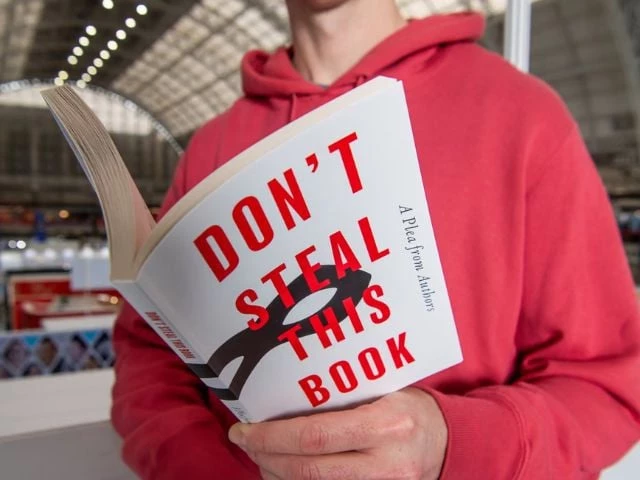
A massive protest against artificial intelligence has erupted in the publishing world after thousands of writers released a deliberately empty book to accuse AI companies of using their work without permission.
The unusual project, titled Don’t Steal This Book, contains no essays, stories or chapters. Instead, its pages simply list the names of roughly 10000 authors who have joined the campaign demanding stronger protections for creative work in the age of AI.

Among the contributors are major literary figures including Kazuo Ishiguro, Philippa Gregory and Richard Osman, as well as bestselling writers such as Marian Keyes and historian David Olusoga. The protest book is being distributed to attendees at the London Book Fair, turning one of the industry’s biggest gatherings into a stage for the growing conflict between authors and AI developers.
The project was organised by composer and campaigner Ed Newton-Rex, who has become a prominent voice in the debate over how artificial intelligence systems are trained. He argues that many generative AI tools rely on massive datasets built from copyrighted books, music and images scraped from the internet without consent or payment.
Newton-Rex said the book was designed to make a blunt statement about what he calls the exploitation of creative work by technology companies. According to him, the AI industry has been built on material taken without permission, placing writers and other artists in direct competition with machines trained on their own creations.
The protest comes as the UK government prepares to release an economic assessment of potential changes to copyright law that could affect how AI companies use creative content. One proposal under consideration would allow AI firms to train their systems on copyrighted material unless creators actively opt out, a suggestion that has sparked fierce backlash from artists and publishers.
Many authors argue the burden should be on AI developers to obtain licences and compensate creators rather than forcing writers to police how their work is used online. Critics fear that loosening copyright rules could undermine the livelihoods of authors whose books may be used to train chatbots and other AI systems.
By releasing an empty book filled only with names, the participating writers hope to send a stark message: the creative industry is watching closely as governments and technology companies battle over who truly owns the words that power artificial intelligence.













This material may not be published, broadcast, rewritten, redistributed or derived from. Unless otherwise stated, all content is copyrighted © 2026 The Express Tribune.






COMMENTS
Comments are moderated and generally will be posted if they are on-topic and not abusive.
For more information, please see our Comments FAQ