How power, politics and fear reshaped our universities
Updated 22 hours ago

Pakistan is a unique country that has rarely been swayed by shifting tides

The conflict between Iran and the US-Israel combine has effectively placed the world on pause. The rules governing trade and commerce are being rewritten. Interestingly, the beneficiaries of the existing system appear to be the losers of today. Nothing in global politics is permanent.
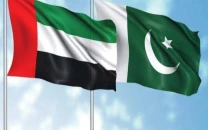
Pakistan is a unique country that has rarely been swayed by shifting tides. It possesses a distinctive capacity to navigate even the most turbulent times. It's hardcore, old-fashioned diplomacy operates on sincerity, transparency and realism. This textbook diplomacy has, in today's chaotic circumstances, placed Pakistan in a relatively favourable position.
Despite Iran being under sanctions for more than five decades, Pakistan has never been forced into choosing sides. The US has not pushed Pakistan beyond certain limits, and Gulf countries have similarly avoided forcing Pakistan into difficult tests of allegiance. In general, all actors involved in this conflict have, perhaps unintentionally, provided Pakistan with room to manoeuvre. There have been no rigid demands, no forced allegiances, and no unlimited partnerships. This is the dividend of long-term, principled diplomacy.
The current crisis presents multiple opportunities for Pakistan. One prominent example is the uncertainty surrounding the Strait of Hormuz and the broader Middle East. Pakistan has promptly positioned itself as an attractive destination for global cargo traffic by amending regulations and offering incentives to shipping lines and international airlines. No nation involved in current conflict has apparently had any problem with this move; rather it is being encouraged to hold the global supply chain.
It was once difficult to imagine a scenario in which Port Qasim, Gwadar and Karachi Port could operate at or near full capacity, handling significant international cargo flows. Yet the current regional disruptions are beginning to make such possibilities less hypothetical. Similarly, Karachi Airport is gradually positioning itself as a more active transit point in an increasingly constrained regional airspace.
Assessments from experienced diplomats indicate that Pakistan is being presented with a rare set of strategic openings. The appropriate response, however, is not rhetorical optimism but calibrated engagement. Pakistan's foreign policy must continue to prioritise clear, transparent and interest-driven communication with both regional and global actors. Dialogue should remain instrumental - used to exchange information, manage tensions and prevent miscalculations. Strengthening institutional presence through embassies and consulates, alongside measured public diplomacy initiatives, can incrementally build trust without overexposure.
At the same time, Pakistan needs to diversify its external engagements. Greater coordination with Central Asian and Far Eastern states in trade, security and environmental cooperation is no longer optional but necessary. Eastern Europe, long treated as peripheral, requires renewed attention. In this context, Russia can serve as a functional entry point, given its enduring influence across several former Soviet republics.
Since the end of the Cold War, Pakistan's diplomatic focus has remained disproportionately centered on the Middle East and the Global North, while maintaining strategic continuity with China. This imbalance has constrained engagement with former Soviet states, limiting Pakistan's ability to expand economic linkages or secure advantageous partnerships.
Instead, a significant portion of strategic energy was absorbed by prolonged involvement in Afghanistan. This orientation was rooted in a post-Cold War assumption that US dominance would persist, with China acting as the primary counterweight. The resulting alignment during the Afghan conflict produced consequences that continue to shape Pakistan's internal security landscape.
The present moment, however, reflects a systemic shift. Power is diffusing, alignments are becoming fluid, and rigid blocs are giving way to transactional engagements. In such an environment, Pakistan's relative strategic restraint and continuity of policy are beginning to yield space rather than constraints.
The challenge now is not the absence of opportunity, but the discipline required to convert it into durable advantage.












This material may not be published, broadcast, rewritten, redistributed or derived from. Unless otherwise stated, all content is copyrighted © 2026 The Express Tribune.

COMMENTS (2)
Comments are moderated and generally will be posted if they are on-topic and not abusive.
For more information, please see our Comments FAQ