Kim Kardashian expands TV empire with 'Team Moms' on Paramount+
Updated 2 hours ago

Celebrated director of Sátántangó and The Turin Horse shaped global art house cinema with stark, slow-paced films
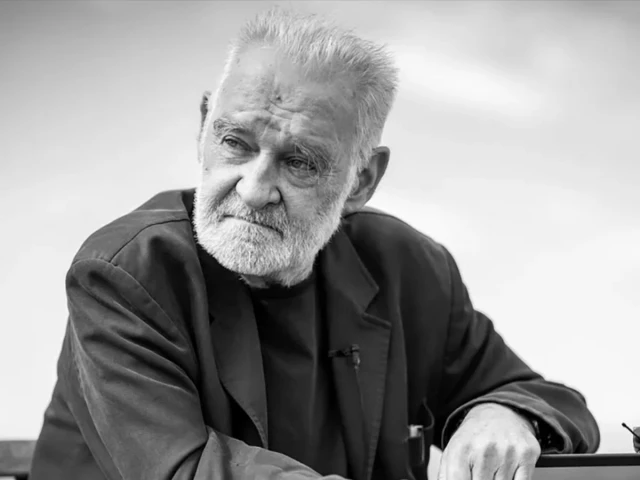
Béla Tarr, the acclaimed Hungarian film director known for his austere, visually striking style and lengthy, meditative films, has died at the age of 70. His death was confirmed Tuesday by the Hungarian Filmmakers’ Association, which said Tarr passed away after a prolonged illness.
Tarr was celebrated for directing influential works such as Sátántangó, Werckmeister Harmonies, Damnation, and The Turin Horse. Over the course of his career, he wrote and directed nine feature films, beginning with Family Nest in 1979 and concluding with The Turin Horse in 2011.
Tarr’s final film, The Turin Horse, earned the Silver Bear Jury Grand Prize at the Berlin International Film Festival. His earlier debut, Family Nest, was completed when he was just 23 years old and won the Grand Prize at the Mannheim-Heidelberg International Film Festival.
Tarr frequently collaborated with Hungarian novelist László Krasznahorkai, whose works served as the basis for several of the director’s films, including Sátántangó and Werckmeister Harmonies. The films received widespread international recognition and were screened at major festivals across Europe and Asia. Tarr also held honorary teaching positions at universities in China.
Born in 1955 in the southern Hungarian city of Pécs, Tarr spent much of his life in Budapest. His films were widely known for their extended runtimes, deliberate pacing, black-and-white cinematography, and long, uninterrupted takes. Sátántangó, his longest film, runs more than seven hours and is often cited as a defining example of his cinematic approach.
Critics and filmmakers have described Tarr’s work as deeply influential within art house cinema. Directors including Gus van Sant and Jim Jarmusch have previously acknowledged his impact on their own filmmaking.
Tarr worked closely with editor and longtime collaborator Ágnes Hranitzky, who edited all of his films from The Outsider onward. She also shared co-directing credit on his final three features: Werckmeister Harmonies, The Man from London, and The Turin Horse.
Beyond filmmaking, Tarr was outspoken on political issues, frequently criticizing nationalism and populist leadership, including Hungarian Prime Minister Viktor Orbán. He also publicly opposed Hungary’s cultural policies and supported students protesting government reforms at Budapest’s University of Theatre and Film Arts in 2020.
After retiring from feature filmmaking, Tarr relocated to Sarajevo, where he founded a film academy known as film.factory. He later produced films by students from the program and divided his time between Sarajevo and Budapest.
Tarr’s death marks the loss of a singular voice in international cinema, remembered for reshaping the language and rhythm of modern art film.














This material may not be published, broadcast, rewritten, redistributed or derived from. Unless otherwise stated, all content is copyrighted © 2026 The Express Tribune.






COMMENTS
Comments are moderated and generally will be posted if they are on-topic and not abusive.
For more information, please see our Comments FAQ