<?xml version="1.0" encoding="UTF-8"?>
<rss version="2.0"
	xmlns:content="http://purl.org/rss/1.0/modules/content/"
	xmlns:wfw="http://wellformedweb.org/CommentAPI/"
	xmlns:dc="http://purl.org/dc/elements/1.1/"
	xmlns:atom="http://www.w3.org/2005/Atom"
	xmlns:sy="http://purl.org/rss/1.0/modules/syndication/"
	xmlns:slash="http://purl.org/rss/1.0/modules/slash/"
	xmlns:media="http://search.yahoo.com/mrss/"
	>

<channel>
	<title>The Express Tribune &#187; Mazhar Abbas</title>
	<atom:link href="http://tribune.com.pk/author/2948/mazhar-abbas/feed/" rel="self" type="application/rss+xml" />
	<link>http://tribune.com.pk</link>
	<description>Latest Breaking Pakistan News, Business, Life, Style, Cricket, Videos, Comments</description>
	<lastBuildDate>Tue, 21 May 2013 09:14:19 +0000</lastBuildDate>
	<language></language>
	<sy:updatePeriod>hourly</sy:updatePeriod>
	<sy:updateFrequency>1</sy:updateFrequency>
	<generator>http://wordpress.org/?v=3.5.1</generator>

		<item>
		<title>Analysis: The Tiger’s tightrope</title>
		<link>http://tribune.com.pk/story/550585/analysis-the-tigers-tightrope/</link>
		<pubDate>Fri, 17 May 2013 04:30:10 +0000</pubDate>

		<guid isPermaLink="false">http://tribune.com.pk/?p=550585</guid>

		<description>
		<![CDATA[
			<a href="http://tribune.com.pk/story/550585/analysis-the-tigers-tightrope/">
				<img src="http://i1.tribune.com.pk/wp-content/uploads/2013/05/550585-NawazSharifAFP-1368764974-261-160x120.jpg" width="160" height="120" alt="" />
			</a>
			<p><div><strong class='location'>KARACHI:&nbsp;</strong>
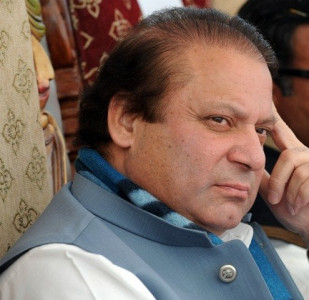
<p><strong>Nawaz Sharif, the incoming prime minister, says one of his top priorities will be the revival of economy, but in order to achieve this goal, a lot of other tasks must first be handled. Thus, the areas he must now focus on are: terrorism and extremism, the law and order situation in Balochistan and Karachi, the energy crisis, political instability and relations with India.</strong></p>
</div>
<p>The PML-N chief will be looking at taking both the political and military leadership on board before initiating any peace talks with the Taliban. Sharif has already engaged Maulana Fazlur Rehman in this regard and may assign the JUI-F leader an important role in any formal talks with the Taliban. Sharif’s most important meeting, however, will be with the Chief of Army Staff. The PML-N will likely meet General Ashfaq Parvez Kayani in the coming weeks.</p>
<p>It will be interesting to see how far the PML-N government will endorse Gen Kayani’s statement on owning the ‘War on Terror’ a month back. The Taliban too will be anxiously waiting for Sharif to unveil his policy on the war on terror and relations with the US.</p>
<p>The volatile situation in Balochistan is another issue Sharif will want the army chief’s views on and would seek to address on a priority basis. The PML-N chief would also seek to engage Baloch insurgent groups, which boycotted Saturday’s elections, and at the same time take on board other important leaders in the province, such as Balochistan National Party-Mengal chief Akhtar Mengal and Mir Hasil Bizenjo.</p>
<p>The BNP-M/PML-N relationship may be adversely affected, however, if PML-N Balochistan chapter president Sanaullah Zehri ends up becoming the chief minister. Zehri had earlier accused Mengal of involvement in the recent attack on his convoy.</p>
<p>The other area where he will need the army chief’s input is when it comes to dealing with Karachi.</p>
<p>The PML-N chief has quite a few plans for the country’s economic hub and has often stated that peace in the city is directly linked with the nation’s economic development. But his past decisions regarding Karachi – ordering the 1992 Karachi operation and imposing governor’s rule in 1998 – did not succeed in bringing about any lasting peace in the city.</p>
<p>Although Sharif may choose to engage the Muttahida Qaumi Movement this time around, he will be unable to offer the party much considering the thinking prevalent in the PML-N camp.</p>
<p>A difficult decision the PML-N government may have to take would be whether to initiate a high treason case against former president General Pervez Musharraf. The gravity and historic weight of this decision can be gauged by the fact that no government in Pakistan so far has ever tried a military dictator. While the PML-N chief has been quite firm about trying Musharraf for treason, his government would likely avoid any taking any hasty decision in order to dispel any impression of vindictiveness.</p>
<p>Sharif might also adopt a policy of ‘restraint’ when dealing with pending cases against President Asif Ali Zardari as well. The cases would possibly only be reopened if Zardari either loses or chooses not to contest the upcoming presidential elections.</p>
<p>The PML-N chief would be looking to keep the political temperature down, at least initially, to allow him to concentrate on fixing the economy and confronting terrorism. He has already told his financial advisors – Ishaq Dar and Sartaj Aziz – that the PML-N government’s first budget has to be ‘people friendly’.</p>
<p>Sharif will get a rousing reception when he enters Parliament for the first time since 1999. He will create a record if he ends up taking oath as the prime minister for a third time. Thanks to the PPP-led Parliament, the bar on anyone becoming premier for more than two terms has been abolished.</p>
<p>While he will spell out his party’s priorities in his first address upon taking oath, he will most likely avoid touching upon ‘sensitive’ issues. Learning from past mistakes, he will avoid confronting the establishment but at the same time will establish his political writ.</p>
<p>Above all, Sharif will leave important pending cases to the judiciary but his government would act fast on implementing the court’s pending decisions.<em></em></p>
<p><em>Published in The Express Tribune, May 17<sup>th</sup>, 2013.</em></p>
</p>
			<br clear="all"/>
		]]>
		</description>

		<media:content width="424" height="318"
							isDefault="true" medium="image" url="http://i1.tribune.com.pk/wp-content/uploads/2013/05/550585-NawazSharifAFP-1368764974-261-640x480.jpg">
			<media:title>Nawaz Sharif AFP</media:title>
			<media:description>File photo of Nawaz Sharif. PHOTO: AFP/FILE</media:description>
			<media:thumbnail url="http://i1.tribune.com.pk/wp-content/uploads/2013/05/550585-NawazSharifAFP-1368764974-261-160x120.jpg" width="160" height="120" />
      </media:content>

		<wfw:commentRss></wfw:commentRss>
		<slash:comments>3</slash:comments>
	</item>
		<item>
		<title>Post 9/11 Pakistan: a huge challenge for Nawaz  </title>
		<link>http://tribune.com.pk/story/548504/analysis-post-911-pakistan-a-huge-challenge-for-nawaz/</link>
		<pubDate>Mon, 13 May 2013 04:36:55 +0000</pubDate>

		<guid isPermaLink="false">http://tribune.com.pk/?p=548504</guid>

		<description>
		<![CDATA[
			<a href="http://tribune.com.pk/story/548504/analysis-post-911-pakistan-a-huge-challenge-for-nawaz/">
				<img src="http://i1.tribune.com.pk/wp-content/uploads/2013/05/548504-PMLNPHOTOAFP-1368394740-840-160x120.jpg" width="160" height="120" alt="" />
			</a>
			<p><div>
<p><strong>Prime minister-in-making Nawaz Sharif is set to start his innings from where he left it on October 12, 1999. But over the last 12 years, Imran Khan’s Pakistan Tehreek-e-Insaf has emerged as a new force against him, replacing the Pakistan Peoples Party, at least in Punjab and Khyber-Pakhtunkhwa.</strong></p>
</div>
<p>Sharif faces far greater challenges today than those he faced during his last tenure as premier. Post-9/11 Pakistan is far more difficult to govern and the issue of terrorism was far easier to handle in 1997 than in 2013. There was no insurgency in Balochistan a decade ago and Karachi was not a volcano waiting to explode like it is today.</p>
<p>Despite its victory in the centre and Punjab, the situation will still be tough for a PML-N government. It is likely to encounter opposition from the governments in Sindh and K-P. With PPP still enjoying a majority in the Senate, Nawaz may also find it difficult to pass legislation in Parliament.</p>
<p>Although PTI could not perform well in Punjab as it did in K-P, those elected on its ticket from the former province are veteran politicians like Shah Mehmood Qureshi, Jehangir Tareen and Sheikh Rashid Ahmed, rather than youngsters.</p>
<p><img alt="" src="http://pullquotesandexcerpts.files.wordpress.com/2013/05/national-assembly.jpg" /></p>
<p>The party’s success in K-P, meanwhile, was largely due its bold stance against US drone strikes in the tribal areas and the war on terror – issues which have marred both Awami National Party and PPP’s reputation in the province.</p>
<p>PTI should be satisfied with its performance in the 2013 elections and consider it a victory. The last time the party contested the polls in 2002, only Imran Khan managed to win a seat.</p>
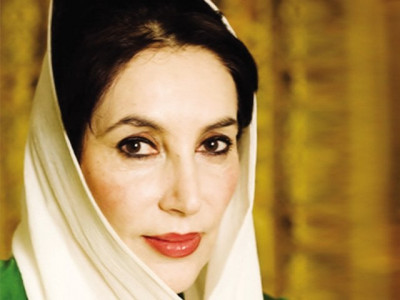
<p>PPP last performed poorly in 1997, when it managed to win only 18 seats the National Assembly. Although the party bounced back in 2002, thanks to the charismatic presence of Benazir Bhutto, its mandate was hijacked by then president Pervez Musharraf, who formed the new PPP-Patriots. Following Benazir’s assassination in 2007, her husband Asif Ali Zardari emerged as party’s figurehead and saw it to victory in the 2008 elections.</p>
<p>PPP’s subsequent five-year term, however, has damaged the public’s perception of the party and diminished its vote-bank, particularly in South Punjab. Bad governance, allegations of corruption, infighting and its own decision to all but concede Punjab led to a complete washout in the 2013 polls. PPP may also find it difficult to bounce back since it lacks any charismatic leader this time around.</p>
<p><i>Published in The Express Tribune, May </i><i>13<sup>th</sup>, 2013.</i></p>
</p>
			<br clear="all"/>
		]]>
		</description>

		<media:content width="424" height="318"
							isDefault="true" medium="image" url="http://i1.tribune.com.pk/wp-content/uploads/2013/05/548504-PMLNPHOTOAFP-1368394740-840-640x480.jpg">
			<media:title>PML N-PHOTO-AFP</media:title>
			<media:description>Supporters of Pakistan Muslim League-Nawaz celebrate with fireworks the victory of their party a day after landmark general elections, in Lahore. PHOTO: AFP
</media:description>
			<media:thumbnail url="http://i1.tribune.com.pk/wp-content/uploads/2013/05/548504-PMLNPHOTOAFP-1368394740-840-160x120.jpg" width="160" height="120" />
      </media:content>

		<wfw:commentRss></wfw:commentRss>
		<slash:comments>1</slash:comments>
	</item>
		<item>
		<title>Press freedom day: Editorial line vs Bottom line</title>
		<link>http://tribune.com.pk/story/543875/press-freedom-day-editorial-line-vs-bottom-line/</link>
		<pubDate>Fri, 03 May 2013 05:18:48 +0000</pubDate>

		<guid isPermaLink="false">http://tribune.com.pk/?p=543875</guid>

		<description>
		<![CDATA[
			<a href="http://tribune.com.pk/story/543875/press-freedom-day-editorial-line-vs-bottom-line/">
				<img src="http://i1.tribune.com.pk/wp-content/uploads/2013/05/543875-freedomspeakexpressionspeechquietfilex-1367558218-593-160x120.jpg" width="160" height="120" alt="" />
			</a>
			<p><div><strong class='location'>KARACHI:&nbsp;</strong>
<p><strong>“It’s been said that a country gets the kind of government which it deserves. With equal truth it can be said that the country gets the kind of press it deserves. If the politics of country is dirty, its press cannot be immune from it.”</strong></p>
</div>
<p>These were the observations made in 1954 by the first and the only Press Commission in Pakistan, and they’re still true today. This is perhaps the biggest challenge our media faces after a 63 year struggle for the freedom of the Press, a struggle that was led by highly professional journalists and editors.</p>
<p>Media today has joined the bandwagon of corrupt politicians, bureaucracy, generals and commercial and business interest to the detriment of journalistic ethics. Those who still consider journalism as a “mission” are in the minority.</p>
<p>The greatest challenges are: (1) Corruption (2) Absence of editors’ institution, (3) Commercial interests overriding editorial/ethical consideration, (4) Extremism and threats endangering the freedom to write and speak, and (5) Rising political interest in the media.</p>
<p>If we manage to address the first three challenges we will be able to overcome others as well.</p>
<p>Recently, a list was made public containing names of journalists and the sums of money purportedly handed out to them, including for travelling on the PM’s official tours as well as the information ministry’s official functions and special assignments. Some 15 journalists denied that they were paid or said their names were wrongly mentioned because they never accompanied the PM on that tour.</p>
<p>But has anybody, including PFUJ, APNS, CPNE, PBA and Press Council of Pakistan, taken any position on their “relationship” with the information ministry.</p>
<p>I was anxiously awaiting an announcement from any of these bodies that in future its members would not travel on government expense on official tours; that if they would send anyone, they would bear the costs themselves. I was expecting the leading media houses to come out in public and denounce the ministry of information and issue future guideline. I was hoping that at least the PFUJ would declare that they would not accept any favour from the ministry.</p>
<p>Unfortunately, it is business as usual. No one wants this profitable ministry abolished.</p>
<p>I don’t see any cut in the information budget or see any possibility that official media will get independence to the extent of editorial freedom with reasonable restrictions. Only the PTI has promised to abolish the ministry. In the past, the PPP also had made such promises, so one must wait and see if the PTI will deliver. Unlike other South Asian countries, Pakistan’s struggle for press freedom has been an epic one. Today, even though there is no censorship, the news gets censored – not by a government department, but thanks to commercial consideration and political relationships.</p>
<p>News items are cut short in print to make room for ads; with election fever at its peak, the time for talk shows is limited to 30 minutes to account for commercial breaks. In the next ten days, we will hardly see news on the back page as parties have booked full back pages. In years to come, we might see full front page ad and a one-liner: “please see the news on the back page.”</p>
<p>Commercial success is essential, but one must realise that the commercials follow the content and not vice versa. Rising political interference through commercial ventures is dangerous for free media, and has damaged the cause of the freedom of the press.</p>
<p>If a second media commission is set up (I have my doubt the present one can do it), its finding and observation on ethics, working conditions, commercial interests and relationship with governments would be an eye opener. I don’t think this is going to happen, so the ethical journalists must continue their fight for the crucial phase of this endless struggle.</p>
<p><em>The writer is the Director Current Affairs at Express News. Previously he has served as Director News, ARYNEWS. He has also served as secretary general, PFUJ.</em></p>
<p><em>Published in The Express Tribune, May 3<sup>rd</sup>, 2013. </em></p>
</p>
			<br clear="all"/>
		]]>
		</description>

		<media:content width="424" height="318"
							isDefault="true" medium="image" url="http://i1.tribune.com.pk/wp-content/uploads/2013/05/543875-freedomspeakexpressionspeechquietfilex-1367558218-593-640x480.jpg">
			<media:title>freedom speak expression speech quiet pemra media DESIGN: SUNARA NIZAMI</media:title>
			<media:description>News items are cut short in print to make room for ads; with election fever at its peak, the time for talk shows is limited to 30 minutes to account for commercial breaks. DESIGN: SUNARA NIZAMI</media:description>
			<media:thumbnail url="http://i1.tribune.com.pk/wp-content/uploads/2013/05/543875-freedomspeakexpressionspeechquietfilex-1367558218-593-160x120.jpg" width="160" height="120" />
      </media:content>

		<wfw:commentRss></wfw:commentRss>
		<slash:comments>1</slash:comments>
	</item>
		<item>
		<title>Clean the dirt and the dirty will go away</title>
		<link>http://tribune.com.pk/story/540445/clean-the-dirt-and-the-dirty-will-go-away/</link>
		<pubDate>Thu, 25 Apr 2013 19:12:50 +0000</pubDate>

		<guid isPermaLink="false">http://tribune.com.pk/?p=540445</guid>

		<description>
		<![CDATA[
			<a href="http://tribune.com.pk/story/540445/clean-the-dirt-and-the-dirty-will-go-away/">
				<img src="http://i1.tribune.com.pk/wp-content/uploads/2013/04/540445-MazharAbbasNew-1366907074-747-160x120.JPG" width="160" height="120" alt="" />
			</a>
			<p><p>Ethical journalism is in serious danger. The <a href="http://tribune.com.pk/story/538900/secret-funds-case-list-of-282-journalists-to-be-made-public-today/" target="_blank">lists submitted by the Ministry of Information</a> (MoI) to the Supreme Court are interesting and present a serious problem. The simple solution is to clean up the dirt so that the dirty can automatically be wiped out, i.e., the MoI should be abolished, as in the last 63 years, it has been unable to defend any state or government interest.</p>
<p>The MoI tried to confuse the journalist community by making the list controversial. For instance, they have mixed up individual beneficiaries with those who went on official visits. It was unfair on the ministry’s part to mention such names even though such tours are official and there is no secret in them. Secondly, journalists go on the tour after permission from their respective organisations.</p>
<p>The ministry also adopted criminal silence over clarification and categorical denials from some journalists named in the list. One journalist has written a letter to the secretary of information that the office either clarifies her position or she reserves the right to file a defamation case against the ministry. So far, there is complete silence from other journalists named in the list. One can only hope that if they were wrongly implicated, they will stand up. However, at the same time, they should not completely reject the list but inquire about those who have not yet given an explanation.</p>
<p>In order to eradicate corruption on the media front — at least to a large extent — I have several proposals to make. To achieve this, sincere efforts are required by media stakeholders like the Pakistan Federal Union of Journalists, the All Pakistan Newspapers Society (APNS), the Pakistan Broadcasters Association (PBA) and the Council of Pakistan Newspaper Editors.</p>
<p>The first suggestion 1) is to abolish the Ministry of Information. 2) If there is still a problem, the Supreme Court should abolish its secret fund, which should be audited every year and made transparent. 3) A powerful media complaints commission should be appointed immediately. 4) The advertisement control of the Ministry of Information should be handed over to an independent body of professionals with unblemished records as, over the years, successive governments have used it as a tool for blackmailing the media. 5) The APNS and the PBA should take the responsibility of journalists and their families killed in the line of duty. 6) Another proposal is that media houses should bear boarding and lodging costs of journalists if they want to send anyone on official tours. 7) Press clubs and unions should work off their own resources instead of depending on government grants. In this regard, they can work on quarterly souvenirs, sponsorships, etc. It is quite contradictory if, on the one hand, we fight for our rights with the government and, on the other, seek grants from it. Under no circumstances should press clubs take donations from political parties. 8) All journalists who are irregular employees, including district correspondents, workers in remote areas, conflict zones, etc, must be made full-time journalists. 9) Parliament should properly legislate for the welfare of journalists and appoint an independent committee for parliamentary oversight. 10) Finally, journalists must not maintain close friendships with politicians so as to remain free from bias and personal political agendas.</p>
<p>Until these changes are made, ethical journalism remains in serious danger.</p>
<p><i>Published in The Express Tribune, April </i><i>26<sup>th</sup>, 2013.</i></p>
</p>
			<br clear="all"/>
		]]>
		</description>

		<media:content width="424" height="318"
							isDefault="true" medium="image" url="http://i1.tribune.com.pk/wp-content/uploads/2013/04/540445-MazharAbbasNew-1366907074-747-640x480.JPG">
			<media:title>Mazhar Abbas  - New</media:title>
			<media:description>The writer is director current affairs Express News and has previously worked with ARY News. He is a former secretary general of the Pakistan Federal Union of Journalists</media:description>
			<media:thumbnail url="http://i1.tribune.com.pk/wp-content/uploads/2013/04/540445-MazharAbbasNew-1366907074-747-160x120.JPG" width="160" height="120" />
      </media:content>

		<wfw:commentRss></wfw:commentRss>
		<slash:comments>9</slash:comments>
	</item>
		<item>
		<title>Ignoring army’s advice proves costly for Musharraf </title>
		<link>http://tribune.com.pk/story/537594/analysis-ignoring-armys-advice-proves-costly-for-musharraf/</link>
		<pubDate>Fri, 19 Apr 2013 05:14:17 +0000</pubDate>

		<guid isPermaLink="false">http://tribune.com.pk/?p=537594</guid>

		<description>
		<![CDATA[
			<a href="http://tribune.com.pk/story/537594/analysis-ignoring-armys-advice-proves-costly-for-musharraf/">
				<img src="http://i1.tribune.com.pk/wp-content/uploads/2013/04/537594-image-1366320020-636-160x120.JPG" width="160" height="120" alt="" />
			</a>
			<p><div>
<p><strong>About a month before his return, former army General (retd) Pervez Musharraf was delivered a formal message from the army, telling him not to return to Pakistan. He ignored the advice, thinking that the institution with which he had spent his life would protect him. It did not happen and now it appears that the army may not take any position in his case.</strong></p>
</div>
<p>Army sources confirmed that he was warned of the consequences and dangers he may face, which also include serious threats to his life.</p>
<p>“Yes, the message was communicated to him,” an unimpeachable source disclosed without saying exactly how this message was conveyed.</p>
<p>Musharraf was told about all the groups who could target him. He was also told that his return may put the army in an embarrassing position as he would become the centre of controversies and fingers would be pointed at him and the army alike.</p>
<p>It’s not clear whether the general was also told about his political standing in Pakistan, in case he was under any illusions. For instance, when he addressed a public meeting in Karachi through a video link about a year back he was told by his inner circle that there were some 25,000 people whereas the fact is that it was a poor show.</p>
<p>During his self-exile, differences also emerged within Musharraf’s All Pakistan Muslim League (APML). Some of his supporters left the party, except the late Sher Afghan Niazi and Lt General (retd) Rashid Qureshi.</p>
<p>Despite all this, Musharraf decided to go ahead with his plan and announced the date of his return, a decision which did not sit well with the army.</p>
<p>Another point for Musharraf to note is that the army recently reinstated three generals after their retirement only so that it could court martial them on corruption charges. Will Musharraf share their fate? Indeed, is his arrest the result of his and his aide’s threat to open ‘Pandora’s box’?</p>
<p>The former army chief has perhaps misread the ground situation, thinking the institution he once headed will protect him, not just physically, but also by shielding him from trial. So far the army has not taken any position but has certainly provided full security to him.</p>
<p>This is the first time in Pakistan’s history that a former army chief and president, faced prison and possible trial. He may now become the scapegoat for the events that unfolded from Oct 12, 1999 to 2008.</p>
<p>Beside Musharraf, the Supreme Court in Asghar Khan case had also ordered action against former army chief General (retd) Aslam Baig and former ISI chief Lt. General (retd) Asad Durrani, but no action was initiated by the former PPP government for reasons known only to President Asif Ali Zardari and former premier Raja Pervaiz Ashraf.</p>
<p>It is premature to predict the fate of Musharraf, but he is certainly likely to face a lot of humiliation and embarrassment. Will the establishment for the first time remain silent, letting events take their own course, or will it play a role, if things started rolling too fast or in a direction that is not to its liking?<em></em></p>
<p><em>Published in The Express Tribune, April 19<sup>th</sup>, 2013.</em></p>
</p>
			<br clear="all"/>
		]]>
		</description>

		<media:content width="424" height="318"
							isDefault="true" medium="image" url="http://i1.tribune.com.pk/wp-content/uploads/2013/04/537594-image-1366320020-636-640x480.JPG">
			<media:title>0005</media:title>
			<media:description>DESIGN: FAIZAN DAWOOD</media:description>
			<media:thumbnail url="http://i1.tribune.com.pk/wp-content/uploads/2013/04/537594-image-1366320020-636-160x120.JPG" width="160" height="120" />
      </media:content>

		<wfw:commentRss></wfw:commentRss>
		<slash:comments>25</slash:comments>
	</item>
		<item>
		<title>Analysis: Smaller parties left out in the cold</title>
		<link>http://tribune.com.pk/story/535699/analysis-smaller-parties-left-out-in-the-cold/</link>
		<pubDate>Mon, 15 Apr 2013 05:13:21 +0000</pubDate>

		<guid isPermaLink="false">http://tribune.com.pk/?p=535699</guid>

		<description>
		<![CDATA[
			<a href="http://tribune.com.pk/story/535699/analysis-smaller-parties-left-out-in-the-cold/">
				<img src="http://i1.tribune.com.pk/wp-content/uploads/2013/04/535699-politicalparties-1366002429-551-160x120.jpg" width="160" height="120" alt="" />
			</a>
			<p><div>
<p><strong>The decision of Pakistan Muslim League-Nawaz and Pakistan Tehreek-e-Insaf to contest the May 11 elections without forming any electoral alliance or entering into any major seat adjustments may result in the complete elimination of smaller political parties, which have traditionally depended heavily on support from bigger parties.</strong></p>
</div>
<p>In the past, the establishment played a key role in making and breaking political alliances, usually to the Pakistan Peoples Party’s detriment. For the first time, however, the establishment has opted against using its influence on any political alliances and has not gone beyond keeping just a close eye on developments. While it may have been a result of the Asghar Khan case, the move has placed smaller parties in a dilemma.</p>
<p>Most small parties, which mostly revolve around certain individuals, have survived since they were accommodated by bigger parties. While it is true that some of these individuals have remained important political figures in their own right, the parties have hardly ever made a deeper mark. They’ve remained, in the words of Zulfikar Ali Bhutto, ‘tonga’ parties – driven by a single leader.</p>
<p>The recent setback PML-Likeminded and PML-Ziaul Haq have suffered at the hands of PML-N could be an eye-opener for many parties. Both these PML factions left Nawaz Sharif at a time when he was seeking support after the Pervez Musharraf’s October 12, 1999 coup. Now, Nawaz has returned the favour, leaving them with nowhere to turn to.</p>
<p>The desperation can be gauged by the fact that one prominent Likeminded leader, Kashmala Tariq, is considering leaving politics for good and taking up law practice. Other leaders may similarly be looking for new jobs. Leaders like Prof Sajid Mir and Sahibzada Fazl Karim who have been able to get elected to Parliament thanks to PML-N support, are also struggling.</p>
<p>The PML-N’s decision to run solo in Punjab reflects its confidence in upsetting all predictions about the close contest it may face with PTI and the PPP/PML-Quaid alliance in the province. Along with closing its door on PML-Likeminded, the PML-N has also opted against an alliance with Jamaat-e-Islami.</p>
<p>For JI though, it is high time it evaluated its own politics to find out as to why neither PML-N nor PTI have made any major seat arrangements with it. JI chief Syed Munawwar Hassan’s statements are rife with contradiction as well – on the one hand he blames his party’s failure to chalk out seat adjustments with other parties on foreign influence, on the other he admits JI has made adjustments on six seats with the PML-N. Not being able to strike any major seat adjustment deals with PTI, PML-N or the Jamiat Ulema-e-Islam Fazl is a failure on the part of JI’s leadership.</p>
<p>Meanwhile, Nawaz’s confidence in sweeping the polls in Punjab has allowed him to shift his attention to other provinces. His brother Shahbaz recently met with Sardar Akhtar Mengal, chief of Balochistan National Party-Mengal, and Mehmood Khan Achakzai, president of the Paktunkhwa Milli Awami Party (PkMAP) in Balochistan. The Sharif brothers also anxiously await the outcome of seat adjustments made with the 10-party alliance in Sindh. Reportedly, the PML-N leadership has received positive signals in Sindh.</p>
<p>PML-N may face problems in working out seat adjustments with JUI-F and JI in Khyber-Pakhtunkhwa, giving a slight edge to PTI. But the way politics is shaping in the province, the three parties may soon join hands against Imran Khan.</p>
<p>The PTI chief, at the same time, is concentrating solely on Punjab and K-P, leaving space for PML-N in Sindh and Balochistan. Imran knows that a major victory in Punjab is crucial for any hope he has of forming the government in Islamabad.</p>
<p>Independent candidates are unlikely to win in Punjab due to the deep polarisation in the province among three factions – PML-N, PTI and the PPP/PML-Q combine. The situation in Sindh and Balochistan may be different in this case, though. This is also an opportunity for religious and smaller parties to test their own strength through the votes they receive.</p>
<p><i>Published in The Express Tribune, April </i><i>15<sup>th</sup>, 2013.</i></p>
</p>
			<br clear="all"/>
		]]>
		</description>

		<media:content width="423" height="318"
							isDefault="true" medium="image" url="http://i1.tribune.com.pk/wp-content/uploads/2013/04/535699-politicalparties-1366002429-551-640x480.jpg">
			<media:title>political parties</media:title>
			<media:description>The Sharif brothers also anxiously await the outcome of seat adjustments made with the 10-party alliance in Sindh.  PHOTO: FILE</media:description>
			<media:thumbnail url="http://i1.tribune.com.pk/wp-content/uploads/2013/04/535699-politicalparties-1366002429-551-160x120.jpg" width="160" height="120" />
      </media:content>

		<wfw:commentRss></wfw:commentRss>
		<slash:comments>3</slash:comments>
	</item>
		<item>
		<title>Analysis: In the upcoming elections, the playing field may be ‘level’ but not for all</title>
		<link>http://tribune.com.pk/story/533339/analysis-in-the-upcoming-elections-the-playing-field-may-be-level-but-not-for-all/</link>
		<pubDate>Tue, 09 Apr 2013 20:24:43 +0000</pubDate>

		<guid isPermaLink="false">http://tribune.com.pk/?p=533339</guid>

		<description>
		<![CDATA[
			<a href="http://tribune.com.pk/story/533339/analysis-in-the-upcoming-elections-the-playing-field-may-be-level-but-not-for-all/">
				<img src="http://i1.tribune.com.pk/wp-content/uploads/2013/04/533339-Electionfiller-1365538472-608-160x120.jpg" width="160" height="120" alt="" />
			</a>
			<p><p><strong>As the security threat looms over most political leaders, it seems the upcoming elections will not be able to provide a level playing field to all candidates.</strong></p>
<p>The intelligence agencies have already alerted some party chiefs, including Bilawal Bhutto, President Asif Ali Zardari, Dr Farooq Sattar and Asfandyar Wali, about possible threats to their lives. They have been advised to refrain from leading rallies or public meetings &#8211; an act which stands contrary to the Election Commission of Pakistan’s (ECP) promise of providing everyone a ‘level playing field’.</p>
<p>Though the ECP has already engaged the Pakistan army, Frontier Constabulary, the Rangers and the police but continued attacks on these forces have made the situation quite alarming to hold “terror-free” elections. Only last week, on April 3, there was an attack outside the paramilitary complex in Karachi that resulted in the death of four Rangers’ men. Dozens of policemen have already been killed in the recent attacks, making election security quite a challenge.</p>
<p>On April 2, a Pakistan Peoples Party (PPP) candidate was killed in Orangi Town while an Awami National Party (ANP) leader was killed in Bannu. The two parties along with the Muttahida Qaumi Movement (MQM) are particularly under direct threat, but leaders of other parties are not very safe either.</p>
<p><img alt="" src="http://pullquotesandexcerpts.files.wordpress.com/2013/04/the-apex1.jpg?w=625" /></p>
<p>ANP president Asfandyar Wali, who will be contesting from his home constituency in Charsadda, is also finding it extremely difficult to go out in the public. He will be using video links to address the public that certainly gives an advantage to his opponents. Other ANP leaders, such as Ghulam Ahmad Bilor, Mian Iftikhar Hussain and others, are also facing similar issues.</p>
<p>MQM’s chief campaigners, Dr Farooq Sattar and Haider Abbas Rizvi &#8211; the two firebrand speakers &#8211; are also facing ‘security issues’, making the party campaign quite challenging. Baloch National Party’s Sardar Akhtar Mengal also feared it would be difficult for them to carry their campaign. Besides, former General (retd) Pervez Musharraf, too has been told not to campaign and restrict himself to closed-door meetings.</p>
<p>It was these threats that forced the PPP leadership to cancel their most prestigious jalsa on April 4 &#8211; the eve of the death anniversary of its founder Zulfikar Ali Bhutto. Instead, Bilawal Bhutto and President Zardari addressed a small ‘in-house’ gathering.</p>
<p>With the security forces admitting before the Supreme Court about the presence of no-go areas in the city &#8211; and believe me there are quite a few &#8211; how can the ECP ensure a level playing field? The Tehreek-e-Taliban Pakistan (TTP), which claimed the responsibility of the attack on Rangers, earlier advised the supporters of these political parties to avoid public meetings and rallies. The three parties that the TTP excluded in its list of parties to negotiate with in February, clarified who the main targets are.</p>
<p>Nevertheless, these parties participated in Jamiat-e-Ulema Islam &#8211; Fazlur Rehman’s All Parties Conference and supported negotiations with the TTP. If the voters fail to turn up at rallies and public meetings, or polling booths for that matter, either due to fear or caution, can the elections really be called free and fair?</p>
<p>The apex court order to clean up the city’s no-go areas in seven days is an indication that the ‘level playing field’ has not been prepared. The ECP has identified over 100 most sensitive constituencies where they need the army’s support.</p>
<p>The 2008 elections were held despite the assassination of former prime minister Benazir Bhutto, but that was because she was the only one facing security threats five years ago. Today, almost all the main political leaders are facing difficulties. It seems the parties will contest the upcoming elections but the playing field may not be ‘level’.</p>
<p><i>Published in The Express Tribune, April </i><i>10<sup>th</sup>, 2013.</i></p>
</p>
			<br clear="all"/>
		]]>
		</description>

		<media:content width="421" height="318"
							isDefault="true" medium="image" url="http://i1.tribune.com.pk/wp-content/uploads/2013/04/533339-Electionfiller-1365538472-608-640x480.jpg">
			<media:title>Election-2013---filler</media:title>
			<media:description>The apex court order to clean up the city’s no-go areas in seven days is an indication that the ‘level playing field’ has not been prepared.</media:description>
			<media:thumbnail url="http://i1.tribune.com.pk/wp-content/uploads/2013/04/533339-Electionfiller-1365538472-608-160x120.jpg" width="160" height="120" />
      </media:content>

		<wfw:commentRss></wfw:commentRss>
		<slash:comments>1</slash:comments>
	</item>
		<item>
		<title>Analysis: Dr Fauzia vs the Jamaat-e-Islami</title>
		<link>http://tribune.com.pk/story/533037/analysis-dr-fauzia-vs-the-jamaat-e-islami/</link>
		<pubDate>Tue, 09 Apr 2013 04:34:04 +0000</pubDate>

		<guid isPermaLink="false">http://tribune.com.pk/?p=533037</guid>

		<description>
		<![CDATA[
			<a href="http://tribune.com.pk/story/533037/analysis-dr-fauzia-vs-the-jamaat-e-islami/">
				<img src="http://i1.tribune.com.pk/wp-content/uploads/2013/04/533037-fauziasiddiqui-1365481937-660-160x120.jpg" width="160" height="120" alt="" />
			</a>
			<p><div><strong class='location'>KARACHI:&nbsp;</strong>
<p><strong>Ms Fauzia Siddiqui, the sister of Dr Aafia Siddiqui, will be contesting elections against former mayor of Karachi and Jamaat-e-Islami leader Naimatullah Khan. Understandably, this has put the JI in a tight spot.</strong></p>
</div>
<p>She originally decided to contest from NA-250 (Karachi) in order to take on former President Pervez Musharraf. Now, his nomination papers for that constituency have been rejected and one has to wait and see whether he will file an appeal or not.</p>
<p>Fauzia, who decided to contest as an independent after getting a cold shoulder from the JI, is still in the running. Despite the JI’s best efforts, she has refused to withdraw. A senior JI leader in Karachi confirmed that efforts were made to convince her not to contest but she insisted and there is not much they can do to change her mind.</p>
<p>Why the JI refused her a ticket is another question. Sources say the tough JI conditionality for selection of the candidates may have prevented them from nominating or even supporting her in the elections. But one wonders why the Jamaat, which has seen its influence in Karachi whittled away, did not cash in on this opportunity.</p>
<p>After all, the Pasban, which comprises of youth members of the JI, have led a campaign too free Dr Aafia since 2005 and are still backing Fauzia Siddiqui. They too are now in a fix.</p>
<p>However, the JI is now giving more importance to its other youth wing, Shabab-e-Milli , and seems to have practically abandoned the Pasban, which was promoted by former JI Ameer, Qazi Hussain Ahmad, in the ’90s.</p>
<p>Fauzia, who is inexperienced in politics, came to the fore after 2005, when for the first time a foreign female journalist disclosed the presence of her sister Aafia in an Afghan jail.</p>
<p>Dr Aafia, who was residing in the US, disappeared in May 2003 after she left her home in Karachi, where she was staying with her mother. It is generally believe that she was picked up in an intelligence operation and handed over to the US at the old Quaid-e-Azam International Airport, from where she was flown to Kabul.</p>
<p>Surprisingly, the then MMA, which included the JI, did not raise the issue in the National Assembly or even in what was then the NWFP Assembly.</p>
<p>Her mother, who was interviewed for the first time by me, about a week after Aafia’s disappearance, disclosed that she was assured by then chairman of the Senate Mohammad Mian Soomro and Mushahid Hussain Syed, that she would be returned. That promise remains unfulfilled.</p>
<p>One also wonders what Fauzia Siddiqui wants to achieve by contesting elections, given that she stands little chance of success and that her defeat can only damage her sister’s cause. She has every right to feel disappointed with the JI for not supporting her or nominating her, but the cause of releasing her sister should take precedence over an electoral bid.</p>
<p>The Jamaat could have accommodated her on a reserved seat and only the Jamaat’s leadership knows why they did not do so. If they can make seat adjustments with the PML (N), the leader of which its Ameer once described as “two sides of the same coin,” when comparing him to Asif Ali Zardari,  then one seat could have been given to Fauzia as well.</p>
<p><i>Published in The Express Tribune, April </i><i>9<sup>th</sup>, 2013.</i></p>
<p><em>Correction: In an earlier version of the story, Naimatullah Khan was mistakenly referred to as Naimatullah Siddiqui. The error has been fixed. </em></p>
</p>
			<br clear="all"/>
		]]>
		</description>

		<media:content width="424" height="318"
							isDefault="true" medium="image" url="http://i1.tribune.com.pk/wp-content/uploads/2013/04/533037-fauziasiddiqui-1365481937-660-640x480.jpg">
			<media:title>fauzia siddiqui 111</media:title>
			<media:description>File photo of Dr Fauzia Siddiqui. PHOTO: EXPRESS/FILE </media:description>
			<media:thumbnail url="http://i1.tribune.com.pk/wp-content/uploads/2013/04/533037-fauziasiddiqui-1365481937-660-160x120.jpg" width="160" height="120" />
      </media:content>

		<wfw:commentRss></wfw:commentRss>
		<slash:comments>23</slash:comments>
	</item>
		<item>
		<title>Analysis: ‘8,000 policemen will make no difference to Karachi’s law and order&#039;</title>
		<link>http://tribune.com.pk/story/531255/analysis-8000-policemen-will-make-no-difference-to-karachis-law-and-order/</link>
		<pubDate>Thu, 04 Apr 2013 21:35:00 +0000</pubDate>

		<guid isPermaLink="false">http://tribune.com.pk/?p=531255</guid>

		<description>
		<![CDATA[
			<a href="http://tribune.com.pk/story/531255/analysis-8000-policemen-will-make-no-difference-to-karachis-law-and-order/">
				<img src="http://i1.tribune.com.pk/wp-content/uploads/2013/04/531255-karachiunrest-1365111252-595-160x120.jpg" width="160" height="120" alt="" />
			</a>
			<p><div>
<p><strong>The deteriorating law and order situation of this city of 20 million is unlikely to improve even though the interim provincial government recently decided to recruit 8,000 policemen.</strong></p>
</div>
<p>This decision of the Sindh cabinet is too big itself considering they have hardly two months. In this short span of time, the caretaker chief minister could have managed with five or six ministers and only two advisers given they are only expected to look after routine matters. Perhaps, political considerations were kept in mind.</p>
<p>If the police are recruited with the same consideration, the result could be more disastrous as the Sindh police are more of a political force than a police force. These 8,000 vacancies would have been filled by now if the Pakistan Peoples Party (PPP) and the Muttahida Qaumi Movement (MQM) had not developed differences over the distribution of ‘quota’ last year. This common practice under successive governments has resulted in political leanings among at least 70 per cent of the police.</p>
<p>If the government recruited 15,000 to 18,000 police constables in the past five years, at least 6,000 were allegedly recruited by former interior minister Zulfiqar Mirza. The past five governments had recruited nearly 50,000 police constables, a majority of whom were hired through political affiliations or under parties’ quota. As a result, the Sindh police became a politicised force but divided among parties &#8211; no wonder Karachi’s law and order went from bad to worse.</p>
<p>Earlier in the 90s, nearly 5,000 policemen were sacked as they were recruited on political considerations without any record. “Yes, it is true,” said a senior police officer, on condition of anonymity. “There were reports that these policemen were more loyal to their parties then to the police.”</p>
<p>A few serving and retired senior police officers have also admitted that policemen act as ‘facilitators’ of alleged criminals and terrorists, rather than protect people.</p>
<p>Surprisingly, around 700 ASI posts are lying vacant as the department has not given promotions or hired men at this post in the last five years. The jobs were supposed to come through the Sindh Public Service Commission (SPSC), which has interviewed potential candidates and is likely to make recommendations soon.</p>
<p>Interestingly, after the Sindh Local Government Ordinance was withdrawn, the police tried direct appointments and promotions under Police Act, 1861, and Police Rules, 1931. As they were about to release the list, the election commission imposed a ban. Now, the decision lies with the SPSC.</p>
<p>It may be pertinent to note that the caretaker’s first major decision was on police recruitments. If the interim government follows procedure, it is highly unlikely they will be able to fill all vacancies unless they follow the traditional ‘pick and choose’ without merit.</p>
<p>According to the procedure, the posts need to be advertised in national daily newspapers. The minimum qualification for a constable is Matriculate. This is followed by the verification of their certificates and other relevant records, such as their background, criminal checks, etc. The applicant also has to be at least five feet six inches and clear the physical and medical tests. The shortlisted candidates are then invited for written tests and oral interviews by senior officers of the ranks of DIG and SP. The whole procedure lasts up to six weeks, after which the successful ones are sent on full training for at least three months.</p>
<p>If the interim government succeeds in hiring police constables above political consideration, they won’t be able to work during the elections as training takes time. A workable option is to hire policemen on merit and send them on a six-month training programme. Meanwhile, the government should make do with the Rangers and the army during the elections, along with the 100,000-strong existing police force.</p>
<p><em>The writer is the director of current affairs at Express News</em></p>
<p><em>Published in The Express Tribune, April 5<sup>th</sup>, 2013.</em></p>
</p>
			<br clear="all"/>
		]]>
		</description>

		<media:content width="424" height="318"
							isDefault="true" medium="image" url="http://i1.tribune.com.pk/wp-content/uploads/2013/04/531255-karachiunrest-1365111252-595-640x480.jpg">
			<media:title>police karachi afp</media:title>
			<media:description>Pakistani policemen stand guard in a troubled neighbourhood in Karachi. PHOTO: AFP/ FILE</media:description>
			<media:thumbnail url="http://i1.tribune.com.pk/wp-content/uploads/2013/04/531255-karachiunrest-1365111252-595-160x120.jpg" width="160" height="120" />
      </media:content>

		<wfw:commentRss></wfw:commentRss>
		<slash:comments>2</slash:comments>
	</item>
		<item>
		<title>Najam Sethi should have taken greater care</title>
		<link>http://tribune.com.pk/story/528145/najam-sethi-should-have-taken-greater-care/</link>
		<pubDate>Fri, 29 Mar 2013 05:22:08 +0000</pubDate>

		<guid isPermaLink="false">http://tribune.com.pk/?p=528145</guid>

		<description>
		<![CDATA[
			<a href="http://tribune.com.pk/story/528145/najam-sethi-should-have-taken-greater-care/">
				<img src="http://i1.tribune.com.pk/wp-content/uploads/2013/03/528145-NajamSethiAFP-1364534446-765-160x120.jpg" width="160" height="120" alt="" />
			</a>
			<p><div>
<p><strong>Najam Sethi will certainly go down in history as the first journalist to get the top slot in Punjab, even if it is for only 40 or 50 days. But would he prefer to be remembered for his journalistic credentials or for his political posts?</strong></p>
</div>
<p>Sethi reportedly defended his decision, saying that journalists often criticise wrongdoings in the system but shy away when actually offered the opportunity to run that system. A few years back senior journalist Rahimullah Yusufzai, declined an offer to become a Minister in the NWFP cabinet, saying: “my job is journalism and not politics. I am happy where I am.” Should Sethi have done the same?</p>
<p>There is no doubt that a good journalist should have an intimate understanding of politics, along with good contacts. However, a good journalist should never use his/her contacts or profession as a convenient ladder that can be climbed for political gain.</p>
<p>Having said that, there is no bar on any journalist to quit his profession and join politics. In fact, a good journalist can become a good politician, so long as they quit journalism first.</p>
<p>It is part of our job to keep close contacts with politicians, bureaucrats, military, police, intelligence agencies and a cross section of society, but only for professional reasons. Problems arise when good contacts turn into good friends and we cross the “red line” between professional relations and personal favours. Unfortunately, we often cross that line.  In the past, journalists who reached the position of editor often even avoided attending official dinners held by governors or chief ministers and rarely attended functions held by presidents and prime ministers.</p>
<p>A journalist should not accept any positions of political power because to do so is in fact a direct clash of interest. Secondly, a journalist must look for the story but not become part of the story. Thirdly, it is among the basic norms of journalism, that we should not accept any favours, political or otherwise. Fourthly, if we considered the Media as a watchdog or, as is often said, the fourth pillar of the State, then how can we journalists become a part of any other organ of the State?</p>
<p>But Pakistani journalists have been joining politics and serving in government ever since Pakistan emerged on the map of the world. The Ministry of Information played a pivotal role in it, by corrupting the journalists through different kinds of ‘favours’, starting from plots and tours and also by offering money both directly and indirectly.</p>
<p>Over the years, top journalists and columnists have been approached by, and have themselves approached, top politicians in order to get their support and vice versa.</p>
<p>It all started when the late Altaf Hussain quit his post as editor of Dawn and joined Ayub Khan’s cabinet. Since then, many top former editors and journalists have also joined this elite club, such as Mushahid Hussain Syed, Dr Maleeha Lodhi, Sherry Rehman, Hussain Haqqani, and others. There are also a number of columnists who work as “advisers” for different political parties.</p>
<p>The names of some of senior journalists also popped up in the Mehran Bank scam for allegedly accepting money in the 1990 elections. None of them have challenged these allegations.</p>
<p>Sethi is an anchor par excellence and a very powerful writer indeed. He will certainly want to be remembered for his 40 years of journalistic work and not for his 40-odd days as caretaker CM, no matter how good an administrator he turns out to be.</p>
<p><em>Published in The Express Tribune, March 29<sup>th</sup>, 2013.</em></p>
</p>
			<br clear="all"/>
		]]>
		</description>

		<media:content width="424" height="318"
							isDefault="true" medium="image" url="http://i1.tribune.com.pk/wp-content/uploads/2013/03/528145-NajamSethiAFP-1364534446-765-640x480.jpg">
			<media:title>Najam-Sethi-AFP</media:title>
			<media:description>Najam Sethi. PHOTO: AFP</media:description>
			<media:thumbnail url="http://i1.tribune.com.pk/wp-content/uploads/2013/03/528145-NajamSethiAFP-1364534446-765-160x120.jpg" width="160" height="120" />
      </media:content>

		<wfw:commentRss></wfw:commentRss>
		<slash:comments>19</slash:comments>
	</item>
	
</channel>
</rss>
<!-- Performance optimized by W3 Total Cache. Learn more: http://www.w3-edge.com/wordpress-plugins/

Page Caching using apc
Database Caching 21/47 queries in 0.043 seconds using memcached
Object Caching 1423/1600 objects using apc

 Served from: tribune.com.pk @ 2013-05-21 14:18:47 by W3 Total Cache -->