Iran ships some LPG, jet fuel despite US blockade, data shows
Updated 44 minutes ago

Iran vows strikes will continue until enemies are defeated and pledges revenge for war and slain school children
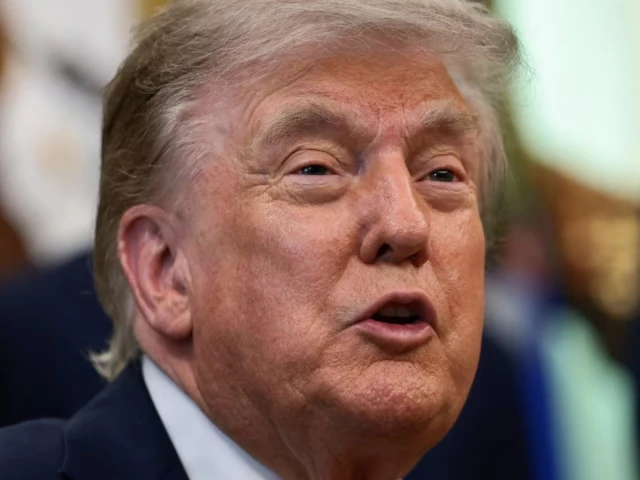
President Donald Trump directed the US military not to launch new strikes on Iran on Friday, ending nearly two weeks of daily attacks, Axios reported Saturday, citing sources familiar with the decision.
After approving daily strikes for the previous 13 days, Trump declined to authorize Friday's plan. It remains unclear whether the pause is temporary or marks a broader shift.
The decision suggests Trump wants to allow more room for diplomacy and believes the current level of US strikes has reached its practical limit without expanding into major combat, according to the report.
Although the US military continues preparing for a possible escalation, Trump has not ordered such a move, the report said.
Speaking at the White House, Trump said he could continue or intensify the strikes, including "knocking out everything they have." However, he said the "smarter strategy" is to "make a deal" with Iran.
"We're talking to (the Iranians) right now. I think they're getting more and more serious as the days go by. We're locked and loaded and ready to go, but we're talking to them," Trump said.
Later, at the White House Correspondents Association dinner, Trump said he did not believe Iran was ready to reach an agreement, "but I'm willing to listen."
Read More: Pakistan, Saudi Arabia reaffirm 'brotherly ties' as Mideast tensions heat up with Houthi involvement
Trump's order came hours after an Omani delegation arrived in Tehran for talks on a new arrangement to reopen the Strait of Hormuz.
Two regional sources said the negotiations have progressed and that Oman and Iran could reach an agreement over the weekend, after which Trump would decide whether to accept the proposed deal.
Iran defends Hormuz clause, Araghchi
Iranian Foreign Minister Abbas Araghchi accused the United States of violating the Strait of Hormuz provisions of the post-war memorandum of understanding, saying Washington sought to undermine Tehran’s authority over the strategic waterway by opening an alternative shipping corridor.
In an interview published Saturday by the state-run Iran newspaper, Araghchi rejected criticism that Article 5 of the memorandum was ambiguous, insisting that the provision clearly assigns Iran responsibility for restoring navigation through the Strait of Hormuz.
Araghchi said Article 5 stipulates that Iran will take the necessary measures to reopen the Strait of Hormuz within one month, including determining shipping routes and carrying out mine-clearing operations.
He said the agreement also provides for navigation-related services to be offered free of charge for 60 days, after which Iran and Oman are to negotiate a long-term framework for managing the strategic waterway and related maritime services.
“The article is completely clear from our perspective,” he said.
‘US violated the agreement’
Araghchi accused Washington of violating the memorandum by opening a separate southern shipping corridor before the one-month implementation period had expired.
“When Article 5 says Iran will make the arrangements, it means Iran determines the route and the necessary mechanism,” he said. “If the Americans believed another corridor should be added or removed, they should have consulted Iran.”
He said the route designated by Tehran had been selected based on security and navigational safety considerations because mine-clearing operations were still underway.
According to Araghchi, the alternative route was introduced about 10 days after the strait was reopened, despite two weeks remaining before the agreed implementation deadline.
He said Tehran repeatedly warned Washington through the direct communication line established following talks in Switzerland, as well as through Qatari and Pakistani mediators.
“I personally conveyed these messages both directly and through the Qatari and Pakistani mediators,” he said, adding that Iran urged Washington to wait until the implementation period expired before judging Tehran’s compliance.
“We saw no goodwill in America’s behavior,” Araghchi said. “It appeared they were determined either to create tensions or to weaken Iran’s sovereignty and management over the Strait of Hormuz.”
He also claimed maritime communications showed ships were encouraged to avoid the route designated by Iran in favor of the southern corridor, even though, according to Tehran, it was slower and posed greater navigational risks.
“In the end, regardless of their intentions, it was the United States that violated the agreement and set developments on the course we are witnessing today,” he said.
Regional tensions escalated after US President Donald Trump announced on July 8 that the ceasefire outlined in the Islamabad MoU was no longer in effect.
Since then, the US and Iran have exchanged strikes, with Washington targeting sites inside Iran, while Tehran says it has attacked US military facilities and equipment across several countries in the region.
Regional trust after the war
Asked about Iran’s relations with Arab countries following the 40-day war, Araghchi acknowledged that tensions remained but said he believed there was growing regional willingness to rebuild trust.
He said Iran had maintained continuous contacts with neighboring countries to explain that its military actions were aimed at responding to attacks rather than targeting regional states.
Araghchi complained that US forces had used facilities in some regional countries during the conflict, saying Tehran believed such actions had occurred either with the countries’ knowledge or through misuse of their territory.
Read More: Naval blockade first step in ‘blockade-for-blockade’ campaign: Houthi spokesperson
Despite those grievances, he said regional governments increasingly recognize that security and stability must be achieved collectively rather than through reliance on foreign military powers.
“I see the will to rebuild trust,” he said. “We are neighbors and will remain neighbors. We must live together in peace.”
He argued that the recent conflict had demonstrated that hosting foreign military bases does not necessarily enhance security and, in some cases, can become a source of insecurity.
‘Yemen has no military solution’
Commenting on developments in the Bab al-Mandab Strait, Araghchi said the Yemen conflict should not be viewed through the prism of Iran but as a longstanding regional issue involving Yemen, Saudi Arabia and other neighboring countries.
He reiterated that there is no military solution to the crisis and urged dialogue between Yemen and Saudi Arabia, as well as among Yemeni parties.
“Iran is ready to play a constructive role if dialogue begins between Yemen and Saudi Arabia,” he said.
Araghchi said Tehran has consistently encouraged diplomacy, expressing hope that current tensions would not further complicate the situation in Yemen.
“The Yemen issue can be resolved through diplomacy and dialogue,” he said. “There is no need for further military confrontation.”
Iran claims it destroyed 11 US warplanes
Iran claimed Saturday that its armed forces destroyed 11 US warplanes and helicopters on the ground during the recent 15-day conflict with the US.
Speaking to the semi-official Tasnim News Agency, Islamic Revolutionary Guard Corps (IRGC) spokesman Brig. Gen. Hossein Mohebbi said the attacks were carried out between July 8 and July 22.
Mohebbi claimed the destroyed equipment included 17 reconnaissance and operational drones, including eight that were “brand-new,” one F-15 fighter jet inside a hardened shelter, one P-8 maritime patrol aircraft, one C-17 military transport aircraft and eight aerial refueling aircraft.
He said the aircraft were destroyed while stationed on the ground at US military bases but did not specify their locations.
Iran security chief vows operations until enemy 'fully defeated'
The Secretary of Iran's Supreme National Security Council said on Saturday that the ongoing strikes by Iranian forces would persist until the enemy is "fully defeated" and "retribution is exacted for the innocent children of Minab and Lamerd and will continue beyond that point".
Read More: Houthis fire on Saudi oil sites; no US strike on Iran for first time in two weeks
Mohammad Bagher Zolghadr also pledged retribution for the US-Israel war on Iran and the killing of schoolchildren, state news agency IRNA reported.
Secretary of Iran's Supreme National Security Council, declared that the ongoing and precision strikes by Iranian forces will persist until the enemy is fully defeated and retribution is exacted for the innocent children of Minab and Lamerd and will continue beyond that point. pic.twitter.com/lxESXDxzoW
— IRNA News Agency ☫ (@IrnaEnglish) July 25, 2026
The single largest casualty from an attack, according to Iranian authorities, was the attack on a girls’ school in the city of Minab, where 168 people were killed and 95 were wounded, most of them children.
Araghchi says ‘no military solution’ to Yemen conflict
Iranian Foreign Minister Abbas Araghchi said on Saturday there was no military solution to the escalating conflict between Saudi Arabia and Houthi rebels in Yemen after both sides traded attacks.
"We believe that there is no military solution to the issue of Yemen, Bab al-Mandab, and other regional issues," said Araghchi in an interview published on Saturday by the state-run Iran Daily newspaper, calling for "dialogue".
Iran's Baghaei accuses EU of hypocrisy over human rights concerns
Iranian foreign ministry spokesman Esmaeil Baghaei accused the European Union of hypocrisy, saying its stated human rights concerns about Iran cannot be reconciled with what he described as EU support for military attacks on the country.
Baghaei responded to remarks by the EU’s foreign policy chief, Kaja Kallas, about the bloc’s human rights concerns regarding Iran in a post on X.
.@Kajakallas speaks of the European Union’s “human rights concerns” regarding Iran. How can a professed commitment to human rights be so easily reconciled with providing logistical and technical support for lethal aggressions against the Iranian people — aggressions that…
— Esmaeil Baqaei (@IRIMFA_SPOX) July 25, 2026
Baghaei said the EU could not credibly profess a commitment to human rights while providing what he called logistical and technical support for “lethal aggressions” against Iranians that deliberately target civilians and critical national infrastructure.
He accused the bloc of refusing to condemn what he termed war crimes and of offering "not a single word of sympathy for Iranian children slaughtered by American-Israeli bombs and missiles", which he said were enabled by the EU’s “logistical and technical support”.
"This is not merely a loss of credibility. It is the banality of evil — and the purest form of hypocrisy."
Iran reports no new US attacks as Gulf tensions remain high
Iran reported no strikes overnight into Saturday, an apparent break from nearly two weeks of consecutive nights of US attacks, as per Al Jazeera.
Also Read: Dar urges Iran, US to build on Islamabad MoU
The Iranian health ministry’s spokesperson, Hossein Kermanpour, said that “Iran had a peaceful night”. Unlike the previous 13 nights, US Central Command did not announce new strikes.
The war has so far killed more than 3,400 people in Iran, according to the ministry. Eighteen US service members, 24 civilians in Israel and smaller numbers of civilians have also been reported dead in countries across the region.
In Lebanon, more than 4,000 people have been killed, as well as 38 Israeli troops.
Egyptian foreign minister discusses regional de-escalation, maritime security with Iranian, Omani counterparts
Egypt's top diplomat Badr Abdelatty held separate phone calls on Saturday with his Iranian and Omani counterparts to discuss efforts to de-escalate regional tensions and safeguard freedom of navigation, the Foreign Ministry said.
According to a ministry statement, Abdelatty spoke with Iranian Foreign Minister Abbas Araghchi and Omani Foreign Minister Badr Albusaidi as part of ongoing consultations on regional developments and efforts to restore security and stability.
The talks focused on advancing de-escalation efforts, with Abdelatty stressing the need for an immediate halt to all military actions and escalation and for prioritising political and diplomatic solutions to contain rising tensions and prevent the conflict from expanding.
He said such efforts would help strengthen regional security and stability while sparing the peoples of the region from further escalation and its consequences.
Abdelatty also underscored the importance of preserving freedom of navigation in the Strait of Hormuz and the Red Sea, describing it as a cornerstone of regional security and stability and essential to protecting international trade and global supply chains.
He stressed the need to avoid any measures that could threaten the security of maritime routes or endanger shipping, saying such steps are necessary to safeguard the interests of countries in the region and the global economy.
Iran rescues 28 Indian seafarers after vessel attacked
All 28 Indian crew members on board a Mozambique-flagged ship were rescued after coming under attack near Iran’s territorial waters, according to Al Jazeera.
The tanker DISHA transmitted a distress signal after being targeted by “hostile forces” as it entered Iranian waters.
“Upon the occurrence of the incident, the ship immediately transmitted a distress call to the Iranian coastguard,” Mohammad Fathali, Iranian ambassador to India, told the ANI news agency.
“In response, the relevant Iranian maritime and rescue authorities were deployed to the scene without delay and promptly initiated rescue operations. All crew members on board the vessel, including the 28 Indian nationals, were rescued safely and remain in good health.”
Fathali cautioned against foreign naval involvement in the Strait of Hormuz.
“Experience has repeatedly demonstrated that the presence and intervention of extra-regional military forces have not enhanced security in the region; rather, they have contributed to heightened tensions and greater instability.”
Tanker ‘incident’ reported in Gulf of Oman
The United Kingdom Maritime Trade Operations (UKMTO) said it received a report of an incident involving a tanker and military forces in the Gulf of Oman, according to Al Jazeera.
The agency advised vessels in the area to review the latest maritime security information and stay aware of what it called an “evolving operational environment”.
Authorities are investigating the situation, UKMTO said. It gave no further details on the tanker, its flag, or the military forces involved.
Trump says Netanyahu to visit US next Tuesday
US President Donald Trump said on Friday that Israeli Prime Minister Benjamin Netanyahu would visit the United States next week.
The two leaders are expected to meet on Tuesday as the US-Israeli war on Iran completes five months.
US missiles struck targets across Iran on Friday and President Donald Trump vowed "major military punishment" for Tehran and its Houthi allies in Yemen, though he once again left open the door to a diplomatic deal with Iran.
Two weeks after the collapse of an interim truce meant to end the war, Iranian armed forces responded by firing at US bases in neighbouring Arab countries and warning that they could strike non-military buildings there used by US personnel.
Trump has threatened in recent days to widen targets to Iran's energy plants and bridges, send ground forces to seize its oil hub of Kharg Island, and bomb a deep-underground nuclear-linked site known as Pickaxe Mountain.
Read: Iran rejects temporary ceasefire until Strait of Hormuz demands met
On Friday, he said he had not yet decided on new major strikes, however.
"We are talking to them," Trump told reporters at the White House. "I think they're being serious. I think ... they are being by far the most serious that we've seen them, but that doesn't mean we get there."
Asked what the exit strategy was for the Iran war, Trump said, "There's a military exit where we just keep going just the way we are, and we can even make it a heavier dose, and it's knocking out everything they have. Or there's a smarter strategy that you make a deal."
But he added, "We're locked and loaded. We're ready to go."
The key waterway of the Strait of Hormuz, the entrance to the Gulf, has so far been the focus of a war that has killed thousands in almost five months, stoked global inflation and fanned fears of an economic downturn.
The Houthis, who control northern and western Yemen, have also declared a naval blockade of Saudi Arabia, which has diverted millions of barrels of oil by pipeline each day to the Red Sea to skirt Iran's near-total blockade of Hormuz.
After the Houthis said they had struck two Saudi tankers in the Red Sea on Thursday, Trump said he would hold Iran accountable for any further attacks by the fighters.
A Saudi vessel sustained minor hull damage from an attack in the Red Sea on Friday, state news agency SPA said.
The Saudi-led coalition in Yemen said it struck Houthi military sites there, saying they were used to threaten commercial shipping.
Reuters could not immediately verify the reports.
Iran threatens US forces
The US military launched air strikes on Iran late on Thursday and early on Friday, racking up 13 consecutive nights of attacks.
Read more: Dar urges Iran, US to build on Islamabad MoU
In a statement on X, the Iranian health ministry said 59 people had been killed and 666 wounded since the resumption of clashes with US forces in late June.
Iranian media cited the head of Iran's top joint military command as saying Iran would kill a member of the US forces for every Iranian killed.
The war has killed 18 US service members. The Pentagon has said 100 service members had been injured since July 7. Officials have told Reuters that more than 500 US troops have been injured so far.
Pakistan exploring path for talks, sources say
Brent futures stood down more than $4 at a little over $96 on Friday, after the previous day's attack on the Saudi tankers in the Red Sea's Bab el-Mandeb strait boosted oil prices 7% to $100 per barrel for the first time since May.
Sources said Pakistan was exploring a path towards resuming stalled talks between the US and Iran to end the war, after China initiated a push.
Exploratory discussions took place during a visit by Iran's Interior Minister Eskandar Momeni to Islamabad this week — his second in the last 10 days, three Pakistani sources said.
Tankers rerouting, shipping insurance rises
The Houthi attacks forced several other tankers to turn around and head north through the Suez Canal, which would be a much longer route to Asia, by sailing around Africa.
Still, half of the 18 ships exiting Bab el-Mandeb on Thursday were carrying crude oil, including two Chinese supertankers, while the number of tankers crossing through the Strait of Hormuz fell to just one, the lowest since May 7.
US warns citizens in MidEast to exercise caution
The Iranian army said it had attacked US military equipment depots at Al-Adiri, officially named Camp Buehring, in northern Kuwait, and the positions of US troops at Camp Arifjan and at Camp Doha, near Kuwait City.
In the early evening, Kuwait said its air defences were intercepting "hostile" targets launched from Iran.
Iran's Revolutionary Guards said they had significantly damaged a surveillance tower used by the US Fifth Fleet in Bahrain.









This material may not be published, broadcast, rewritten, redistributed or derived from. Unless otherwise stated, all content is copyrighted © 2026 The Express Tribune.






COMMENTS
Comments are moderated and generally will be posted if they are on-topic and not abusive.
For more information, please see our Comments FAQ