US' Rubio on 'resignation watch' following midterm defeat as he weighs presidential bid: report
Updated 53 minutes ago

Aviation security experts say apparent coordination, timing of threats are unusual, officials yet to attribute blame

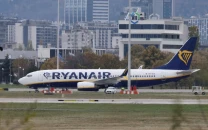
Airlines across Europe received a new wave of bomb threats on Thursday, the second this week, with flights making unplanned landings and others escorted by fighter jets, though none of the threats has proved genuine.
There has been no claim of responsibility, and officials have not attributed blame.
Airlines are not new to bomb threats, but aviation security experts say the apparent coordination and timing of the current incidents is unusual.
Below is an explanation of what risks airlines and passengers face.
Read: New wave of bomb threats hits at least 27 passenger flights across Europe
Flights across Europe were targeted by “hoax” bomb threats on Thursday for the second time this week, disrupting air travel across London, Dublin, and Helsinki, among others.
— CNBC (@CNBC) November 5, 2026
At least 27 different flights were impacted, according to Reuters, with some forced to land unexpectedly… pic.twitter.com/AEDfla38K1
How are most bomb threats made?
Bomb threats against planes are often communicated to airlines, airports or authorities through anonymous emails or phone calls claiming that an explosive device is on board. Authorities do not always disclose how threats are delivered because doing so could encourage copycats and compromise investigations.
A Prague airport representative told CNN on Thursday that they had received a threat from an anonymous email addressed to the airport, and Czech police said similar emails went to other European airports.
1/2 Po obdržení výhružky o uložení nástražného výbušného systému na palubě 4 letadel mířících do Prahy se s kolegy z @PragueAirport připravujeme na jejich přistání. Relevanci výhružek hodnotíme jako nízkou.
— Policie ČR (@PolicieCZ) November 5, 2026
Eric Schouten, head of aviation security group Dyami, told Reuters that an airline's security department first runs the report through a checklist. It then alerts the authorities, who may scramble fighter jets or divert the plane to a designated airport for a full sweep.
What is the risk?
The vast majority of bomb threats turn out to be false alarms, though all must be treated as real until investigated.
Read More: Bomb threats trigger security alerts at airports across Europe
No explosive device has been found on the planes affected this week, but every airline must decide whether a threat is credible and act accordingly.
A spokesperson for the British government called this week's incidents "malicious hoax threats" and said it has "one of the most robust aviation security systems in the world".
Who might be behind it?
Nobody knows.
Rhys Jones of Osprey Flight Solutions said bomb threats can stem from a wide range of motives, including political grievances, activist campaigns, criminal activity, online groups or state-linked hybrid operations.
There is currently no public evidence linking this week's incidents to any specific state or organisation.
What is the impact for airlines?
Even a false alarm can disrupt airlines' operations, with plane diversions and thorough security inspections causing delays for passengers. Carriers typically bear additional costs, including fuel, passenger rebooking, crew disruption and aircraft diversions.
Schouten said a sweep means unloading passengers and baggage, searching the aircraft and reloading. That can push crews past duty limits and lead to missed connections and cancellations.
Air France-KLM Chief Executive Ben Smith said on Thursday he had never previously seen threats reported in such a coordinated fashion.
"We're quite confident that we have in place what we need to ensure that it has minimal or no impact on our operation," Smith told reporters. "So we have no ask today of our governments to change the way they manage these types of situations."













This material may not be published, broadcast, rewritten, redistributed or derived from. Unless otherwise stated, all content is copyrighted © 2026 The Express Tribune.






COMMENTS
Comments are moderated and generally will be posted if they are on-topic and not abusive.
For more information, please see our Comments FAQ