Lifestyle changes driving diabetes spike
Updated 1 hour ago

Says the budget aims at reducing the burden on the salaried class and promoting economic activity
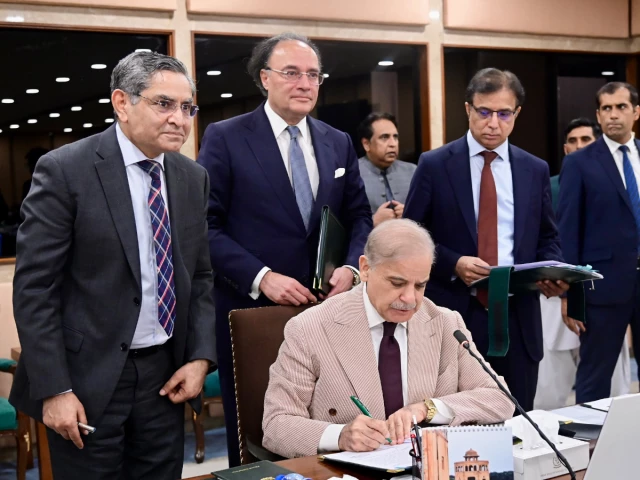
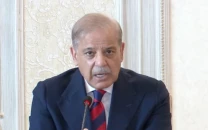
Prime Minister Muhammad Shehbaz Sharif on Friday described the federal budget for fiscal year 2026-27 as a “budget of relief”, saying the government had achieved economic stability and was therefore able to provide relief to the people.
In a statement issued by the Prime Minister’s Office, the premier expressed gratitude for what he said was the attainment of economic stability, attributing it to divine blessings and the resilience of the people.
“I express my boundless gratitude to Almighty Allah, through whose grace and mercy, and with the prayers of the nation, we have achieved economic stability, and by virtue of which we have today provided relief to the people in the budget,” he said.
اسلام آباد ، 12 جون 2026
— Prime Minister's Office (@PakPMO) June 12, 2026
وفاقی بجٹ کے حوالے سے وزیراعظم محمد شہباز شریف کا بیان.
میں اللہ تعالیٰ کا بے پایاں شکر ادا کرتا ہوں، جس کے فضل و کرم اور قوم کی دعاؤں سے ہم نے معاشی استحکام حاصل کیا، اور جس کی بدولت آج ہم نے بجٹ میں عوام کو ریلیف فراہم کیا. میں پاکستان کے ہر شہری کا… pic.twitter.com/DHeR8pz6vE
The prime minister thanked the people of Pakistan for enduring economic hardships and contributing to the country’s economic stability.
“I extend my heartfelt thanks to every citizen of Pakistan who, in the most difficult circumstances, demonstrated patience and resilience, faced hardships, and played a full role in the economic stability of their country,” he said.
He said he had promised the public that once economic stability was achieved, its benefits would be passed on directly to ordinary citizens.
“Alhamdulillah, the time of prosperity has now begun. After the difficult period, the improvement and relief that I promised you, and the relief that my nation truly deserves in the real sense, has now formally commenced,” he said.
Read: Budget 2026-27: Federation will transfer Rs7.4tr to provinces, says finance minister
Praising the key features of the budget, the prime minister termed it a “budget of relief” aimed at reducing the burden on the salaried class and promoting economic activity.
“This budget is a budget of relief, a budget for public welfare. It is a budget to reduce the burden on the salaried class. It is a budget for increasing exports, promoting industries, agricultural development, and encouraging investment and economic growth,” he said.
He said the primary objective of the budget was to ensure that the benefits of a strengthened economy reached the public directly and that all segments of society were included in the development process.
The prime minister also thanked Deputy Prime Minister Ishaq Dar, Chief of Defence Forces and Chief of the Army Staff Field Marshal Syed Asim Munir, Finance Minister Muhammad Aurangzeb, the government’s economic team, the chief ministers of the four provinces and relevant institutions for their efforts in making the relief measures possible.
Referring to the Prime Minister’s Apna Ghar Programme and other initiatives, the premier said the government had taken concrete steps ranging from facilitating home ownership and providing tax relief to creating employment opportunities for young people, reducing the burden on the middle class and promoting business activity.
“This journey of development will continue in full force, and we will take every possible step for the welfare and well-being of the people,” he concluded.
He earlier signed the draft of the Federal Budget 2026–27 while chairing a cabinet meeting in Islamabad to review the budget proposals.
He said taxes had to be imposed so that the economic distortion that had been spread over many years in the past could be stabilised and the paths of national development could be widened.
"Certainly, this will cause difficulties and hardship for the common man, and I believe that on my behalf and on behalf of the entire cabinet, I would like to thank the people of Pakistan who have borne this inflation with great patience and tolerance," he added.
"In the last two years, inflation has come down from 38 per cent. It has stabilised. But now again, due to the crisis, there has been a slight increase in it, and the policy rate of the banks has also come down from 22.5 per cent to 11 per cent, and it was expected that it would be reduced further, but due to the Gulf crisis we also had to face difficulties in this regard," the prime minister said.
"Our main economic indicators are in front of you. Without going into further detail, I would like to say that despite all these challenges, our economy today is stable, and we should hope that after approval of this third budget, God willing, our economy will begin to move faster," PM added.
"There were certainly many challenges in preparing this budget. I believe that no country can achieve development, let alone progress, if its security is not strong and invincible.
"We must immediately build water reservoirs and dams, and rapidly increase focus on indigenous energy resources. These include solar panels and batteries, which are now becoming available at reasonable prices. For all these matters, funds are not being issued," the prime minister added.
وزیرِ اعظم محمد شہباز شریف نے پارلیمنٹ ہاؤس میں مالی سال 2026-27 کے بجٹ کی وفاقی کابینہ سے منظوری کے بعد بجٹ دستاویز پر دستخط کر دیئے. pic.twitter.com/vNyNvHXzX5
— Prime Minister's Office (@PakPMO) June 12, 2026
"In the last one and a half months, we have had extensive engagements with provinces.
"We held meaningful dialogue with Punjab, Sindh, Balochistan, and Khyber-Pakhtunkhwa (K-P), and they were informed that the federation requires additional funds."
He said he personally visited Punjab along with my team and presented the entire situation.
He said, "I am very grateful to Nawaz Sharif and Punjab CM Maryam Nawaz, who expressed goodwill and, in a good manner, provided full support for the legitimate needs and pressing requirements of the federation".
"Similarly, we held discussions with Sindh; I myself and our team were present. Despite various challenges, they also demonstrated full cooperation," he said.
PM Shehbaz thanked President Asif Ali Zardari and PPP Chairman Bilawal Bhutto-Zardari, who supported this in the best national interest.
Similarly, he said the Balochistan chief minister also showed great generosity and K-P CM Sohail Afridi also demonstrated the same positive spirit.
In the National Economic Council (NEC) meeting, all four provinces jointly reviewed and approved the development plan and related activities with consensus. He believed this was a milestone for which no better example of national unity, economic solidarity and cohesion can be found.
He thanked the entire team and provincial leadership and expressed great satisfaction and appreciation for the two-year performance of Pakistan.
"There are four pillars of CPEC 2.0: A, G, C, A, I, T, Mind, Minerals, Special Economic Zones, and Joint Ventures. Because of this, development will take place rapidly," PM Shehbaz said.
China’s support has been extremely encouraging and positive, he said. The prime minister also thanked the International Monetary Fund (IMF) for its assistance.
In a post on X, PM Shehbaz said the "budget has been prepared with great effort and sincerity, and the welfare of Pakistan’s great nation has been given top priority".
الحمدللہ اس بجٹ کو بہت محنت اور خلوص سے تیار کیا گیا ہے، اور پاکستان کی عظیم قوم کی فلاح و بہبود کو اولین ترجیح دی گئی ہے۔
— Shehbaz Sharif (@CMShehbaz) June 12, 2026
The prime minister held a telephonic conversation with PML-N President Nawaz Sharif. During the call, He briefed Nawaz on the details of the federal budget. PML-N president directed the prime minister to ensure maximum relief for the public in the budget and added that rising inflation would increase public hardship and must be controlled.
PM Shehbaz met a delegation of the MQM in Islamabad, where discussions were held on the upcoming federal budget and the country’s overall political and economic situation, according to a statement issued by the Prime Minister's Office.
The delegation was led by MQM Convener and Federal Minister for Education and Professional Training Khalid Maqbool Siddiqui. It also included Federal Minister for National Health Services Syed Mustafa Kamal and Member of the National Assembly R. Javed Hanif, Farooq Sattar and Aminul Haque.
اسلام آباد : 12 جون، 2026
— Prime Minister's Office (@PakPMO) June 12, 2026
وزیراعظم محمد شہباز شریف سے متحدہ قومی موومنٹ کے وفد کی ملاقات ہوئی
وفد کی قیادت متحدہ قومی موومنٹ کے کنوینر اور وزیر برائے وفاقی تعلیم و پیشہ ورانہ تربیت ڈاکٹر خالد مقبول صدیقی نے کی. وفد میں وزیر برائے قومی صحت سید مصطفیٰ کمال اور ارکین قومی اسمبلی… pic.twitter.com/cktThKvveX
Senior cabinet members, including Planning Minister Ahsan Iqbal, Law Minister Azam Nazeer Tarar, Economic Affairs Minister Ahad Khan Cheema, Information Minister Attaullah Tarar, and Prime Minister’s Advisor Rana Sanaullah, were also present.
The meeting focused on the Federal Budget 2026–27, which is expected to be presented soon.
The PMO, in its statement, described MQM as an important coalition partner and said that its role in promoting economic stability and public welfare was acknowledged during the meeting.
He said the government’s cooperation with MQM would continue in the same spirit for the national interest and public service.






This material may not be published, broadcast, rewritten, redistributed or derived from. Unless otherwise stated, all content is copyrighted © 2026 The Express Tribune.
1727268465-0/Untitled-design-(42)1727268465-0-208x130.webp "independence 2 0")
COMMENTS (1)
Comments are moderated and generally will be posted if they are on-topic and not abusive.
For more information, please see our Comments FAQ