PSX surges 4% in holiday-shortened week
Updated 11 minutes ago

Energy procurement blunder, missed export opportunities worsen imbalance
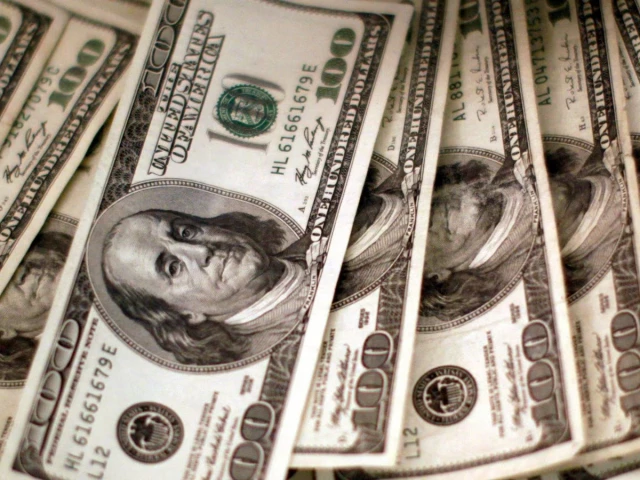
Pakistan's external sector has once again sounded a loud alarm. The country's trade deficit surged to $31.988 billion in the first 10 months of FY2026 and $4.074 billion in April 2026, a massive increase of 43.5% month-on-month and 20.28% year-on-year. Pakistan recorded goods imports of $6.553 billion, the highest level in 46 months since June 2022.
This is not a one-off spike. It is the predictable outcome of structural weaknesses, policy inertia and missed geopolitical opportunities. As highlighted in these pages in early December 2025, practical and implementable measures were available; their limited uptake has since amplified the current imbalance. April data from the Pakistan Bureau of Statistics (PBS) reveals a troubling imbalance. Imports surged 28.41% month-on-month to $6.553 billion, while exports grew only 9.5% to $2.479 billion, widening the gap sharply. Even more concerning is the broader trend: Pakistan's trade deficit has not widened because of growth-led import expansion driven by industrialisation. It is consumption-heavy, energy-driven and structurally inefficient. Pakistan's April petroleum bill stood at $2.144 billion: crude oil $988 million, motor gasoline $543 million, high-speed diesel $399 million, LNG $107 million and LPG $107 million.
Energy imports: the real culprit
At the heart of this crisis lies Pakistan's flawed energy and procurement strategy. By December 2025, Pakistan was drowning in surplus LNG from an overcommitted long-term deal with Qatar – scrambling to offload excess cargo – only to lurch, by March and April, into panic buying from the spot market at nearly double the price, paying as high as $18.88 per mmBtu to keep independent power producers running. Now, Pakistan is urgently looking to buy two more LNG cargoes for May delivery to help ease its gas shortage. Is this a strategy or last-minute fire-fighting?
The country continues to rely heavily on imported oil and LNG, despite having periodic access to lower-priced energy in global markets. Yet, instead of strategic purchasing, Pakistan repeatedly resorts to last-minute buying, often at peak prices. This reactive approach is aggravated by critically low oil storage capacity, forcing the country to import in smaller, frequent and more expensive batches. The result is a higher import bill and greater exposure to global price volatility. In simple terms, Pakistan is paying a premium for poor planning, and the masses are bearing the cost.
Missed opportunity amid ME conflict
The ongoing geopolitical tensions in the Middle East – particularly around key shipping routes – have disrupted global supply chains. But where some countries saw risk, others saw opportunity. Regional peers moved quickly to ration petrol and gas and to capture diverted export orders, expand textiles and manufacturing shipments, and secure long-term energy contracts at negotiated rates. Pakistan did neither. Instead, its exports remained largely stagnant, even declining in key months earlier this fiscal year, while competitors filled the supply gaps in global markets. The failure was not external – it was strategic.
Why Pakistan lost export race
Several structural issues explain why Pakistan failed to capitalise. First, lack of export diversification: exports remain concentrated in low-value textiles, rice and other commodities to fixed, far-away destinations, with minimal movement into higher-value sectors such as engineering goods or IT-enabled services. Second, energy cost disadvantage: high electricity and gas tariffs have priced Pakistani commodity exporters out of global markets, mainly because of shifting from hydel power generation to thermal, long-term IPPs and LNG terminal contracts on capacity payments.
Third, policy uncertainty: frequent changes in import restrictions, exchange rate management, high interest rates and doubled taxation have created an unpredictable business environment and shrunk the export surplus. Fourth, weak trade diplomacy: despite the government's large footprint abroad, the country failed to gain more market access. While competitors secured preferential access and trade deals, Pakistan remained largely passive, with loss-making free trade agreements with China and Malaysia and a preferential trade agreement with Indonesia.
Energy – last-minute panic buying
Perhaps, the most avoidable factor is the oil and gas procurement mechanism. Instead of building reserves when prices are low, Pakistan delays procurement decisions, enters the market during price spikes and pays higher premiums because of urgency. This cycle repeats itself, inflating the import bill unnecessarily. At a time when global energy markets reward strategic storage and long-term contracting, Pakistan continues to operate in a short-term, crisis-driven mode.
Pakistan does not lack potential – it lacks execution. The following reforms are critical. First, build strategic oil reserves: invest in storage infrastructure to allow bulk purchasing when prices are low. The government must exit from energy price fixation, let the market open oil and gas prices on a daily basis, and distance itself from port and refinery. This alone can significantly reduce the import bill, create a more transparent price formula and ease the burden on consumers and industries.
Second, reform energy procurement: shift from spot purchases to long-term forward booking, diversified supply contracts, including regional pipelines and discounted sources. Third, prioritise export competitiveness: provide targeted energy subsidies for export sectors, stabilise policies and incentivise value-added manufacturing. Fourth, diversify the export base: move beyond textiles into IT, engineering goods, pharmaceuticals, agro-processing and value-added consumer goods.
Fifth, leverage geopolitics – learn to live with it, not fear it – and develop agile trade strategies to capitalise on global disruptions rather than being a passive observer. Sixth, align the exchange rate with reality: an overvalued currency discourages exports and encourages imports – this imbalance must be corrected sustainably.
Pakistan's $32 billion trade deficit is not just a statistic – it is a reflection of years of flawed priorities. While the world is reorganising supply chains and securing energy corridors, Pakistan remains trapped in a cycle of reactive policymaking.
THE WRITER IS A FORMER VICE PRESIDENT OF KCCI, AN INDEPENDENT ECONOMIC ANALYST FOCUSING ON GLOBAL TRADE, ENERGY ECONOMICS AND GEOPOLITICAL RISK












This material may not be published, broadcast, rewritten, redistributed or derived from. Unless otherwise stated, all content is copyrighted © 2026 The Express Tribune.








COMMENTS (12)
Comments are moderated and generally will be posted if they are on-topic and not abusive.
For more information, please see our Comments FAQ