SSWMB gears up for Eid cleanliness drive with staff training
Updated 16 hours ago

Fuel Subsidy Programme extended until May 31, motorcycle ride-hailing services tax reduced from 5% to 2%
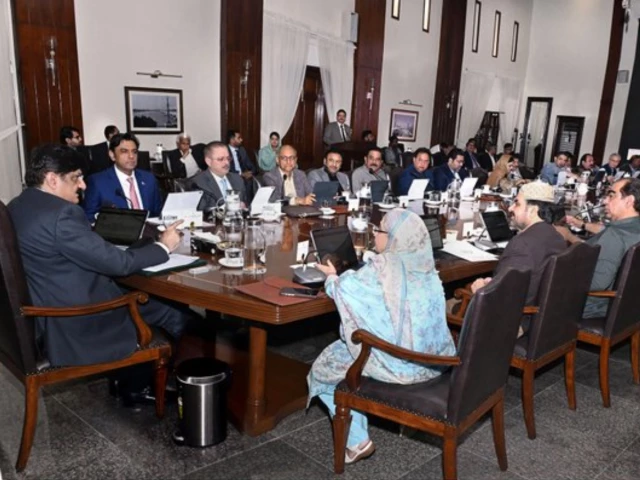
The Sindh Cabinet on Tuesday approved the allocation of over Rs30 billion for measures and subsidies across multiple sectors, including infrastructure, transport, health, education, energy and public services.
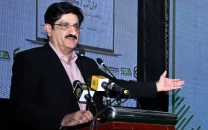
According to a spokesperson for the Sindh Chief Minister, Murad Ali Shah, the cabinet discussed a 25-point agenda in detail, with senior provincial ministers, advisers, special assistants, the chief secretary and administrative secretaries in attendance.
Sindh Cabinet, chaired by CM Syed Murad Ali Shah approved a massive development, welfare & reform agenda worth over Rs30 billion aimed at improving infrastructure, healthcare, governance, education and public relief across province. pic.twitter.com/jvj9EjWeXE
— Sindh Chief Minister House (@SindhCMHouse) May 5, 2026
Subsidy programmes
The cabinet extended deadlines for settlement agreements under the Sindh Development and Maintenance of Infrastructure Cess Amendment Act 2026 until August 23. It also approved revised instalment plans for outstanding dues, with payments scheduled through 2028 and incentives for early settlement.
The cabinet approved a reduction in sales tax on motorcycle ride-hailing services from 5% to 2%, a move expected to support online drivers and reduce ride cancellations. Officials estimated annual financial implications of Rs120 million, with expectations of improved service efficiency.
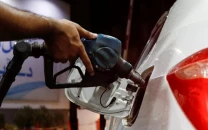
In a major relief measure, the People's Motorbike Fuel Subsidy Programme was extended until May 31. The government has released Rs2 billion for May payments, while over 548,000 beneficiaries continue to receive subsidies. So far, Rs1.096 billion has been disbursed under the scheme.
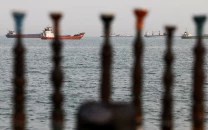
The Sindh government approved a Rs515 million fuel subsidy package for the province’s fishing community, aimed at offsetting rising fuel costs and supporting livelihoods across coastal districts.
Officials said fishermen in Karachi, Thatta, Sujawal, and Badin would benefit from the scheme, which includes a one-off payment covering two months of fuel expenses. The Sindh chief minister said immediate financial relief was being provided to fishermen, adding that safeguarding thousands of families’ livelihoods remained a key priority.
The cabinet was informed that a sharp rise in diesel prices had led to an estimated 20% decline in fishing activity.
Under the approved scheme, 9,634 registered boats will receive subsidies. Owners of 2,331 small coastal boats fitted with 20-horsepower engines will receive Rs200,000 per vessel, with a total allocation of Rs466.2 million.
A further 488 boats with 10-horsepower engines will receive Rs100,000 each, with Rs28.8 million set aside for this category.
The provincial cabinet also approved a shift to a digital payment system to ensure transparency. Payments will be made after online registration with either the Sindh Director General of Marine or the Karachi Fisheries Harbour Authority. Following verification, funds will be transferred directly into the bank accounts of boat owners.
A joint management committee from the Sindh Livestock and Fisheries Department will oversee the implementation and monitoring of the subsidy scheme.
Read: Somali pirates demand direct talks with Pakistan
CM Shah said the government was committed to ensuring transparency, adding that payments would be made directly into beneficiaries’ accounts under a fully accountable system.
The US and Israel launched an attack on Iran in February, after which Tehran retaliated with strikes and closed the Strait of Hormuz, disrupting global oil supplies and triggering a sharp rise in international oil prices.
Amid the rising prices, the government, in the first week of March, increased petroleum product prices twice, noting that the hikes exceeded the increase in the international market. However, the most significant increase was witnessed in April this year.
Earlier this month, the government raised the petrol price by Rs137 per litre, taking it to a record Rs458.4. However, a few days later, the prime minister, in a televised address, announced a Rs80 per litre reduction in the petroleum levy on petrol, bringing its price down to Rs378 per litre.
Last week, the government again increased the prices of both high-speed diesel (HSD) and petrol by Rs26.77 per litre despite no corresponding increase in international rates, as it imposed nearly Rs27 per litre additional levy on fuel to push prices higher.
Just a week later, the government raised petroleum product prices again, bringing them close to Rs400 per litre.
Infrastructure
In Karachi, the cabinet sanctioned Rs6.5 billion for road rehabilitation, with funds released to the Karachi Metropolitan Corporation (KMC) for the improvement of road infrastructure across 24 towns. The chief minister directed that repair work be initiated immediately.
A new bridge over the Indus River between Hyderabad and Kotri was approved, with Rs147.2 million allocated for its engineering design. The project is expected to ease traffic congestion and improve intercity mobility.
The cabinet also approved Rs2 billion for the S-III sewage project, enabling completion of the first phase of the STP-1 facility in Haroonabad.
Read More: Mega corruption scandal hits Sindh's education system
Additional approvals included Rs4 billion for the improvement of Larkana’s drainage system, Rs800 million for water pipeline works in Qasimabad, Rs0.8 billion for an underpass and link road at Qasimabad–Hyderabad Chowk, and Rs0.9 billion for drainage construction from Gudu Chowk to Ya Ali Colony via Mir Fateh Colony.
A further Rs1.2 billion was approved for widening Sheikh Ayaz Road in Hyderabad and improving its drainage system, while Rs0.5 billion was sanctioned for a sports complex in Latifabad.
Health, education and social welfare
In the health sector, Rs635.48 million was approved for a 50-bed trauma centre at Ghulam Muhammad Medical College Hospital in Sukkur. The chief minister directed that the facility be made operational by June 2026.
The cabinet also approved Rs25 million for Pir Ilahi Bakhsh Law College in Dadu, Rs90 million for an ECCE block at St Patrick’s High School in Karachi, and Rs80 million for the establishment of an orphanage in Umerkot.
Digitalisation and governance reforms
Rs48.9 million was allocated for the digitalisation of the district judiciary system, aimed at improving efficiency and public access to justice. The cabinet also approved Rs86.535 million for the Sindh Job Portal.
Approval was granted for holding “Indus AI Week 2026” to promote artificial intelligence and digital innovation in the province.
In governance reforms, Rs615.7 million was approved for payment of dues of the Sehwan Development Authority, subject to a strict restructuring plan. The cabinet imposed a ban on new recruitment in the authority, placing 421 employees into a surplus pool.
A Centre of Excellence for counter-extremism was also approved with an allocation of Rs42.86 million.
Urban planning and land use
The cabinet approved 500 acres of land for a mega cemetery in Karachi’s Malir area, with a total valuation of Rs6.75 billion. The land will be transferred to the local government department to address the city’s growing burial space requirements.
Energy
The cabinet decided to activate the Sindh Electric Power Regulatory Authority and approved the appointment of Faisal Malik as Member Finance and Policy.
Agriculture reforms
The cabinet reviewed progress on the Sindh Farmers Agricultural Collectives Act 2026. A sub-committee led by Sindh Agriculture Minister Sardar Muhammad Bakhsh Mahar held consultations with farmer representatives and stakeholders.
Officials said the proposed law would establish cooperative organisations at the watercourse level across the province, with elected leadership including chairpersons and secretaries to empower farmers. A four-member committee has been formed to finalise amendments before presenting the draft law to the cabinet for approval.
Legal and administrative measures
The cabinet approved the establishment of an Anti-Encroachment Tribunal in the Shaheed Benazirabad Division under the Sindh Public Property (Removal of Encroachment) Act 2010. Jurisdiction will be extended from the district to the divisional level, with consultation from the Sindh High Court (SHC) for the appointment of presiding officers.
Budget allocations have also been made for the tribunal for the financial year 2026–27.






This material may not be published, broadcast, rewritten, redistributed or derived from. Unless otherwise stated, all content is copyrighted © 2026 The Express Tribune.










COMMENTS
Comments are moderated and generally will be posted if they are on-topic and not abusive.
For more information, please see our Comments FAQ