Families of Pakistani hostages held by Somali pirates urge govt to form committee for their release
Updated 2 hours ago

Senior officials of Pakistan, Saudi Arabia, Türkiye and Egypt meet in Islamabad
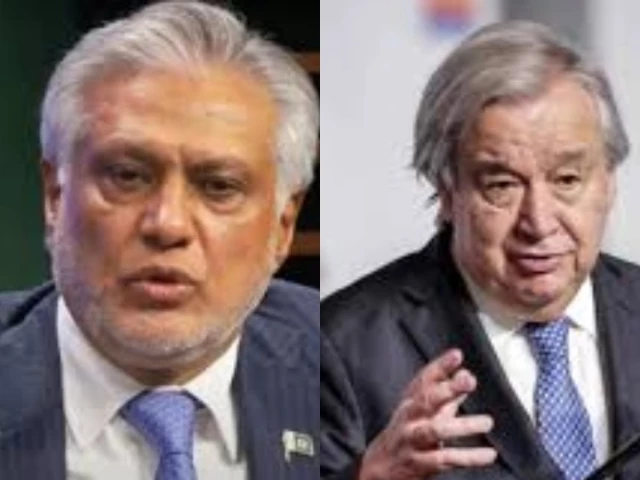
United Nations Secretary-General António Guterres appreciated Pakistan’s constructive role in convening the Islamabad talks and expressed the UN’s full support for the country’s continued efforts in the peace process in a call with Deputy Prime Minister and Foreign Minister Ishaq Dar on Tuesday.
Pakistan took centre stage when it brokered a 14-day ceasefire between the United States and Iran, followed by high-stakes talks in Islamabad attended by senior delegations from the two countries. Although the talks did not yield the desired results, the ceasefire remains intact, and speculation about a second round of negotiations continues to grow.
The Foreign Office (FO) said on X today that the UN chief called FM Dar and commended his efforts in advancing regional peace.
FM Dar also reaffirmed Pakistan’s commitment to promoting dialogue and diplomacy to ensure peace and stability in the region.
DPM/FM Senator Mohammad Ishaq Dar @MIshaqDar50 received a call from UN Secretary-General Antonio Guterres @antonioguterres today.
— Ministry of Foreign Affairs - Pakistan (@ForeignOfficePk) April 14, 2026
The SG appreciated Pakistan’s constructive role in convening the Islamabad talks and commended the DPM/FM’s efforts in advancing regional peace. He… pic.twitter.com/H7v9LWuoat
FM Dar also received a telephone call from Romanian counterpart Oana-Silvia Toiu.
She appreciated Pakistan’s role in facilitating the Islamabad talks. Both leaders welcomed the positive momentum in Pakistan-Romania relations and reaffirmed their commitment to further strengthening cooperation.
They also exchanged views on regional and global issues, agreeing on the importance of continued dialogue and diplomacy for the peaceful resolution of conflicts.
Deputy Prime Minister / Foreign Minister Senator Mohammad Ishaq Dar @MIshaqdar50 today received a telephone call from Romanian Foreign Minister Oana-Silvia Toiu @oana_toiu.
— Ministry of Foreign Affairs - Pakistan (@ForeignOfficePk) April 14, 2026
Foreign Minister Toiu appreciated Pakistan’s role in facilitating the Islamabad talks. Both leaders… pic.twitter.com/7K9ep34jjo
FM Dar also spoke with Turkish counterpart Hakan Fidan. Both leaders exchanged views on the regional situation, including the latest developments, and reaffirmed the importance of close coordination on issues of mutual interest.
Both leaders also discussed important engagements at the upcoming Antalya Diplomacy Forum.
DPM/FM Senator Mohammad Ishaq Dar @MIshaqDar50 spoke this evening with Turkish Foreign Minister Hakan Fidan @HakanFidan.
— Ministry of Foreign Affairs - Pakistan (@ForeignOfficePk) April 14, 2026
Both leaders exchanged views on the regional situation, including the latest developments, and reaffirmed the importance of close coordination on issues of… pic.twitter.com/XHytiygb7K
Earlier, Kuwaiti FM Sheikh Jarrah Jaber Al-Sabah praised Pakistan’s role in facilitating the US-Iran peace efforts in a telephone call with Dar.
Dar reaffirmed Pakistan’s resolve to continue sustained efforts, emphasising dialogue and diplomacy as the only viable path to resolving issues.
Both sides reaffirmed the strong Pakistan–Kuwait ties and agreed to remain in close contact.
DPM/FM Senator Mohammad Ishaq Dar @MIshaqDar50 spoke with the FM of Kuwait, Sheikh Jarrah Jaber Al-Sabah.
— Ministry of Foreign Affairs - Pakistan (@ForeignOfficePk) April 14, 2026
The Kuwaiti FM commended Pakistan’s role in facilitating the Islamabad talks and appreciated the DPM/FM’s efforts in this regard.
DPM/FM reaffirmed Pakistan’s resolve to… pic.twitter.com/rEyr9Nnncl
European Union Foreign Policy Chief Kaja Kallas and Canadian FM Anita Anand also praised Pakistan’s role during separate telephone calls with the deputy premier.
During his call with the EU foreign policy chief, Dar “appreciated the regular and close contact between Pakistan and the EU during the ongoing regional situation” and briefed her on developments from the recently held Islamabad Talks.
DPM/FM Senator Mohammad Ishaq Dar @MIshaqDar50 received a phone call from EU HRVP @kajakallas.
— Ministry of Foreign Affairs - Pakistan (@ForeignOfficePk) April 14, 2026
DPM/FM appreciated the regular and close contact between Pakistan and the EU during the ongoing regional situation. He shared the developments about the recently held Islamabad Talks.… pic.twitter.com/rK5aj5fOqs
According to the statement, Kaja “commended Pakistan’s constructive role for facilitating US-Iran direct negotiations in Pakistan”. Both sides “emphasised the need for continued dialogue & diplomacy for resolution of the conflict”.
The two leaders also “positively assessed the growing cooperation between Pakistan and EU, and agreed to maintain close contact on all issues of mutual interest”.
In a separate call with the Canadian top diplomat, FM Dar “exchanged views on recent developments, including the US–Iran negotiations held during the Islamabad Talks”.
Anita “appreciated Pakistan’s role in facilitating dialogue”, the FO said. “Underscoring the importance of all parties adhering to a ceasefire,” Dar reaffirmed Pakistan’s commitment to “continuing its support for dialogue and diplomacy”.
Deputy Prime Minister / Foreign Minister, Senator Mohammad Ishaq Dar @MIshaqDar50, spoke late last night with Canada’s Foreign Minister, Anita Anand @AnitaAnandMP, to exchange views on recent developments, including the U.S.–Iran negotiations held during the Islamabad Talks.… pic.twitter.com/LPF8q2BZyZ
— Ministry of Foreign Affairs - Pakistan (@ForeignOfficePk) April 14, 2026
Both ministers agreed to remain in close contact on issues of mutual concern, the statement concluded. The calls came two days after the US and Iran were unable to reach an agreement to end their war despite marathon negotiations lasting around 21 hours.
The prolonged talks, aimed at halting hostilities that have killed thousands and driven global oil prices higher over the past six weeks, ended with both sides blaming each other for the impasse.
Also Read: US, Iran may give diplomacy a second shot
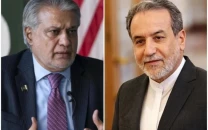
The Iranian delegation was led by Speaker Bagher Ghalibaf and assisted by Foreign Minister Abbas Araghchi, while the US delegation was led by VP JD Vance, along with Special Envoy Steve Witkoff and Jared Kushner.
The US and Israel launched a joint offensive on Iran on February 28, killing thousands of people in Iran, including then-supreme leader Ayatollah Ali Khamenei and leaving tens of thousands injured, with civilian areas, including residential buildings and religious sites, among those hit.
The conflict also expanded geographically. Iran retaliated with drone and missile strikes targeting Israel as well as Jordan, Iraq, and Gulf countries hosting US military assets. It also restricted the movement of ships through the Strait of Hormuz.
FM Dar meets foreign officials
Separately, FM Dar also held meetings with foreign officials from Turkiye, Saudi Arabia and Egypt.
The FO said he appreciated the "close, brotherly relations and convergence of views on important regional and global matters" among the four countries.
He called for devising a cooperative framework among the four countries, focusing on the shared goals of peace, prosperity and economic development.
The Deputy Prime Minister/Foreign Minister Senator Mohammad Ishaq Dar @MIshaqDar50 met with Mr. Musa Kulaklikaya, Deputy Foreign Minister of Turkiye; Ambassador Nazih El Naggari, Assistant Foreign Minister of Egypt; and, Prince Dr. Abdullah bin Khalid bin Saud Al-Kabeer AlSaud,… pic.twitter.com/ES0LHhiVej
— Ministry of Foreign Affairs - Pakistan (@ForeignOfficePk) April 14, 2026
FO Spokesperson Tahir Andrabi later held a meeting with the officials as well.






This material may not be published, broadcast, rewritten, redistributed or derived from. Unless otherwise stated, all content is copyrighted © 2026 The Express Tribune.






COMMENTS
Comments are moderated and generally will be posted if they are on-topic and not abusive.
For more information, please see our Comments FAQ