Govt lifts early closing rules, lets shops stay open longer until May 31
Updated 1 hour ago

Trump agrees to PM Shehbaz's proposal for two-week ceasefire with Iran, subject to Strait of Hormuz opening
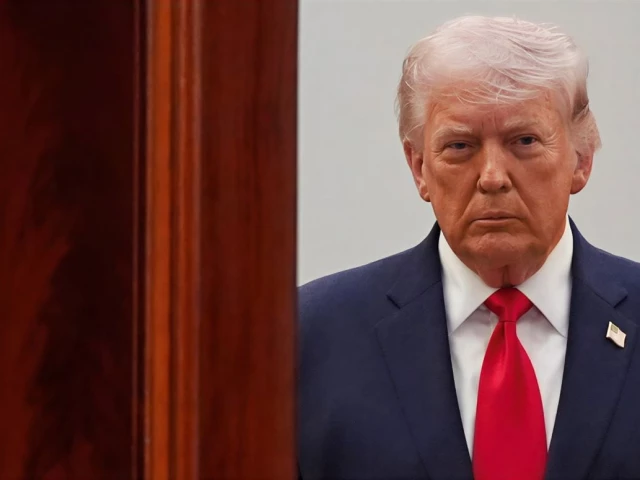
US President Donald Trump agreed to a two-week ceasefire with Iran, less than two hours before his 8pm deadline to destroy a "whole civilization", while responding to a high-stakes diplomatic effort from Pakistan to defuse tensions in the Middle East.
The NYT reported that Iran accepted Pakistan's proposal, saying ceasefire was approved by the new Supreme Leader.
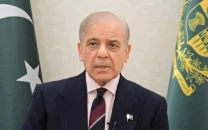
Prime Minister Shehbaz Sharif in an appeal to the US president had urged all sides to pause hostilities for two weeks as backchannel efforts gathered momentum toward a potential negotiated settlement. Trump said the ceasefire agreement was made on the condition that Iran agree to reopen the Strait of Hormuz.
"Based on conversations with Prime Minister Shehbaz Sharif and Field Marshal Asim Munir, of Pakistan, and wherein they requested that I hold off the destructive force being sent tonight to Iran, and subject to the Islamic Republic of Iran agreeing to the COMPLETE, IMMEDIATE, and SAFE OPENING of the Strait of Hormuz, I agree to suspend the bombing and attack of Iran for a period of two weeks. This will be a double sided CEASEFIRE!," Trump posted on Truth Social.
"The reason for doing so is that we have already met and exceeded all Military objectives, and are very far along with a definitive Agreement concerning Longterm PEACE with Iran, and PEACE in the Middle East," Trump wrote.
"We received a 10 point proposal from Iran, and believe it is a workable basis on which to negotiate. Almost all of the various points of past contention have been agreed to between the United States and Iran, but a two week period will allow the Agreement to be finalized and consummated. On behalf of the United States of America, as President, and also representing the Countries of the Middle East, it is an Honor to have this Longterm problem close to resolution," he added.
The Pakistani proposal involves a pause on Trump's threat and a commitment from Iran to open the Strait of Hormuz for two weeks. That two-week period would be used to negotiate a larger agreement to potentially end the war.
In a carefully calibrated appeal, the prime minister said diplomatic efforts were "progressing steadily, strongly and powerfully," with the potential to yield substantive results. He directly requested Trump to extend his deadline, warning that the existing timeframe risked derailing fragile progress.
Despite these diplomatic signals, the situation on the ground remained volatile. Explosions were reported across multiple locations, including Tehran and the Gulf, as US and Israeli forces intensified strikes on Iranian infrastructure, targeting bridges, airports and energy facilities.
In a significant escalation, Iran's Revolutionary Guards claimed responsibility for an attack on Saudi Arabia's Jubail petrochemical complex, a key hub in the kingdom's downstream energy sector. Fires and smoke were seen rising from the facility, underscoring the widening scope of the conflict.
Strikes on Kharg Island, Iran's principal oil export terminal, along with attacks on industrial sites in Arak and Mahshahr, highlighted the strategic dimension, with both sides targeting energy infrastructure central to economic stability.
The conflict has also expanded geographically. Israeli operations against Iranian-linked targets intensified, while Iranian missile barrages struck central Israel, causing damage and heightening fears of further escalation.
The humanitarian toll has been severe. Since hostilities erupted on February 28, more than 2,000 people have been killed in Iran and tens of thousands injured, with civilian areas, including residential buildings and religious sites, among those hit. International concern has grown over the impact on non-combatants.









This material may not be published, broadcast, rewritten, redistributed or derived from. Unless otherwise stated, all content is copyrighted © 2026 The Express Tribune.






COMMENTS
Comments are moderated and generally will be posted if they are on-topic and not abusive.
For more information, please see our Comments FAQ