Panda bond opens cheaper yuan funding
Updated 1 hour ago

IMF to review proposals as Pakistan seeks to reduce salaried, corporate rates and raise Rs50b
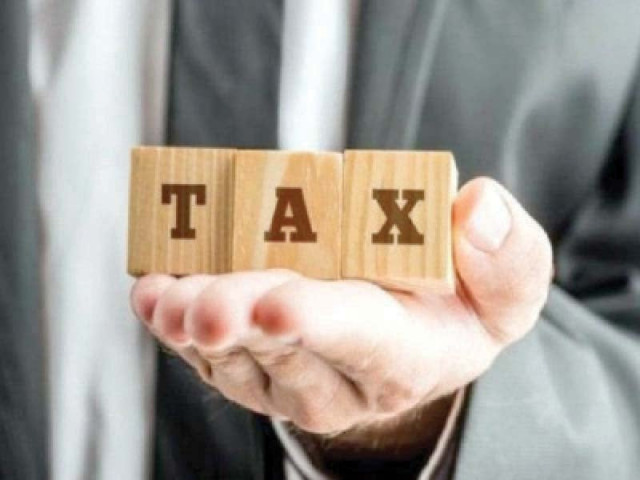
The government has shared its plan with the International Monetary Fund (IMF) to reduce salaried and corporate income tax rates, as it also considers recovering an additional Rs50 billion in the next fiscal year by charging sales tax on fast?moving consumer goods (FMCGs) on their printed market price.
The sources said the government has shared its plan with the IMF to reduce income taxes in the short to medium term. The estimated revenue impact of the relief measures ranges from over Rs400 billion to Rs950 billion, depending on the timing and scale of the rate cuts. Detailed discussions with the IMF mission have not yet taken place and will begin only when the IMF headquarters gives the green signal.
The government wants to significantly reduce income tax rates for the salaried class, lower corporate income tax, abolish advance tax on exporters, reduce the super tax (and gradually eliminate it), and abolish the capital value tax and inter?corporate dividend tax. The sources said the government believes there should be no tax on annual incomes up to Rs1 million, a 5% rate for incomes up to Rs2 million, and a maximum rate of 35% on incomes above Rs7 millionThis means the government is seeking to increase the number of slabs and relax the current very low threshold, under which a maximum income tax rate of 35% plus a 10% surcharge applies.
Sources said the government also wants to completely abolish the 10% surcharge, which would reduce the highest income tax rate to 35%. For corporate income and super tax, the government wants the IMF to agree on a five?year reduction plan, added sources.
An IMF mission led by Iva Petrova is visiting Pakistan to finalise the next fiscal year's budget and thrash out issues related to the power sector (including foreign firms' contract payments), the gas sector circular debt plan, sugar policy and the financial sector strategy.
Pakistan has committed to the IMF that it will take additional revenue measures to compensate for any losses due to relief to any sector. However, there is a view that the IMF should give some relaxation in the primary budget surplus target of 2% of GDP for the next fiscal year. Any cut in the primary budget surplus target could be used to offset the impact of income tax relief. It is unclear how forcefully the finance ministry can take this up with the IMF, especially when the IMF has already signalled that Pakistan should stay on the course of fiscal consolidation.
The government has also assured the IMF that it will take additional revenue measures equal to Rs215 billion. Out of this, it plans to generate Rs50 billion by changing the tax codes of FMCGs to the third schedule of the sales tax law. Under the third schedule, goods are taxed at the market price instead of charging sales tax at every stage of value addition. The proposal to expand the third schedule has also been deliberated at length by the committee led by Deputy Prime Minister Ishaq Dar.
Pakistan introduced the value?added sales tax mode under IMF?World Bank conditions 35 years ago, but since 1990 successive governments have been able to cover hardly 25% of the tax base, as the IMF admitted in its latest staff?level report. Shifting FMCGs to the market?price tax code may also reduce the additional taxes charged for selling goods to unregistered persons and can minimise leakages.
In addition to the standard 18% sales tax, the government also charges a 4% further sales tax and a 2.5% withholding tax from manufacturers for selling goods to unregistered persons. It is the job of the FBR to register businesses, which it has forced on the companies.
The IMF report stated that a broad set of basic goods remains exempt or concessionally taxed, historical zero?rating in export sectors has narrowed the base, and post?devolution fragmentation of GST on services has added compliance and administrative complexity through four separate provincial regimes. The IMF suggested that sales tax compliance could be increased through production monitoring, adoption of digital invoicing and FBR retailer registration.
The government has also assured the IMF that it "will reduce income and sales tax expenditures yielding 0.15% of GDP of revenues".
As part of its enforcement measures to generate another Rs215 billion, the government has informed the IMF that it will expand the new digital invoicing system that enables automatic calculation of sales tax liability. Better monitoring and calculation of sales tax liability is expected to generate Rs46 billion in additional revenues in the next fiscal year, according to the FBR. The FBR is deploying production monitoring in sectors with the largest tax gaps, notably textiles. There is an estimated Rs160 billion sales tax gap in the sugar, cement, tobacco, beverages and fertiliser sectors. It also plans to generate an additional Rs48 billion from monitoring production lines in the next fiscal year.









This material may not be published, broadcast, rewritten, redistributed or derived from. Unless otherwise stated, all content is copyrighted © 2026 The Express Tribune.












COMMENTS
Comments are moderated and generally will be posted if they are on-topic and not abusive.
For more information, please see our Comments FAQ