Panda bond opens cheaper yuan funding
Updated 1 hour ago

CPEC-II moves farming to centre stage where each side brings what other lacks
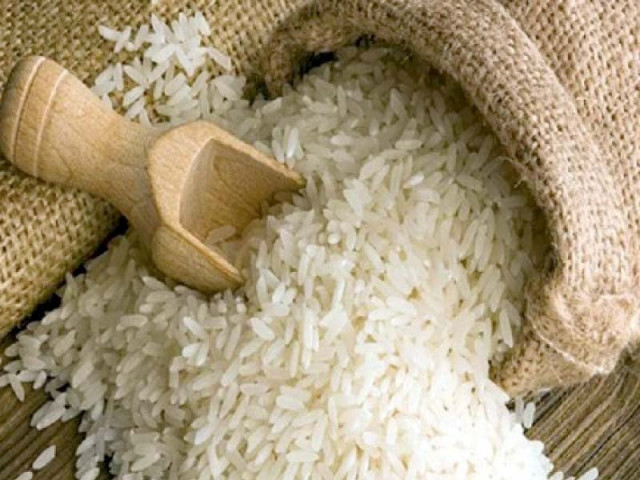
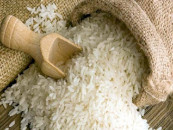
Close to Gujranwala, the rice fields are glowing soft green in the May heat. But the crop growing is not the traditional Basmati rice that farmers have planted for centuries. It is Chinese hybrid rice, born in a laboratory in Hunan, carried across the Karakoram Highway and cross-bred to thrive in Punjab's sunshine.
This single plant tells a much larger story, as Pakistan and China prepare to celebrate 75 years of diplomatic relations in May 2026, the most profound transformation is happening not in conference halls but between soil and stalk, on both sides of the border.
China in 1951, the year Pakistan extended its hand of recognition, was a country struggling to feed itself. A generation later, it engineered the greatest anti-hunger success in human history. The household responsibility system of the late 1970s unlocked village productivity. Hybrid rice, pioneered by scientist Yuan Longping, pushed yields beyond imagination. By 2024, China was producing more grain per hectare than almost any other large nation, not by accident but through a deliberate triad of seed innovation, precision irrigation and digital supply chains. Today, giant drones spray crops in minutes, satellite-guided tractors furrow Heilongjiang's black soil, and refrigerated high-speed trains carry seafood from Shandong to Xinjiang before it loses freshness. China has not just filled its own bowl; it has built an agricultural machine that feeds a fifth of humanity on 9% of the world's arable land.
What, then, does a Chinese agricultural revolution have to do with Pakistan? The answer rumbles along the China-Pakistan Economic Corridor. CPEC's second phase has moved farming to the centre stage, and the transaction is no longer a one-way street. China, with its immense appetite for edible oil, meat, protein and high-value fruit, needs diversified supply chains it can trust. Pakistan, sitting on a vast contiguous farming belt, needs technology, market access and capital. The result is a partnership where each side brings what the other lacks.
Now, the Sino-Pak partnership in the agriculture sector is becoming visible in many parts of the country, especially in Punjab and Sindh. For instance, Chinese seed technology, adopted by researchers at the University of Agriculture Faisalabad, has pushed per-acre maize yields substantially above national averages. Soybeans, once a minor crop, are crushed into meal that partially replaces imported feed and oil. China wins a reliable supply line; Pakistan saves precious foreign exchange and gives its farmers a lucrative rotation crop.
Nowhere is the collaboration more fragrant than in the chilli fields of Sindh. Until 2020, Pakistan grew modest quantities of chilli, plagued by poor drying techniques and high aflatoxin levels that blocked export. A contract-farming deal between Chinese spice companies and local growers changed the calculus. Hybrid chilli varieties, imported drying machines and a direct export corridor to China's Sichuan province turned a sleepy crop into a dollar earner.
Within three seasons, thousands of smallholders were delivering bright red, low-moisture chilli straight to Chinese buyers. The effect on the ground is anything but abstract: incomes climbed, women found work on sorting lines and China secured a dependable source of a kitchen staple that its domestic acreage cannot fill.
Also, at the University of Agriculture Faisalabad, the Pakistan-China Hybrid Rice Research Centre, jointly operated with the Longping High-Tech company, has released multiple varieties tailoured for different ecologies. Meanwhile, at Pir Mehr Ali Shah Arid Agriculture University in Rawalpindi, the Sino-Pak Centre of Excellence for Agricultural Advanced Technologies trains the next generation of breeders and agronomists. Pakistani students are also pursuing doctoral degrees in agronomy, food safety and supply chain management at Chinese universities each year under a bilateral talent programme. The flow of human capital is as critical as the movement of seeds.
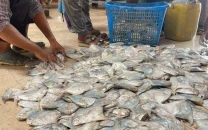
The collaboration also flows in the other direction. Pakistan's prized mangoes and oranges, handled through modern cold storage and a quarantine facility at the Sost border post, reach Chinese city dwellers within days. A dedicated foot-and-mouth disease-free compartment in Punjab, built to Chinese sanitary specifications, has opened the door for heat-processed meat exports, and once protocols for frozen products are firmed up, Pakistani halal beef and mutton will target China's massive protein market. Fishermen along the Makran coast are tending China-assisted offshore fish cages that rear sea bass and cobia – their harvest appearing on dining tables in Gwadar, and soon in Guangzhou.
These projects reshape lives on both sides of the border in granular ways. A Chinese family in Chengdu stirs a pot of chilli oil that began its journey on a farm near Mirpurkhas. A rice grower in Punjab uses a smartphone app linked to a weather station donated by a Xinjiang agricultural extension programme, saving his water while increasing yield. A Chinese agricultural machinery firm selling drip irrigation systems in Bhakkar discovers that its invention can withstand the ferocious summer heat of Thal desert, a finding that refines its equipment for Africa. Knowledge travels both ways.
All of this is backed by hard institutional scaffolding of the Joint Committee on Agriculture, a dedicated working group under CPEC, and a pipeline of investment in fertiliser and pesticide plants inside the Special Economic Zones. An agricultural industrial park near Gwadar is being designed to process fruit and seafood for export, creating thousands of jobs.
China's own agrarian miracle had been built on decades of steady, patient reform. It did not happen overnight, and neither will Pakistan's. But the 75th anniversary of diplomatic ties offers a moment to take stock of how far the collaboration has travelled.
In 1951, a handful of agricultural experts exchanged pleasantries. In 2026, a farmer in Okara irrigates his potato crop with a sensor that pings a satellite controlled from Beijing. Landlocked Punjab's produce travels on the same Karakoram Highway that donkey carts once struggled across. The bridge between the two old friends, it turns out, is made not just of steel and concrete but of grain, fruit and a shared determination to eat well, together, for the next 75 years.




This material may not be published, broadcast, rewritten, redistributed or derived from. Unless otherwise stated, all content is copyrighted © 2026 The Express Tribune.








COMMENTS
Comments are moderated and generally will be posted if they are on-topic and not abusive.
For more information, please see our Comments FAQ