China visit: growing anarchy and despotism
Updated 55 minutes ago

.
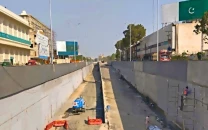
Though the roads leading to Thandi Sarak, Secretariat, Minara Road and the Commissioner's Office might physically take one to the SPSC head office in Hyderabad and its regional offices in Karachi, Sukkur and Larkana - truly getting what it stands for demands far more. While one makes it to the SPSC offices via these four roads, succeeding in its selection process demands more than the commission's mission statement - transparency, integrity, merit and ability. And perhaps that's what the ground realities and time demand.
One might wonder if a person selected purely on 'obsolete' notions of ability would even be able to get a posting, let alone work for the 'welfare' of the masses the way the stakeholders want them to. The SPSC has rightly transcended its orthodox notions of abilities and meritocracy. And this, as is being insisted by the aspirants, isn't ability in the raw sense alone.
Therefore, the SPSC's four roads take a broad view of the selection criteria: first, affluence; second, connections within the SPSC; third, connections beyond the SPSC; and fourth, the innocent ability the aspirants so loudly invoke. There's a reason behind its innocence. Intelligence alone, without connections, money and power, is drained before it can be applied for public good. And the commission is committed to wasting no human resources. The holistic view of competence therefore 'offers' invaluable dividends to society.
First, money, when it paves the road to success, results in the best dividend. It not only compensates for the flaws in one's ability but also helps wash away the traces of so-called integrity. However, the 'commission' alone rarely paves the road to the SPSC unless it is aided by those with sway. This brings one to the connections within - the second key criterion of ability. The connections help elevate ability and directly bring it in line with the SPSC's demands. One shouldn't be disillusioned that those in the commission and their relatives do not qualify for public service. They, in fact, deliver more blows than others - in the same way their near ones have served the cause of 'merit' in the commission. Therefore, critics should not disregard their service to the cause of ability and merit.
Third, being well connected with and in the good books of those calling the shots in the SPSC from beyond qualifies one for success. Various power centres determine the abilities and ultimate success of aspirants based on this connection alone, or on the first two criteria that the commission operates on.
Lastly, there is ability. Innocent ability or raw intelligence. The one that aspirants insist upon over the others. The poor. The disconnected. And the penniless aspirants. In the age of AI, what use could their intelligence possibly be? Therefore, it has been kept last in the pecking order of requirements. For the SPSC, what good could traditional talent possibly do in our society? Had they done any good, society would not have been in its current 'enlightened' shape.
Critics take a narrow view of competence and incompetence. For them, building connections, the art of flattery and more importantly, paying millions, don't count as competence. What they take for granted are the efforts one undertakes to qualify for the commission's implied benchmark of success.
The innovative criterion does not operate in a vacuum: it is instead being sustained and validated through the 'rightful' success of children of judges, powerful journalists and anti-corruption watchdogs - and yes, those who opportunistically mobilise the public against the innovative criterion of the commission for their vested interests. This isn't, however, peculiar to SPSC. Most of the country's affairs effectively operate by the SPSC's four roads to success.
The four roads remain open generously to anyone who can afford the toll. The poor are not excluded. They are simply asked to cough up what they cannot, know whom they cannot know, and be born to whom they were not born.






This material may not be published, broadcast, rewritten, redistributed or derived from. Unless otherwise stated, all content is copyrighted © 2026 The Express Tribune.


COMMENTS
Comments are moderated and generally will be posted if they are on-topic and not abusive.
For more information, please see our Comments FAQ