China visit: growing anarchy and despotism
Updated 1 hour ago

.
Another slap, another day.
We have all seen the video clip. A team of the Federal Investigation Agency (FIA) walks into a jeweller shop in Sarafa bazaar Karachi and proceeds to bully and manhandle the staff. A uniformed person first slaps a young man while searching his pockets. Then he turns around and slaps an older man. His sons protest seeing the FIA person manhandling their father in front of their eyes. There's a woman with the team. We do not know who she is, but she is equally rude with people in the shop. A few non-uniformed people with the FIA team are also seen beating people.
The video is hard to watch. It makes your blood boil. See it again. This time watch it like a father. Or a son. Place yourself in that Sarafa bazaar shop. Visualise FIA people treating you like animals. How does that feel?
And how does it feel when you are told that the head of the FIA has "taken notice" of the incident and, yes of course what else, ordered an enquiry. This is what the state does when state knows it has done something wrong. It knows full well but cannot bring itself to break the shackles of its own culture that produces such horrendous abuse of citizens in the first place. So far, when it comes to the abuse of citizens in this video, and the reaction of the state – no surprises.
It will stay this way. Nothing will change. An enquiry will be held, and as long as there is public outcry and pressure, some routine action will be taken. Some of the FIA abusers in the video will be suspended/reprimanded/warned/transferred (take your pick) and life will return to normal. Perhaps some higher ups in the organisation will tell the subordinates to check for cameras before starting to slap people. This lesson, above all, will be learnt.
But there's a deeper dilemma involved here.
Incidents like this happen dozens of times every day in every city and town of Pakistan. They are the norm, not the exception. The only exception is when they are caught on camera. Then they become a source of discomfort for the superiors. Law enforcement personnel know the soft power of public attention is fleeting, the hard power of a state-sanctioned slap is permanent.
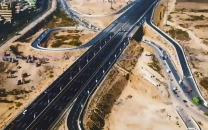
Cynical? Yes, quite so. Not because of the absence of change for the better – external validation is a case in point – but because there are some things we do know can change in Pakistan. And some not. So, for instance, we know we can build better infrastructure. The government of Punjab is doing stellar work in redesigning public places, remodelling congested bazars and markets, and also through the 'Suthra Punjab' project, cleaning up cities and towns across the province. This is good governance. But it is also, relatively speaking, easier governance.
The more difficult governance is reforming the culture of public service delivery organisations, and especially the law enforcement agencies. The fact that successive attempts at such reforms under various prime ministers, chief ministers and random other ministers have been spectacular failures reinforces the low credibility of present and future claims.
It is the requirement of the 'system' we are told as justification for the absence of real reform. This justification is always whispered in private, never offered in public. I once asked a very senior person in the federal government why he was not reforming the police as promised. He said, with a sigh I might add, that his people had told him that if he lost control over the police, he would lose control over his government. That was the end of the discussion.
Too simplistic and cliched? Perhaps. Failures often have complex reasons and factors. But then so does success. What explains Pakistan's remarkable military performance against India? What explains our surprising diplomatic heft as mediators in a war with global reach? What explains our recognition as a serious player in South Asia, Gulf and the larger Middle East? In fact, what explains our impressive technological achievements in the field of defence production? From nuclear weapons to fighter jets to long- and short-range missiles, we are manufacturing hi-tech weaponry few countries can.
And yet, we just cannot stop FIA officials from slapping fathers in front of their sons.
What explains this contradiction? Why such will and skill on one side, and such callousness and failure on the other? There is clearly something that people responsible for failures in service delivery are not willing to acknowledge. Or accept.
Attempts at reform, whenever they are undertaken, inevitably revert to the easy part of governance. So, police reform under an energetic leader will end up in refurbished thanas, refurnished offices, new computers and big TV screens, flashier police cars and more active TikTok accounts. That's where it all ends. What does not end are the slaps on the faces of helpless citizens.
I know Chief Minister Maryam Nawaz Sharif is trying to break the status quo of traditional governance. But her real test is this: reforming institutions that – as part of their ingrained culture – abuse, maltreat and exploit citizens. Getting such reform done is far more difficult than building world class infrastructure – impressive as this is – but it is much more long-lasting. And a thousand times more valuable for a common Pakistani.
But this incident did not happen in Punjab. The responsibility for this travesty lies with the FIA. Interior Minister Mohsin Naqvi is the boss of FIA. Like CM Maryam Nawaz, he too has built a reputation as a doer. He is not burdened by our regressive political and bureaucratic culture. He has picked Dr Usman Anwar as the Director General of FIA. Dr Usman has served as Inspector General of Police for Punjab for a lengthy stint both under Mohsin Naqvi and later with Maryam Nawaz. He must have performed well to merit such important appointments.
This makes the revolting FIA video even more surprising. If people like Maryam Nawaz, Mohsin Naqvi and Dr Usman Anwar cannot reform police and FIA, then can anyone? And if not, then we return to my initial cynicism that nothing will change. Another notice, another enquiry, another reprimand, another suspension, another transfer – and uniformed thugs will live to slap another father in front of his sons on another day in another place somewhere in Pakistan.






This material may not be published, broadcast, rewritten, redistributed or derived from. Unless otherwise stated, all content is copyrighted © 2026 The Express Tribune.


COMMENTS
Comments are moderated and generally will be posted if they are on-topic and not abusive.
For more information, please see our Comments FAQ