Trump seeks changes to Iran deal draft negotiated by envoys, Axios reports
Updated 39 minutes ago

'The aggressor must be punished and taught a lesson that will deter them,' says parliamentary speaker
Speaker of Iran’s Parliament Mohammad Bagher Ghalibaf said on Tuesday night that Iran was not seeking a ceasefire as the country's conflict with the United States and Iran that has plunged the Middle East into a crisis drags on.
In a post on X, he said: "Certainly we aren't seeking a ceasefire. We believe the aggressor must be punished and taught a lesson that will deter them from attacking Iran again.
"The Zionist regime has consistently perpetuated a vicious cycle of 'war, negotiations, ceasefire, then war again' throughout its disgusting history. We will break this cycle."
2/ The Zionist regime has consistently perpetuated a vicious cycle of "war, negotiations, ceasefire, then war again" throughout its disgusting history. We will break this cycle.
— محمدباقر قالیباف | MB Ghalibaf (@mb_ghalibaf) March 10, 2026
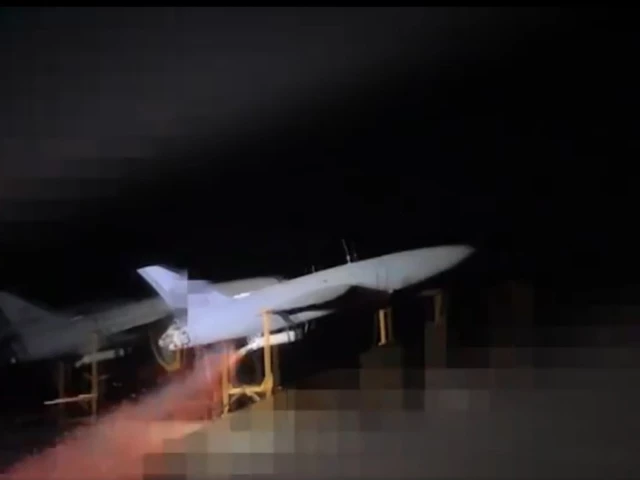
The comments came as the Iranian army said it launched a new spate of attacks targeting a military center in Israel's Haifa and the satellite intelligence reception centre of the Ofek spy satellites.
📹 یک مرکز نظامی در حیفا و مرکز دریافت اطلاعات ماهوارههای جاسوسی افق هدف حمله پهپادهای نیروی زمینی ارتش
— خبرگزاری تسنیم (@Tasnimnews_Fa) March 10, 2026
اطلاعیه ارتش:
مرکز نظامی واقع در حیفا که هدف قرار گرفته نقش کلیدی در ساخت تسلیحات نظامی داشته است#ازالة_اسرائیل_من_الوجود pic.twitter.com/Ozxtm6ADq0
At the same time, Iranian naval officer Ali Reza Tangsiri rubbished reports of an oil tanker passing through the Strait of Hormuz with a US military escort as "utterly false".
He warned that any passage of the US fleet and its allies would be "halted by the net of Iranian missiles and suicide drones".
ادعای عبور کشتی نفتی با اسکورت ارتش امریکا از تنگه هرمز کذب محض است.
— علیرضا تنگسیری (@alirezatangsiri) March 10, 2026
هر تردد ناوگان امریکایی و متحدانش، در تور موشکها و شهپادهای ایرانی متوقف خواهد شد.
Ghalibaf earlier said that Iran would not leave any aggression unanswered, declaring that “whatever the enemy does, we will undoubtedly respond with a proportionate and immediate retaliation.”
He added that “no malice will go unanswered”, emphasising that Iran would apply what he described as the principle of “an eye for an eye”.
دشمن بداند هر کاری انجام دهند، بدون تردید ما به ازای متناسب و فوری خواهد داشت؛ هیچ شرارتی بیپاسخ نمیماند، ما امروز قاعدهٔ «چشم در برابر چشم» را حکم میکنیم؛ بیتعارف، بیاستثنا.
— محمدباقر قالیباف | MB Ghalibaf (@mb_ghalibaf) March 10, 2026
اگر جنگ زیرساخت را آغاز کنند، بدون شک زیرساختها را هدف قرار خواهیم داد.
He further cautioned that attacks on infrastructure would be met with a similar response, stating that if an adversary initiated war against Iran’s infrastructure, the country would “undoubtedly target their infrastructure” in retaliation.
Meanwhile, Iran’s Supreme National Security Council Secretary Ali Larijani responded strongly to a recent Truth Social post by US President Donald Trump, rejecting what he described as threats directed at Iran.
In his post, Trump warned that if Iran disrupted oil shipments through the Strait of Hormuz, the US would respond forcefully. “If Iran does anything that stops the flow of Oil within the Strait of Hormuz, they will be hit by the United States of America TWENTY TIMES HARDER than they have been hit thus far,” Trump wrote.
ملت عاشورایی ایران، از تهدیدات پوشالی شما نمیترسند.
— Ali Larijani | علی لاریجانی (@alilarijani_ir) March 10, 2026
بزرگتر از شما هم نتوانستند ملت ایران را حذف کنند.
مراقب خود باشید حذف نشوید! pic.twitter.com/v1aWLoJk7K
He added that the US would “take out easily destroyable targets that will make it virtually impossible for Iran to ever be built back, as a Nation, again — Death, Fire, and Fury will reign upon them.”
Responding to the remarks, Larijani said, “The Ashura-loving nation of Iran does not fear your paper threats.” He added that Iran has historically endured pressure and confrontation, stating, “Even those greater than you could not eliminate the Iranian nation.” He also issued a warning in response to Trump’s statement, saying, “Watch out for yourself—lest you be eliminated!”
Moreover, Iranian President Masoud Pezeshkian said that Iran’s long history ensures its survival despite threats. “Iran is the heir to a civilization at least 6,000 years old. Through the trials of history, no power has ever succeeded in erasing this storied name. Anyone who entertains the illusion of destroying Iran knows nothing of history. Aggressors have come and gone; Iran has endured,” he posted on X.
Iran is the heir to a civilization at least 6,000 years old. Through the trials of history, no power has ever succeeded in erasing this storied name. Anyone who entertains the illusion of destroying Iran knows nothing of history. Aggressors have come and gone; Iran has endured. pic.twitter.com/XX63yFuynT
— Masoud Pezeshkian (@drpezeshkian) March 10, 2026
Iran Military Media outlines new strike strategy
According to a post by Iran Military Media on X, two key factors have prompted Tehran to fundamentally change its missile launch strategy: “indiscriminate US attacks on urban centers and civilian infrastructure” and “the blinding of the enemy’s air‑defence network in the region.”
Under the new approach, Iranian strikes will operate as a “continuous cycle, effectively ongoing around the clock with no pause.”
The post also stated that a more destructive mix of missiles will be deployed, “all carrying warheads weighing over one ton.” Militarily, the focus will be on causing damage that is “either irreversible or would take years to repair,” it added.
It further said Iran will “concentrate its firepower more tightly,” expand the “geographic scope of its strikes,” and increase their intensity, making attacks far more devastating. The post concluded that there is now broad consensus in Iran that “the time has come to escalate the attacks.”
Two factors—the indiscriminate U.S. attacks on urban centers and civilian infrastructure, and the blinding of the enemy’s air‑defense network in the region—have prompted Iran to fundamentally change its launch strategy. From now on, Iranian strikes will form a continuous cycle,…
— Iran Military Media (@IRMilitaryMedia) March 10, 2026
Iran's intelligence ministry arrests foreign agents, state media reports
Iran's intelligence ministry has arrested a foreign national it said was conducting espionage on behalf of the United States and Israel, and acting as a proxy for two Gulf countries, state media cited the ministry as saying on Tuesday, according to Reuters.
The ministry also said it had arrested 30 spies, internal mercenaries, and operational agents of Israel and the US over the past few days.
Pentagon chief says US intensifying strikes on Iran
US attacks on Iran will hit a new intensity Tuesday and the war will continue as long as President Donald Trump decides, Pentagon chief Pete Hegseth said.
"Today will be yet again, our most intense day of strikes inside Iran -- the most fighters, the most bombers," Hegseth told a news conference at the Pentagon more than 10 days into the US-Israeli war against the Islamic republic.
As for a timeline for the war, Trump "gets to control the throttle. He's the one deciding," Hegseth said. "It's not for me to posit whether it's the beginning, the middle or the end," the defense secretary said.
Trump had said the previous day that the war could end "very soon," but remained vague. Among the goals is destruction of Iran's navy, which has been targeted with "artillery, fighters, bombers and sea-launched missiles," General Dan Caine, the top US military officer, said alongside Hegseth on Tuesday.
Iran has vowed to block all oil exports via the Gulf while the war lasts, while Trump has threatened "death, fire, and fury" if Tehran interferes with crude exports.
Caine said US forces continue "to hunt and strike mine-laying vessels and mine storage facilities" -- weapons Iran could use to block maritime traffic.
Hegseth meanwhile accused Iran of "moving rocket launchers into civilian neighborhoods, near schools, near hospitals to try to prevent our ability to strike," saying "that's how they operate."
He did not directly address a strike early in the conflict that hit an elementary school in the southern city of Minab, which Iran said killed more than 150 people, but said that "no nation takes more precautions to ensure there's never targeting of civilians than the United States of America."
Trump has said the incident is being investigated, while suggesting Monday that Iran may have fired a Tomahawk missile at the school itself.
Iran does not possess Tomahawks -- a US weapon used extensively by US forces, including in the current conflict.
Tehran has responded to the war by launching waves of missiles and drones at countries in the region that host US forces, but Hegseth said Tuesday that the volume of fire is lessening. "The last 24 hours have seen Iran fire the lowest number of missiles they've been capable of firing yet," he said.
Iran fighting back but not stronger than US thought, top US general says
Iran is fighting back but is not tougher than the US military expected before the war, the top US general told reporters, as the Pentagon promised its most intense day of strikes in the 10-day-old conflict.
The Pentagon says the number of Iranian strikes has fallen sharply from the start of the war, as the Pentagon bombs Iran's weapons inventories and targets Iran's more limited number of missile launchers.
Asked if Iran was a stronger adversary than he expected when the US military drew up its war plans, General Dan Caine, chairman of the Joint Chiefs of Staff, told reporters the fight was not harder than expected.
"I think they're fighting, and I respect that, but I don't think they are more formidable than what we thought," Caine told the Pentagon briefing.
Oil plunges, stocks steady as Trump says Iran war over 'very soon'
Oil prices sank and equities steadied Tuesday following a wild day of swings that came after US President Donald Trump signalled that the US-Israel war on Iran could end sooner than thought.
International oil benchmark, Brent North Sea crude, plunged nearly seven percent to $92 a barrel, a day after nearing $120.
"This downward swing in oil helped US stocks stage an impressive comeback on Monday to trade in positive territory -- a trend which continued in Asia and is now being repeated in Europe," noted AJ Bell investment director Russ Mould.
The Paris and London stock markets gained around 1.5 per cent, after European gas prices sank 15 per cent, helping ease concerns over a renewed surge for global inflation. Frankfurt gained over two per cent.
Asian stock markets rallied, with Seoul up more than five per cent and Tokyo ending with a gain of 2.9 per cent.
There were advances in Hong Kong, Shanghai, Sydney, Singapore, Bangkok, Mumbai, Taipei, Manila and Jakarta.
Wall Street was unable to continue the rally when trading opened Tuesday, with the Dow and S&P 500 opening flat while the Nasdaq edged higher.
"This is still a fluid market, and if the headlines deteriorate, or the war escalates, then we could see prices reverse once again," said Kathleen Brooks, research director at trading group XTB.
As the crisis in the crude-rich Middle East entered its second week, Trump said the campaign was far ahead of his initial timeline of around a month. "It's going to be ended soon, and if it starts up again they'll be hit even harder," he told a news conference in Florida on Monday.
Iran responded by vowing to block Gulf oil exports and asserting that they, not the US, would "determine the end of the war".
Still, Trump's remarks helped reverse the previous day's spike in oil prices, which had surged since Iranian attacks on shipping closed the strategic Strait of Hormuz in response to the US-Israeli strikes that killed its supreme leader.
The surge also followed strikes on an oil depot in Iran and after attacks on oil infrastructure in Saudi Arabia and Bahrain.
The US president also said he would temporarily waive some oil-related sanctions, after acknowledging talks with Russian counterpart Vladimir Putin.
Investors' attention focused on the Strait of Hormuz, through which nearly 20 per cent of the world's crude oil usually transits from the Gulf to world markets.
About 10 vessels in or near the strait have come under attack since Iran all but blocked the strait in retaliation for the US-Israeli strikes, according to shipping experts.
"While things have calmed down, ultimately, the biggest factor for markets will be whether energy supplies from the region resume normally," said Forex.com analyst Fawad Razaqzada.
"Until traders see confirmation that shipping through the Strait of Hormuz has stabilised and production is returning, oil prices are unlikely to retreat dramatically from current levels," he added.
President Emmanuel Macron has said France and its allies are working on a "purely defensive" mission to reopen the strait, aiming to escort ships "after the end of the hottest phase of the conflict".
Iran says oil blockade will continue until attacks end
Iran's Revolutionary Guards said on Tuesday they would not let any oil be shipped from the Middle East if US and Israeli attacks continue, prompting President Donald Trump to say the US would hit Iran much harder if it blocked exports.
The rhetoric did little to quell a fall in crude prices and a rally in global shares that followed Trump expressing confidence in a swift end to hostilities, even after Iran showed defiance by naming Mojtaba Khamenei as its new supreme leader.
Trump said on Monday the US had inflicted serious damage on Iran's military. He also predicted the conflict would end before the initial four-week time frame he had set out, although he had not defined what victory would look like.
Israel says its war aim is to overthrow Iran's system of clerical rule.
"Our aspiration is to bring the Iranian people to cast off the yoke of tyranny," Israeli Prime Minister Benjamin Netanyahu said in a statement issued by his office on Tuesday.
"In the end, that depends on them. But there is no doubt that through the actions taken so far we are breaking their bones - and our hand is still extended," he said. "If we succeed together with the Iranian people, we will bring about a permanent end - if such things exist in the life of nations."
Read More: Erdogan tells Iran violation of Turkey's airspace ‘cannot be excused for any reason’
US officials have mainly said Washington aims to destroy Iran's missile capabilities and nuclear programme, but Trump has said the war can end only with a compliant Iranian government.
At least 1,332 Iranian civilians have been killed and thousands wounded, according to Iran's UN ambassador, since the US and Israel began air and missile strikes across Iran at the end of February.
Trump said US attacks could increase sharply if Iran sought to block tanker traffic through the Strait of Hormuz, which handles one-fifth of the world's oil supply. “We will hit them so hard that it will not be possible for them or anybody else helping them to ever recover that section of the world," Trump told a press conference on Monday.
Iran says it will determine end of war
The Islamic Revolutionary Guards Corps said it would not allow any oil to leave the region if attacks from the US and Israel continue. "We are the ones who will determine the end of the war," a spokesperson said, describing Trump's comments as "nonsense", according to state media.
In a later Truth Social post, Trump repeated his warning. "If Iran does anything that stops the flow of Oil within the Strait of Hormuz, they will be hit by the United States of America TWENTY TIMES HARDER than they have been hit thus far," he said.
“If Iran does anything that stops the flow of Oil within the Strait of Hormuz, they will be hit by the United States of America TWENTY TIMES HARDER than they have been hit thus far.” - @POTUS pic.twitter.com/EfJm0xQ9Jz
— Karoline Leavitt (@PressSec) March 10, 2026
Saudi Aramco, the world's top oil exporter, warned on Tuesday of "catastrophic consequences" for global oil markets if the war continued to disrupt shipping in the Strait of Hormuz.
The strait is the world's most vital oil export route, connecting the biggest Gulf oil producers with the Gulf of Oman and the Arabian Sea. The war has already effectively shut the Strait of Hormuz, leaving tankers unable to sail for more than a week and forcing producers to halt pumping as storage facilities fill.
Iranian Foreign Minister Abbas Araqchi said Tehran was unlikely to resume negotiations with the US, which he said had spoken of progress after three rounds of talks. "Still, they decided to attack us. So, I don't think talking to the Americans anymore would be on our agenda anymore," he said in an interview with PBS.
Read More: Qatar arrests 313 people for sharing footage, ‘misleading information’ amid attacks by Iran
The appointment on Monday of Mojtaba Khamenei to succeed his slain father, Ayatollah Ali Khamenei, appeared to dash hopes of a swift end to the war, sending oil markets surging and share markets nosediving. Markets swung in the other direction when Trump predicted a quick end to the war, and after reports of a possible easing of sanctions on Russian energy.
After speaking with Russian President Vladimir Putin, Trump said the US would waive oil-related sanctions on "some countries" to ease the shortage.
According to multiple sources, that could mean a further easing of sanctions on Russian oil, which could complicate efforts to punish Moscow for its war in Ukraine. Other options include a possible release of oil from strategic reserves or restricting US exports, sources said.
Brent crude futures LCOc1 fell more than 10% on Tuesday after soaring by as much as 29% on Monday to their highest since 2022. Global stock markets also bounced.
The price of gasoline has particular political resonance in the United States, where voters cite rising costs as a top concern ahead of the November midterm elections, when Trump's Republicans will try to keep control of Congress.
A Reuters/Ipsos poll released Monday found 67% of Americans expect gas prices to rise over the coming months, and only 29% approve of the war.
Tehran was choked in black smoke after an oil refinery was hit, an escalation in strikes on Iran's domestic energy supplies. World Health Organisation chief Tedros Ghebreyesus warned of the fire risks contaminating food, water and air.
Turkey said NATO air defences had shot down a ballistic missile that was fired from Iran and entered Turkish airspace, the second such incident of the war. Iran did not immediately comment on the report.
Israel's military said it had launched new attacks in central Iran and struck the Lebanese capital, Beirut, where Israel has extended its campaign after the Iran-backed militia Hezbollah fired across the border.
In Australia, five Iranian women's soccer team players were granted humanitarian visas after they sought asylum, fearing persecution in their home nation. Canberra has also promised to send military surveillance aircraft to the Middle East and missiles to the United Arab Emirates to help them defend themselves against attacks from Iran.
Turkiye warns Iran over airspace violations
Turkish Foreign Minister Hakan Fidan told his Iranian counterpart, Abbas Araghchi, that violations of Turkish airspace are "unacceptable," according to TRT World.
The Turkish broadcaster stated that, according to diplomatic sources, the conversation between the foreign ministers focused on a recent missile attack that violated Turkish airspace, prompting Ankara to seek clarification and assurances from Tehran.
In a phone call on Tuesday, Fidan warned Araghchi that Turkiye will continue to take all necessary measures to defend its sovereignty, TRT World said citing Foreign Ministry sources.
Fidan also underlined that all regional parties must refrain from actions that undermine security or put civilian lives at risk. Araghchi, meanwhile, stated that the missiles directed towards Turkish airspace did not originate from Iran, adding that a comprehensive investigation into the matter is underway.
Patriot defences deployed in Turkiye
Turkiye has announced the deployment of a Patriot missile defence system in Malatya, in the centre of the country, according to Al Jazeera. The move comes a day after NATO intercepted a second ballistic missile in Turkish airspace.
The deployment was announced following a phone call between Turkish President Recep Tayyip Erdogan and Iranian President Masoud Pezeshkian, during which the Iranian president denied that the missile had been fired from Iran, Al Jazeera reported.
A Turkish defence ministry statement said that "necessary measures are being taken for the security of our borders and airspace, and consultations are being held with NATO and our allies," adding that NATO had also strengthened its air and missile defence measures in the region. The Patriot system, it said, was being deployed in Malatya to support the protection of Turkish airspace.
Malatya is home to Turkiye's Kurecik airbase, a key facility manned by US troops that houses a NATO early-warning radar system capable of detecting Iranian missile launches, Al Jazeera reported.
Iran tells EU chief to ‘spare the hypocrisy’
Esmaeil Baghaei, the spokesperson for Iran’s Foreign Ministry, reacted to a speech by European Union Chief Ursula von der Leyen during which she said “The people of Iran deserve freedom, dignity, and the right to decide their own future.”
Commenting on a video of von der Leyen’s speech, Baghaei wrote on X, “Please spare the hypocrisy. You’ve made a career out of standing on the wrong side of history – green-lighting occupation, genocide, and atrocities, and now laundering US/Israeli crime of aggression and war crimes against Iranians.”
Please spare the hypocrisy. You’ve made a career out of standing on the wrong side of history—green-lighting occupation, genocide, and atrocities, and now laundering U.S./Israeli crime of aggression and war crimes against Iranians.
— Esmaeil Baqaei (@IRIMFA_SPOX) March 10, 2026
Where was your voice when more than 165… https://t.co/t0UeNArnxM
Baghaei asked the EU chief, “Where was your voice when more than 165 innocent IRANIAN little angels were massacred in the city of Minab?” referencing a girls’ school in Southern Iran that was hit on February 28 during the first day of US and Israeli attacks on the Islamic Republic.
“Why don’t you say anything when hospitals, historical sites, oil facilities, diplomatic police headquarter, firefighting stations and residential neighborhoods are wickedly targeted?” the spokesperson questioned.
Further, he accused the EU leadership of being silent “in the face of lawlessness and atrocity”, saying this “is nothing less than complicity”.
Baghaei ended his tweet by telling the EU chief to “Scroll through the replies under your own post and see what people really think about your “whitewashing of criminals.”
Citing 'strategic mistake' EU pivots back to nuclear energy
EU chief Ursula von der Leyen on Tuesday said Europe's turn away from nuclear power had been a "strategic mistake", as soaring oil prices rekindled concerns about the bloc's energy vulnerability.
Speaking at a nuclear summit in Paris, the European Commission president endorsed a return to atomic energy, saying the European Union would back investments in "innovative nuclear technologies". "It was a strategic mistake for Europe to turn its back on a reliable, affordable source of low-emission power," she said.
"For fossil fuels, we are completely dependent on expensive and volatile imports. They are putting us at a structural disadvantage to other regions," von der Leyen said at the Paris summit, which aims to boost the use of civilian nuclear energy. "The current Middle East crisis gives a stark reminder of the vulnerability it creates," she added.
Her comments came as the EU is set to unveil new energy plans that von der Leyen said will include "a 200-million-euro ($230-million) guarantee to support investment in innovative nuclear technologies".
Brussels is focusing in particular on small modular reactors (SMRs), which the commission would like to see in operation by the early 2030s.
SMRs have about a third of the generating capacity of a traditional nuclear power reactor -- but are relatively simple to build and thus more affordable.
Their designs promise enhanced safety features and more efficient operations than traditional plants, but have yet to be deployed at scale.
Merz says sees 'no common plan' to quickly end Iran war
German Chancellor Friedrich Merz has voiced concern that the US and Israel appear to have "no common plan" for bringing the war against Iran "to a swift and convincing end".
"The United States and Israel have been waging war against Iran for over a week. We share many of the goals, but with each day of the war, more questions arise," Merz said. "We are particularly concerned that there is apparently no common plan for how this war can be brought to a swift and convincing end."
Speaking at a Berlin press conference alongside Czech Prime Minister Andrej Babis, Merz warned that "Germany and Europe have no interest in an endless war". "We have no interest in the dissolution of Iran's territorial integrity, statehood or economic viability."
The US-Israeli military campaign must not lead to "a scenario like the one we saw in Libya, Iraq or other states in the region," Merz said. "This affects our security, our energy supply and may also have an impact on migration."
Merz added that "the world needs a stable, viable Iran as part of a regional peace and security order in which neither Israel nor other partners are threatened and in which Tehran abandons its nuclear ambitions and renounces terrorism".
Mideast war displaces 100,000 in Lebanon in single day: UN
Israeli strikes and mass evacuation orders have seen nearly 700,000 people flee their homes in Lebanon in just over a week, with more than 100,000 leaving in 24 hours, the UN said Tuesday.
"Lives have been upended on a massive scale," said Karolina Lindholm Billing, the representative in Lebanon of UNHCR, the United Nations refugee agency.
In just over a week since the new escalation in Lebanon, Israeli air strikes and evacuation warnings to residents of dozens of villages "forced families across Lebanon to flee within minutes", she told reporters in Geneva, speaking from Beirut.
She said "more than 667,000 people in Lebanon have now registered on the (Lebanese) government's online platform as displaced". "This is an increase of 100,000 in just one day," Lindholm Billing said, stressing that this is "a faster pace of displacement compared to 2024", during Israel's last war against Hezbollah in Lebanon.
Lebanon was drawn into the Middle East war last week when Iran-backed Hezbollah attacked Israel in response to the killing of Iranian supreme leader Ayatollah Ali Khamenei in US-Israeli strikes.
Lebanese President Joseph Aoun on Monday accused Hezbollah of working to "collapse" the state and expressed Beirut's readiness for "direct negotiations" with Israel.
Lebanese authorities said on Monday that Israel's attacks since March 2 have killed at least 486 people, including 84 children.
AFP has not been able to carry out a detailed breakdown of the figures.
Lindholm Billing said that around 120,000 of those displaced in Lebanon were sheltering in government-designated collective sites, while many others were staying with relatives or friends or searching for accommodation.
"Many -- often displaced for the second time since the hostilities in 2024 -- fled in a rush with almost nothing, seeking safety in Beirut, Mount Lebanon, northern districts and parts of the Beqaa" in the east, she said.
The World Health Organization meanwhile warned that "overcrowding in shelters and host homes is heightening public health risks, including disease outbreaks, interruptions to routine health services, and disruption of care for chronic diseases, maternal health conditions and mental health disorders".
Many people were also making their way to neighbouring Syria.
More than 78,000 Syrians had returned home from Lebanon since the latest war began, while over 7,700 Lebanese had also crossed the border, Lindholm Billing said, citing Syrian authorities.
She said UNHCR was rushing to replenish its country-level stocks of essential items in Lebanon but its operations in the country were currently only 14 percent funded.
The UN's World Food Programme also said it had activated its food and cash aid to help those displaced in Lebanon.
"However, as needs continue to outpace our capacity to respond, we are in very urgent need of additional funding and support in order to continue to sustain the scale of the response," warned WFP Lebanon country director Anne Valand.






This material may not be published, broadcast, rewritten, redistributed or derived from. Unless otherwise stated, all content is copyrighted © 2026 The Express Tribune.





COMMENTS (1)
Comments are moderated and generally will be posted if they are on-topic and not abusive.
For more information, please see our Comments FAQ