Over 175k visas revoked, State Dept says
Updated 43 minutes ago

US warns capable of resuming war with Iran as deal remains elusive
An adviser to Iran's supreme leader Mojtaba Khamenei has accused US President Donald Trump of "betraying diplomacy for the third time" in his response to a current peace proposal.
Mohsen Rezaei, a military adviser to Iran's supreme leader, writes on X: "As expected, the president of the United States is betraying diplomacy for the third time."
The two previous times appear to refer to the Israeli bombing campaign launched on Iran in June last year, and the US-Israeli bombing campaign launched on February 28, both times amid indirect US-Iran nuclear talks.
"By continuing the naval blockade and making excessive demands in negotiations," said Rezaei, Trump has "again proven he is not inclined toward negotiations and is pursuing other goals."
Mohsen Rezaei was pointed at Trump's continuing a naval blockade imposed on Iran and what he described as excessive demands in negotiations, as he blamed the White House for the failure to reach a peace deal.
The US president ended a White House meeting on Iran on Friday without announcing whether he would approve a proposed agreement with Tehran, despite saying earlier he would make a "final determination".
Instead, the US president outlined a series of demands on Truth Social, including that Iran "must agree" never to possess a nuclear weapon and reopen the Strait of Hormuz without collecting any toll.
He also said Iran's uranium stockpile would either be handed over to the US or destroyed under international supervision.
The proposed memorandum of understanding would reportedly extend the ceasefire by 60 days, reopen shipping through the Strait of Hormuz and pave the way for talks on Iran's nuclear programme.
"Talks with the US are ongoing and there are still minor disagreements," said a member of Iran's negotiating team, Saeed Ajorloo.
"If the final text is approved, we will enter a 60-day dialogue about the details," Ajorloo said in a television interview that was reposted on Telegram by Iran's chief negotiator, Mohammad Bagheri Ghalibaf.
Meanwhile, the United States warned on Saturday it was "more than capable" of resuming war with Iran after President Donald Trump said any peace deal must adhere to his red lines, including Tehran never being able to develop nuclear weapons.
"We're focused on being postured and prepared to re-engage if we have to," Defense Secretary Pete Hegseth said during a visit to Singapore on Saturday, but US President Donald Trump would prefer not to.
The president's goal was that Iran must not be capable of having a nuclear weapon, Hegseth said, and "those goal posts haven't shifted at all."
He said that the Iranians "are coming in our direction. The talks have been productive. I think they know where it needs to go."
"They want to say that they control the strait (of Hormuz) but we do," Hegseth added.
Earlier, while attending the Shangri-La Dialogue in Singapore, Hegseth said that Trump was being patient in making sure any peace pact with Iran ensures that it will not acquire a nuclear weapon.
"If Iran doesn't want to make a great deal that ensures they don't get a nuclear weapon, they can deal with" the US military, Hegseth said, adding that weapons stockpiles were enough to get the job done.
The White House had signaled Trump was close to a decision on a potential deal, though Tehran denied there was a final agreement on ending the conflict.
US sources had told AFP the deal was waiting on Trump's sign-off, but he made no decision after a White House Situation Room meeting on Friday.
US Central Command (CENTCOM) posted on X that American forces "remain present and vigilant across the region."
The efforts to reach a deal were thrown into question this week by US strikes on the Iranian port of Bandar Abbas, countered by retaliatory Iranian fire.
Iran's IRNA state news agency said air defenses shot down a drone "belonging to the US-Zionist aggressor enemy" on Saturday, citing a statement from the army.
Nevertheless diplomacy continued, including to stop fighting in Lebanon, which Iran has insisted be included in any end to the war and where Israeli forces advanced further even as military delegations from both nations met at the Pentagon.
Trump said his priorities in any deal include Iran agreeing to never develop nuclear weapons and the re-opening of the blockaded Strait of Hormuz.
"President Trump will only make a deal that is good for America and satisfies his red lines," a White House official told AFP, adding: "Iran can never possess a nuclear weapon."
Iranian foreign ministry spokesman Esmaeil Baqaei pushed back on Trump's conditions, saying the Islamic republic "said goodbye to the language of 'must' 47 years ago."
Exchanges of messages were continuing, he added, but "no final agreement has been reached."
In his social media post, Trump said Tehran would remove mines from the Strait and end its closure of the waterway with "no tolls," while the US would lift its blockade.
The two countries would also coordinate on removing and destroying Iran's enriched uranium, he said, adding that "no money will be exchanged, until further notice."
Iran's Fars news agency, however, cited sources as saying Tehran was demanding "the immediate release of $12 billion" before moving to the next phase of negotiations.
On the toll-free reopening of Hormuz, the sources said "no such clause appears in the text of the agreement," while Trump's comment on destroying Iran's nuclear material "is fundamentally baseless."
Iran's ISNA news agency on Saturday cited lawmaker Alireza Salimi as saying a plan "to implement Iran's management and sovereignty over the Strait of Hormuz will soon be approved by parliament."
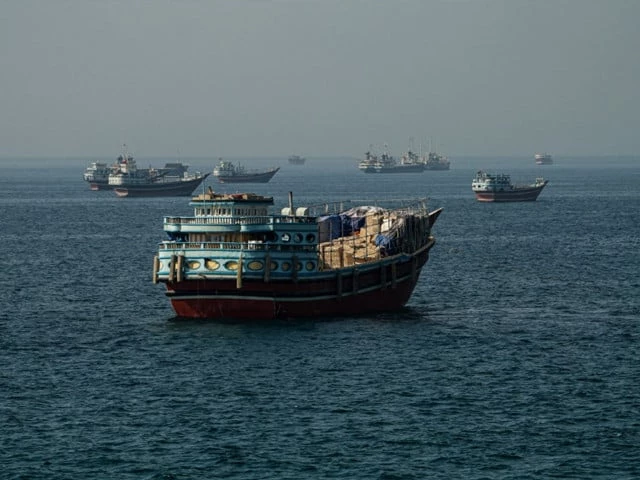
Meanwhile, Iran's Tasnim news agency said the US blockade in the strait remains in place and its ships "are receiving warnings from CENTCOM to stop and not cross the blockade line."
"Both sides are speaking in a way that keeps their supporters satisfied. It's not clear who is telling the truth," Ali, from Tonekabon north of Tehran, told AFP.
Lebanon
Israeli Prime Minister Benjamin Netanyahu said on Friday his country's forces had pushed deeper into Lebanon, even as military delegations from both countries held landmark security talks in Washington.
Israel kept up its heavy bombardment of south Lebanon, with President Joseph Aoun emphasising in a call with US Secretary of State Marco Rubio "the need to exert all efforts to reach a ceasefire".
A truce to halt the fighting between Israel and Tehran-backed Hezbollah officially took effect on April 17, but has never been observed, with Iran insisting that Lebanon be included in any agreement with the United States to end the wider war that engulfed the region in February.
Both Israel and Hezbollah accuse each other of violating the April ceasefire and justify their attacks by the other's alleged breaches.
Netanyahu announced Friday that Israeli forces had advanced beyond a river that runs around 30 kilometres (20 miles) north of the Lebanon-Israel frontier.
"Our forces have crossed the Litani, they have moved up to the commanding terrain," he said in a video released by his office, adding Israel was "hitting Hezbollah head on".
Israel and Lebanon began direct talks in April, with a fourth round expected next week in Washington following Friday's meeting at the Pentagon, running parallel to efforts by the US to strike a deal with Iran to end the regional war and blockade of the strategic Strait of Hormuz.
Elbridge Colby, the Pentagon's second-in-command, called the discussions "productive" in a post on X and said the military talks would inform the State Department-led diplomatic process.
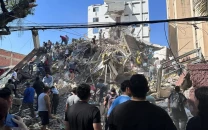
Fighting raged despite the talks with Israeli strikes in the southern city of Tyre killing 11 people, according to Lebanon's health ministry, which called the bombardment a "flagrant violation of humanitarian law".
Hezbollah said it had launched attacks targeting soldiers, barracks and a military camp in northern Israel on Friday and Israel's military in the early hours of Saturday morning confirmed it had intercepted several projectiles from Lebanon, with one hitting near the Israeli town of Kiryat Shmona.
Hezbollah also said its forces attacked Israeli troops trying to advance near the medieval Beaufort fortress, also known as Qalaat al-Chakif, a site Israel's forces had used as a base during their two-decade occupation of southern Lebanon ending in 2000.
US State Department spokesman Tommy Pigott said Rubio had "commended President Aoun's courage and vision in pursuing direct negotiations with Israel" despite Hezbollah's opposition, adding the group was "entirely responsible for the ongoing fighting".
Lebanon was drawn into the regional war when Hezbollah launched rockets at Israel in early March in retaliation for the death of Iran's supreme leader in US-Israeli strikes.
Hezbollah strongly opposes talks with US representatives and has refused to disarm.
Lebanon's military delegation to Friday's talks included six officers, headed by the army's director of operations, Georges Rizkallah.
On the Israeli side, Brigadier General Amichai Levin, head of the strategic division of the army's planning directorate, visited Washington for the talks, an Israeli military spokesman said.
A Lebanese military source earlier told AFP the country's delegation would "emphasise the need for a ceasefire, and will present the army's plan for a state weapons monopoly and the extension of state authority across the country".
Wave of displacement -
On Friday, the Lebanon's state-run National News Agency (NNA) reported Israeli airstrikes on more than 20 locations in the south, before and after its military issued evacuation warnings for eight towns, sparking a huge wave of displacement
Hundreds of people have fled to the usually touristy old city of Tyre, which has not been included in recent Israeli army evacuation orders issued for swathes of the rest of the city and surrounding areas.
This week, Israel's military also declared all areas south of the Zahrani Riveran area that includes Tyreas "combat zones" and told residents to evacuate.
With shelters full, displaced residents were sleeping in cars or tents, an AFP correspondent said.
"The situation is very difficult. Tyre is a peaceful, touristic city. We never imagined going through this," said Karam Amin, 43, whose family of seven have been sleeping in his clothing shop.
"I sorted out a shower ... and we put mattresses on the floor," he said.
Lebanon's health ministry said on Friday Israeli attacks have killed at least 3,355 people since March 2 -- an increase of 31 compared to Thursday when Israeli carried out the first airstrike near Beirut in weeks.









This material may not be published, broadcast, rewritten, redistributed or derived from. Unless otherwise stated, all content is copyrighted © 2026 The Express Tribune.





COMMENTS
Comments are moderated and generally will be posted if they are on-topic and not abusive.
For more information, please see our Comments FAQ