Trump says Russia and Ukraine reach energy ceasefire 'effective immediately'
Updated 3 hours ago

Says accord reflects regional reassessment of US, Dar briefs Araghchi on agreement objectives
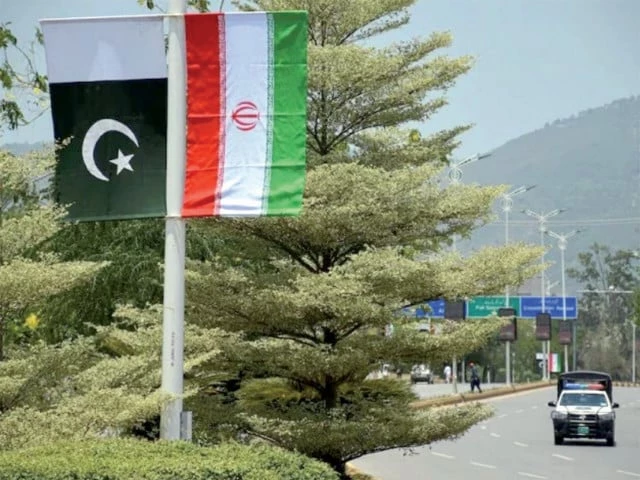
Iran sees no reason to be concerned ?that a new security pact between ?Pakistan, Turkiye and Saudi Arabia is directed ?against Tehran, Iran Foreign Ministry spokesman Esmaeil Baghaei said on Monday as Foreign Minister Ishaq Dar held a telephonic conversation with Iranian FM Abbas Araghchi.
At a weekly news conference, Baghaei portrayed the pactthe Makkah Joint Defence Agreement signed by Pakistan, Turkiye and Saudi Arabia on August 7less as an anti-Iranian move than as evidence of a broader reassessment by regional countries of their security relationships with Washington.
"Countries have reached the conclusion that they cannot rely on America's claim of providing security," he said, adding that Tehran seeks to interpret the new arrangement within the wider transformation of the regional security order rather than immediately treating it as a hostile military alignment.
He said the pact showed a shift ?in regional countries' approach to security, with greater reliance on their own capabilities rather than ?outside powers.
"Any plan that is based on the geopolitical and historical realities of the region, is comprehensive and inclusive, and correctly identifies the enemy and the threat, has a chance of helping to strengthen security and prevent instability and abuses by the Zionist enemy [Israel] and its allies," he added.
Meanwhile, Foreign Minister Ishaq Dar spoke by telephone with Iran Foreign Minister Abbas Araghchi in what appeared to be an effort by Islamabad to prevent the new trilateral security arrangement from creating fresh friction with its neighbour.
Dar's conversation with Araghchi focused on regional and international developments, with particular emphasis on the rapidly evolving situation in the region and efforts to promote peace.
According to the Foreign Ministry, Dar also shared the contours of the recently signed Makkah Joint Defence Agreement with his Iranian counterpart, explaining its objectives of strengthening strategic cooperation and contributing to regional peace and security.
Araghchi thanked Dar for sharing the key aspects of the agreement, and the two ministers agreed to remain in close contact on matters of mutual interest. The conversation was particularly noteworthy because it came as Iran itself appeared to signal that its channels with Islamabad remain open.
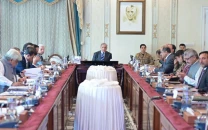
Speaking at a meeting of the federal cabinet, Prime Minister Shehbaz Sharif on Monday also sought to reassure that the Makkah accord is not an act of aggression but meant to promote peace and stability.
Shehbaz said the Makkah Joint Defence Agreement was the culmination of several years of discussions and was intended to promote peace, development and prosperity rather than threaten any country.
"The purpose is absolutely not aggression," he said, describing the arrangement as "completely defensive" and aimed at ensuring peace, stability and progress in the region.
Shehbaz said Islamabad had begun discussions with its partners years ago and that, last year, the arrangement was given an official shape with the aim of eventually turning it into a formal agreement. He said Friday's signing of the trilateral agreement represented another extension of that process.
"This was not something that came about today," he said. "Efforts on this agreement had been continuing for the past several years and, by the grace of God, they reached completion this Friday."
The timing of the agreement, however, has inevitably drawn attention in Tehran.
Iran has long viewed the expansion of foreign-backed security arrangements around the Persian Gulf with suspicion, particularly those involving Saudi Arabia, its principal regional rival, and has repeatedly criticised reliance on the United States for the region's security.
Yet Tehran's initial reaction to the Makkah agreement has been notably restrained.
Pakistan has historically maintained close relations with Saudi Arabia and Türkiye while also preserving a working relationship with neighbouring Iran.
The challenge for the government has become more acute as the region has been reshaped by the conflict involving Iran, the US and Israel, and by continuing disputes over the Strait of Hormuz.
Shehbaz emphasized that the Makkah agreement should be understood as a defensive arrangement and as a source of strength not only for the three signatories but for the broader Muslim world. He congratulated Dar and Field Marshal Asim Munir for their efforts in bringing the agreement to fruition.
Under its central security principle, an armed attack against any one of the three countries is to be treated as an attack against all three.
The pact has been presented by its signatories as a framework for closer strategic and defence cooperation. Pakistani officials have also stressed that it is not intended to be an exclusive arrangement and have indicated that other Muslim-majority countries could potentially join.
That possibility is likely to be watched closely in Tehran.
Despite the signing, Pakistan appears determined to keep its diplomatic door open to Iran.
Iran's immediate concerns, however, remain focused on the wider regional crisis, particularly the Strait of Hormuz and the terms of any future understanding with the United States.
Baghaei said Iran was currently concentrating on discussions with Oman concerning arrangements for the waterway. He said Tehran was not negotiating with Washington, although messages continued to be exchanged through intermediaries.
"The exchange of messages is a natural matter," he said, describing such communications as routine and related to day-to-day issues.
His comments came after Araghchi had said the resumption of negotiations with the United States was impossible as long as Washington continued what Tehran regarded as violations of its commitments.
Baghaei also warned that Iran could not guarantee the Strait of Hormuz would become a secure waterway while what he described as violations of the maritime blockade and other provisions of the understanding continued.
The statements illustrate the difficult diplomatic environment in which Pakistan is trying to balance its relationships. Islamabad has deep strategic and economic ties with Saudi Arabia and Türkiye and sees greater cooperation among Muslim countries as a potential means of strengthening regional security.
At the same time, Iran is Pakistan's immediate western neighbour, and Islamabad has consistently sought to prevent regional conflicts from spilling across its borders.
The Makkah agreement therefore presents Pakistan with both an opportunity and a diplomatic test.
For Saudi Arabia, the pact strengthens its security partnerships at a time when the kingdom has sought greater autonomy in determining its regional security arrangements.
For Turkiye, it provides another mechanism for expanding strategic cooperation with two important Muslim-majority states. For Pakistan, it reinforces its role as a security partner while potentially expanding its diplomatic influence in the Muslim world.
But Islamabad's effort to reassure Tehran indicates that it does not want the new arrangement to be interpreted as the formation of an anti-Iran bloc. The prime minister's language on Monday appeared deliberately designed to make that point.
The PM described the agreement not as a mechanism for confrontation but as an instrument for "peace, development and prosperity." He said its purpose was defensive and that it should be viewed as a source of strength for the three participating countries as well as the wider Muslim community.
The immediate reaction from Tehran suggests that Iran, too, is leaving room for diplomacy.
Rather than condemning Pakistan's decision outright, the Iranian Foreign Ministry sought to emphasize its own assessment that regional states are reassessing their dependence on Washington for security.
The parallel messages from Islamabad and Tehran, one stressing the defensive nature of the Makkah agreement, the other saying there was no reason to view it as directed against Iran, point to an effort by both sides to prevent a new strategic arrangement from damaging their bilateral relationship.
That balancing act is likely to become increasingly important as the wider regional confrontation continues and as Pakistan seeks to position itself simultaneously as a security partner, a regional stakeholder and a diplomatic interlocutor.
For now, Islamabad appears determined to make clear that closer defense ties with Saudi Arabia and Turkiye do not come at the expense of its relationship with Iran. And Tehran, despite its reservations about the changing regional security architecture, appears willing to keep the conversation going.
Meanwhile, US President Donald Trump said Monday he would seek conflict compensation from Iran as part of any peace negotiations, citing attacks and atrocities stretching back decades allegedly backed or perpetrated by Tehran.
Iran is "asking for compensation for the damage done to them during the last five month Military Conflict... I am likewise demanding compensation from Iran, for all of the people that they have killed and gravely wounded with their roadside bombs and many conflicts," Trump posted.









This material may not be published, broadcast, rewritten, redistributed or derived from. Unless otherwise stated, all content is copyrighted © 2026 The Express Tribune.



1727268465-0/Untitled-design-(42)1727268465-0-208x130.webp "the poor man s burden")

COMMENTS
Comments are moderated and generally will be posted if they are on-topic and not abusive.
For more information, please see our Comments FAQ