Trump says he has not heard from Iran that they are suspending talks
Updated 3 hours ago

Iranian panel meets to select new supreme leader
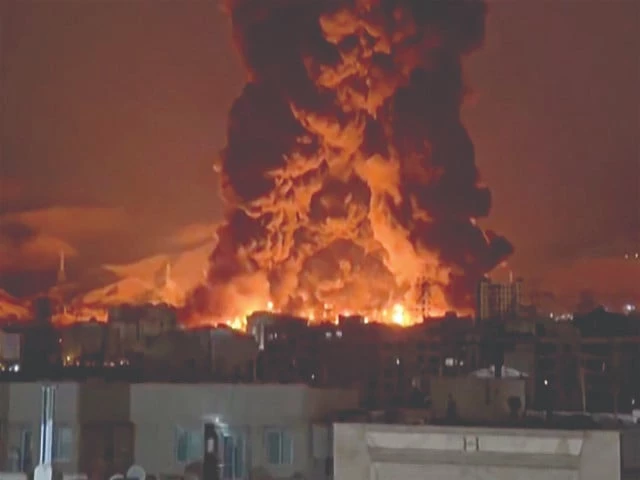
The war between Israel, the United States and Iran intensified on Sunday with fresh strikes on Iranian fuel facilities near Tehran and retaliatory drone and missile attacks across the Gulf, widening a conflict that has shaken regional security and sent global energy markets into turmoil.
As the conflict entered its second week amid uncertainty over Iran's leadership following the assassination of Supreme Leader Ayatollah Ali Khamenei, Iran's Assembly of Experts met privately to select a successor, with Iranian media suggesting that Khamenei's son Mojtaba was a leading contender.
US President Donald Trump said Iran's next leader would not last long without American approval and warned the war might end only when Iran's military and ruling leadership were eliminated.
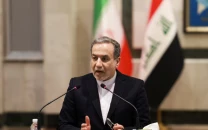
Iran rejected the remarks, with Foreign Minister Abbas Araghchi saying the selection of a new supreme leader was strictly a domestic decision. Araghchi said Iran would continue fighting until there was a permanent end to the war.
He accused the United States and Israel of targeting civilian facilities, including hospitals and schools, and dismissed Washington's claims that Iran posed an imminent nuclear threat.
Israel expanded its bombardment of Iran overnight, hitting major fuel storage facilities around the Iranian capital. Residents reported thick black smoke hanging over Tehran as oil depots burned, lighting the night sky with flames and disrupting fuel distribution in the city.
Iran condemned the strikes as a war crime. Foreign ministry spokesperson Esmaeil Baghaei said targeting fuel depots was releasing toxic materials into the air and endangering civilian lives.
Iran's Revolutionary Guards said their forces could sustain the conflict for up to six months and warned that more advanced long-range missiles could be used in the coming days.
The fighting has increasingly spread across the region. Iran launched drone and missile attacks against several Gulf states, targeting energy and infrastructure facilities. In Kuwait, fuel tanks at the country's international airport were struck by drones, causing a fire that authorities said was later brought under control.
Kuwait's interior ministry said two border guards were killed while performing their duties, and civilian facilities sustained damage from falling debris during interception operations. Kuwait's national oil company announced a precautionary reduction in crude production.
Bahrain said an Iranian drone attack damaged a desalination plant, marking the first reported strike on such a facility during the conflict. Officials said water supplies were not disrupted, though the attack raised concerns about the vulnerability of vital infrastructure.
Saudi Arabia said a projectile struck a residential area south of Riyadh, killing two people and injuring 12 others. The defence ministry said it had intercepted dozens of drones aimed at targets including the diplomatic quarter in the capital.
The United Arab Emirates said its air defence systems intercepted 16 ballistic missiles and more than 100 drones directed toward the country, though several drones managed to hit its territory. The UAE said four migrant workers had been killed in Iranian attacks since the conflict began.
The war has also spread to Lebanon, where Israel launched air strikes after the Iran-backed Hezbollah group fired rockets and drones into Israeli territory. Lebanese health authorities said nearly 400 people had been killed in Israeli strikes over the past week.
Israel struck a hotel in central Beirut on Sunday, saying it had targeted Iranian commanders operating in the city. The attack marked the first strike on the heart of the Lebanese capital since hostilities resumed.
Elsewhere in the region, Israeli forces carried out an air strike in Gaza City that killed at least two Palestinians travelling in a car, according to local health officials. Violence in Gaza has continued despite a ceasefire agreement reached last year.
The human toll of the broader conflict has continued to mount. Iran's UN ambassador said at least 1,332 Iranian civilians had been killed and thousands wounded in US-Israeli attacks, while Iranian strikes have killed 10 people in Israel. At least six US service members have also been killed during the conflict.
The United States has not ruled out further escalation. Reports suggested Washington was considering deploying special forces to secure Iran's stockpile of highly enriched uranium later in the war, though the plan has not been confirmed.
Analysts say the conflict has already begun to reshape the global economy. Fighting near the Strait of Hormuz — a critical route carrying roughly 20% of the world's oil and liquefied natural gas - has disrupted shipping and driven energy prices sharply higher.
Crude prices surged above $90 per barrel within days of the escalation, with fuel costs rising across North America, Europe and Asia. The spike has triggered higher petrol and diesel prices worldwide and heightened fears of a wider energy crisis.
Despite mounting international concern, there is little sign of a diplomatic breakthrough. World leaders including China and the Vatican have called for dialogue and restraint, but the conflict shows no immediate path toward resolution as the region braces for further escalation.






This material may not be published, broadcast, rewritten, redistributed or derived from. Unless otherwise stated, all content is copyrighted © 2026 The Express Tribune.









COMMENTS
Comments are moderated and generally will be posted if they are on-topic and not abusive.
For more information, please see our Comments FAQ