Fresh voices of Pakistani art
Updated 2 hours ago

Drama series depicts idea of possessiveness becoming romance
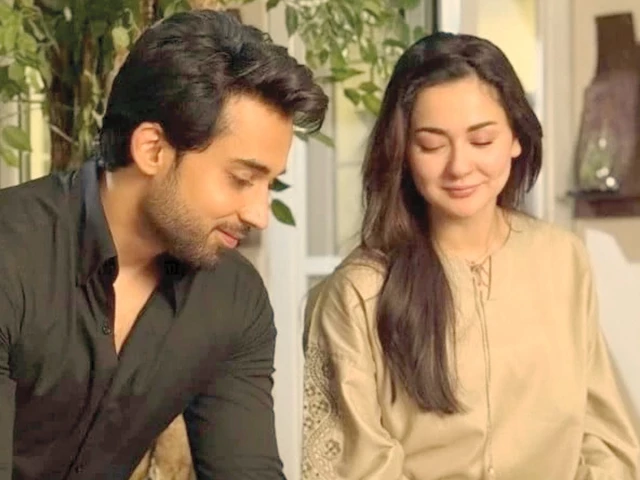
As Pakistani audiences debate what healthy love looks like on screen, Meri Zindagi Hai Tu (MZHT ) has evolved beyond a commercial hit.
It has become a cultural flashpoint, drawing critique for its uncomfortably familiar tropes. Its polarisation raises a deeper question: what kinds of toxic relationships are we quietly validating in 2026?
Starring Hania Aamir and Bilal Abbas, the series follows Ayra - a principled medical student - and Kamyar, a privileged man whose idea of romance often intersects with coercion.
Repetitive plot, romanticised coercion
At the heart of the backlash is not just frustration with repetition, but disbelief that a 2026 drama still treats boundary-breaking as a lover's badge of honor.
The drama's main character, Kamyar, recycles a familiar trope: a wealthy man relentlessly pursuing a woman until she gives in. He shows up uninvited, dismisses refusals, and ignores her autonomy - yet the narrative repeatedly frames this behavior as romantic.
Over time, Ayra's resistance softens, and she gradually develops feelings for him, reinforcing a troubling idea: persistence justifies passion.
Rather than being treated as a red flag, persistent boundary-crossing is framed as strategy.
Others argued that the issue extends beyond Kamyar's behavior to the flat writing and limited development of Ayra's character.
A core viewer critique on social media is that MZHT doesn't just depict toxic behavior - it normalises it.
Some argue the show gives abusive and alcoholic men like Kamyar a free pass, even using religion to justify morality in contrived ways.













This material may not be published, broadcast, rewritten, redistributed or derived from. Unless otherwise stated, all content is copyrighted © 2026 The Express Tribune.






COMMENTS
Comments are moderated and generally will be posted if they are on-topic and not abusive.
For more information, please see our Comments FAQ