Songs of a nation, names worth knowing
Updated 3 hours ago

Power, strategy and will shape outcomes in an unequal conflict

Ninety minutes before the expiration of his self-imposed deadline to wipe out "a whole [Iranian] civilisation", President Trump, on April 8, 2026, thankfully agreed to a two-week interim ceasefire, proposed by Pakistan.
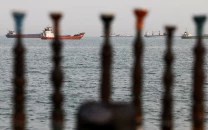
Iran would reciprocate by conditionally opening the Strait of Hormuz (SoM) under conditionalities imposed by the IRGC/Pasdaran. Full marks to Pakistan's astute diplomacy, which will also facilitate direct US-Iran talks in Islamabad on April 10.
This war contains many battles; the closure of SoM, and Iranian drone/missile swarms attacking GCC countries and Saudi Arabia are the most consequential. There is no denying the factual illegality of this war, imposed on Iran in utter violation of international law and interstate norms. However, Iran's strategic overstretch would have/will cost it dearly, being the raison d'etre of this conflict. Its proxy-based forward defence and ideological overbearing will unravel its military, industrial and demographic might.
Although there is a lot of triumphant talk about the recent military successes by Tehran, like downing some US planes, helicopters and drones (some were destroyed by the US Forces on the ground in Iran), emotions aside, this is a minuscule loss to the Coalition war machine, especially the US, which doctrinally is capable of fighting two full-fledged wars simultaneously.
This war does not even qualify as a full-fledged war, as it involves air war alone. The US track record, though, in fighting asymmetric wars against weak opponents is not encouraging. Iraq, Afghanistan and Vietnam are cases in point.
Wars are fought based on tangible and quantifiable aspects of National Power Potential (NPP), like military strength, logistic stamina, economic resilience, demographic quality, etc. However, intangible aspects of NPP, like will to fight, justness of cause, resilience, sacrifice, ability to bear pain, religion and belief, willpower, courage and determination, are other important aspects, called force multipliers, which are hard to quantify and predict.
These force multipliers act in surreal ways and generally benefit the weaker side in protracted asymmetric conflicts. The Taliban's win in the Afghan conflict is an example.
In the cited NPP force multipliers, Iran seems to have an edge. However, ground operations, if any, would put their effectiveness to the test. In the First Gulf War (1980-88), Saddam Hussein's crack Revolutionary Guards, famous for their professionalism, did not give a good combat account of themselves after being pulverised in incessant bombing from the air.
In Iran's case, the Coalition has specifically targeted the IRGC. Iran's unwise conflagration of the conflict with the GCC countries and Saudi Arabia to raise the cost of war and its blocking of Hormuz will cost it Arabs/world sympathy for a long time after this war is over.
The analyst community is in overdrive to poke holes in the Coalition Strategy; however, without any love lost and purely from a military standpoint, one's experience points to the fact that professional militaries draw up a range of options for political masters to take. Military wargaming is intense, overarching and comprehensive, and the US General Staff is presumably competent just like Iran, which has demonstrated preparedness and tenacity to respond to the Coalition's disproportionate aggression.
US military's options to target Iran's oil and gas facilities, industry and infrastructure (bridges, etc), given Trump's threats, would have been war-gamed. Notwithstanding the illegality of attacking these targets, destroying them would irreparably damage Iran. Besides, in this unequal contest, the 'law of diminishing returns' would have ultimately benefited the US, the stronger side. Emotive responses and bravado by Generals, at times, obscure the bigger picture.
There has been a lot of debate about the US Commander-in-Chief, President Trump, pursuing this conflict, and if there is any 'method to the demonstrated madness'. Trump has used American military might like no other American president, as argued by Professor Stephan M Walt in his essay, The Predatory Hegemon, published in the March-April 2026 issue of Foreign Affairs magazine. The Professor terms Trump's grand strategy as 'illiberal hegemony', demanding reciprocity and transactionalism.
In the 'bipolar' world of the Cold War, the US was a 'benevolent hegemon'. In the 'unipolar' era after the collapse of the Soviet Union, America succumbed to hubris and became a 'willful hegemon'. And since the return of contemporary 'multipolarity', America under Trump has unleashed its predatory impulses, which were kept in check by skilful advisers during Trump 1.0 (2017-2021).
A predatory hegemon believes in 'zero-sum' outcomes, claiming, "What is mine is mine; what is yours is also mine." He extracts concessions from friends and foes alike, unencumbered by legality, norms, treaty alliances, etc. Trump tearing up the Climate Accord, claiming Greenland and the Panama Canal, and wanting Canada to be an American state are some worrying predilections. And the coercive power at his disposal makes him an unignorable threat to peace, allies and foes.
He believes unpredictability is a powerful bargaining tool, which is why his shifting demands (Greenland), threats (Iran) and his mercurial iterations, like Europe facing 'civilizational erasure'. He thrives in constant attention, endless admiration and flattery of those around him and abroad, like NATO Secretary General Mark Rutte. Apart from his nomination for the Nobel Peace Prize by some countries, the South Korean President gifted him an enormous gold crown and served him 'Peacemaker's Dessert' during an official banquet recently.
Although playing hardball brings the US short-term tangible benefits, Prof Walt argues that predatory hegemony contains the seeds of its own destruction. Because the administration exaggerates the benefits of pleasing the hegemon, rivals like China lie low and quietly build NPP and alliances to displace the hegemon.
Allies reduce their dependency on the hegemon and push back when the conditions are right. Intention to unilaterally abrogate commitments and treaties (NATO, for example) not only dilutes the hegemon's leverage; it erodes his credibility, if 'intention' is not carried out. In sum, America has weakened and will weaken the alliance networks, built painstakingly over the past 75 years.
This war brings temporary triumph to the US over the ruins of Iran, but it has and may set in motion a gradual and then sudden decline of American power, so unwisely, brutally and unjustly used by the present cabal of US leadership. As for the post-ceasefire negotiations, these must address the underlying causes of conflict and result in a stable regional and international environment. Fingers are crossed!









This material may not be published, broadcast, rewritten, redistributed or derived from. Unless otherwise stated, all content is copyrighted © 2026 The Express Tribune.
COMMENTS
Comments are moderated and generally will be posted if they are on-topic and not abusive.
For more information, please see our Comments FAQ