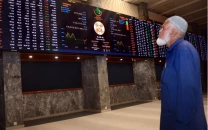
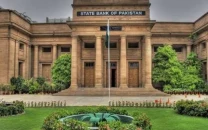
PSX stages robust rally, gain of over 1,000 points
Updated 12 hours ago

The stunning loss of the longstanding OPEC member could create disarray and weaken the group
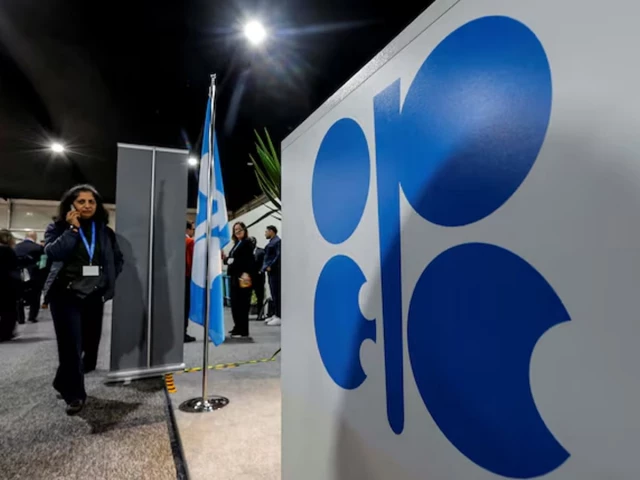
The United Arab Emirates said on Tuesday it quit the Organisation of the Petroleum Exporting Countries (OPEC) and OPEC+, dealing a heavy blow to the oil-exporting groups and their de facto leader, Saudi Arabia, at a time when the Iran war has caused a historic energy shock and unsettled the global economy.
The stunning loss of the UAE, a longstanding OPEC member, could create disarray and weaken the group, which has usually sought to present a united front despite internal disagreements over issues ranging from geopolitics to production quotas.
The UAE said it would withdraw to focus on "national interests", a statement carried by the official WAM news agency said.
The UAE has been an OPEC member through the emirate of Abu Dhabi since 1967, four years before the former British protectorate became a country. The last OPEC member to withdraw from the cartel was Angola in 2024.
"This decision reflects the UAE's long-term strategic and economic vision and evolving energy profile," the UAE statement said.
"During our time in the organisation, we made significant contributions and even greater sacrifices for the benefit of all," it added.
"However, the time has come to focus our efforts on what our national interest dictates."
UAE announces decision to exit OPEC & OPEC+#WamNews https://t.co/4Lql4I8Zgs pic.twitter.com/EjX2VrmVLH
— WAM English (@WAMNEWS_ENG) April 28, 2026
UAE Energy Minister Suhail Mohamed al-Mazrouei told Reuters the decision was taken after a careful look at the regional power's energy strategies.
Asked whether the UAE consulted with Saudi Arabia, he said the UAE did not raise the issue with any other country.
"This is a policy decision, it has been done after a careful look at current and future policies related to level of production," said the energy minister.
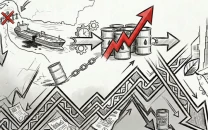
OPEC Gulf producers have already been struggling to ship exports through the Strait of Hormuz, a narrow chokepoint between Iran and Oman through which a fifth of the world’s crude oil and liquefied natural gas normally passes, because of Iranian threats and attacks against vessels.
Mazrouei said the move, in which the UAE will also leave the OPEC+ grouping, would not have a huge impact on the market because of the situation in the strait.
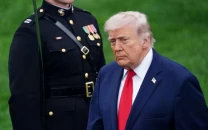
The UAE's exit from OPEC represents a win for United States President Donald Trump, who, in a 2018 address to the UN General Assembly, accused the organisation of "ripping off the rest of the world" by inflating oil prices.
Trump has also linked US military support for the Gulf with oil prices, saying that while the US defends OPEC members, they "exploit this by imposing high oil prices".
The move came after the UAE, a regional business hub and one of Washington's most important allies, criticised fellow Arab states for not doing enough to protect it from numerous Iranian attacks during the war.
Anwar Gargash, the diplomatic adviser for the UAE president, criticised the Arab and Gulf response to the Iranian attacks in a session at the Gulf Influencers Forum on Monday.
"The Gulf Cooperation Council countries supported each other logistically, but politically and militarily, I think their position has been the weakest historically," Gargash said.
"I expect this weak stance from the Arab League and I am not surprised by it, but I haven't expected it from the [Gulf] Cooperation Council and I am surprised by it," he said.
Mazrouei noted the UAE has been a member of OPEC and OPEC+ for a long time, but he said the world would demand more energy, suggesting his country's move will help meet those needs.
The UAE's exit comes as global spare capacity hovers at historically low levels, leaving the oil market increasingly tight.
Operating outside the producer group allows the UAE to fully leverage its position as a supplier of some of the world's lowest-cost and lowest-carbon barrels.
Jorge Leon, an analyst at Rystad Energy, said its withdrawal may not immediately impact oil markets while Hormuz shipments remain on hold.
But the UAE will now be free to raise production, "raising broader questions about the sustainability of Saudi Arabia's role as the market's central stabiliser — and pointing to a potentially more volatile oil market as OPEC's capacity to smooth supply imbalances diminishes".
Jamie Ingram, managing editor for the Middle East Economic Survey, posted that OPEC was losing 13% of its production capacity with the UAE's departure, citing the International Energy Agency.
Founded in 1960, the 12-member OPEC cartel in 2016 partnered up with 10 other producers to form OPEC+ to gain more clout.
The Vienna-based group drew international attention in 1973, when it imposed an oil embargo against Israel's allies in the midst of the Yom Kippur War, triggering the first oil crisis.
Within just a few months, prices quadrupled, highlighting the cartel's dominance.
Faced with rising competitors in the 1980s, it introduced the famous quota system that enabled it to exert more control over the market.
This strategy meant the group fared relatively well during the 2008 financial crisis and the price shock in the wake of the Covid pandemic, despite increased internal tensions.





This material may not be published, broadcast, rewritten, redistributed or derived from. Unless otherwise stated, all content is copyrighted © 2026 The Express Tribune.





COMMENTS
Comments are moderated and generally will be posted if they are on-topic and not abusive.
For more information, please see our Comments FAQ