Cole Sprouse joins 'Hot Year' alongside Kathryn Newton and Storm Reid
Updated 40 minutes ago

The helmet featured images of fallen sports figures and members of the Ukrainian military
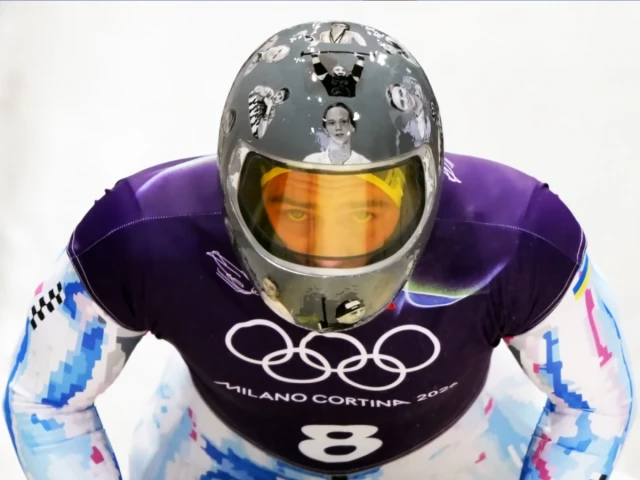
Ukrainian Winter Olympian, Vladyslav Heraskevych, has been gifted $200,000 after being banned from competing at the Milan-Cortina Games over a controversial helmet tribute, a gesture that has ignited global debate over athlete expression and the limits imposed by Olympic rules.
The athlete at the center of the storm was disqualified from competition after refusing to remove a helmet honoring Ukrainian athletes killed in the Russian invasion. The helmet, described as a “helmet of memory,” featured images of fallen sports figures and members of the Ukrainian military.
Olympic officials ruled that the tribute violated Rule 50 of the Olympic Charter, which prohibits political, religious, or racial demonstrations during competition. Heraskevych was offered the option of wearing a black armband instead, but he declined, stating that honoring those who had died was more important than competing.
His disqualification quickly became one of the most controversial moments of the 2026 Winter Olympics, fueling conversations about free expression and double standards. Critics pointed out that other athletes have previously made symbolic gestures without punishment, while supporters argued that the Olympic Charter’s neutrality rules must be upheld consistently.
The backlash and wave of support for Heraskevych soon translated into a major show of solidarity. A private donor stepped forward to gift the athlete $200,000, praising his courage and commitment to honoring those lost in the war. The donation is being seen as both a financial boost and a symbolic stand against what many perceive as an overly restrictive policy.
The controversy has also inspired other Ukrainian athletes to quietly show support. Alpine skier Dmytro Shepiuk, for example, displayed a handwritten note reading “UKR heroes with us” after completing his race — a subtle but powerful act of solidarity.
The International Olympic Committee has defended its stance, insisting that its rules are designed to keep the focus on sport rather than political messaging. However, the incident has reopened long-running debates about whether neutrality policies disproportionately silence athletes from countries in conflict.
As the Games continue, Heraskevych’s disqualification — and the $200,000 gesture that followed — has become one of the defining off-field stories of the Olympics, highlighting the tension between global sport, personal expression, and political reality.










This material may not be published, broadcast, rewritten, redistributed or derived from. Unless otherwise stated, all content is copyrighted © 2026 The Express Tribune.





COMMENTS
Comments are moderated and generally will be posted if they are on-topic and not abusive.
For more information, please see our Comments FAQ