Tarar says public opinion should determine creation of new provinces
Updated 1 hour ago

Info minister says proposal should proceed only if public supports it, cites constitutional provisions for referendums
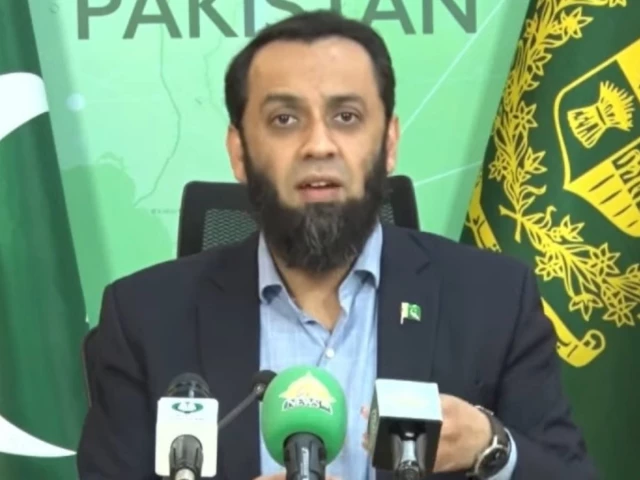
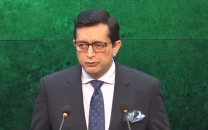
Information Minister Attaullah Tarar on Friday backed holding a referendum to determine public opinion on the creation of new provinces, saying the proposal should proceed only if people supported it.
Speaking to reporters outside the Election Commission of Pakistan (ECP), Tarar said there was no harm in holding a referendum, adding that the Constitution provided for such a vote on matters of national importance or public interest.
He said people should be given an opportunity to express their views before any decision was taken, adding that the proposal should not be pursued if the public opposed it.
A referendum is a direct vote in which citizens are asked to express their views on a particular question. The idea of holding one on the creation of new provinces was floated by Interior Minister Mohsin Naqvi, who argued that it could help establish public opinion on the issue and settle the debate.
Also Read: Bilawal reiterates focus on economy amid political row with ministers over new provinces
The information minister also said Prime Minister Shehbaz Sharif had met the president, during which they discussed various matters and the need to move forward through mutual understanding and consensus.
Responding to questions about an ECP hearing concerning his visit to Gujranwala, Tarar said he had travelled to his hometown at the invitation of the District Bar Association's general secretary.
He said no election candidate had attended the event and that the invitation had been extended before the announcement of the election schedule. He added that the association's general secretary was also his colleague.
Background of debate over new provinces
The current debate over new provinces began on July 30, when Naqvi called for additional administrative units or provinces as part of a broader overhaul of the country’s governance system. Naqvi argued that meaningful structural reforms were needed to improve governance, deliver justice and create opportunities for young people.
The proposal quickly became politically sensitive in Sindh, where the Pakistan Peoples Party (PPP) strongly opposed any move to divide the province. Sindh Chief Minister Murad Ali Shah rejected Naqvi’s assessment that the governance system had collapsed and called the proposal outdated, warning that no bloodshed would be allowed over the creation of new provinces.
The debate widened in August when Muttahida Qaumi Movement–Pakistan (MQM-P) backed the creation of new provinces and called for a national dialogue with political parties. The party argued that Pakistan’s growing population, poor governance and concentration of political power made greater administrative devolution necessary. The move put the party, which is part of the federal coalition but sits in opposition in Sindh, at odds with the PPP’s position on the province.
Read More: PTI backs referendum to determine public opinion on creation of new provinces
The dispute reached the Sindh Assembly at the beginning of September. On September 3, the house unanimously passed a resolution rejecting any proposal to divide Sindh or alter its territorial limits. The resolution described Sindh as a “historic, civilisational and constitutional entity” and declared that “Sindh is one and shall remain one”.
Naqvi, however, showed no sign of backing away. On September 5, he said he would continue to support new provinces regardless of whether he remained in office, arguing that the ultimate decision should belong to the people rather than politicians or governments. He said the public should first be told the “pros and cons” of creating new administrative units before being allowed to decide.
That position has since raised another question over how public opinion could be formally established. A constitutional debate emerged over whether a referendum could be used to gauge support for new provinces. Article 48(6) allows a matter of national importance to be put to a referendum following approval by a joint sitting of Parliament, although a referendum itself would not create a new province; any change to provincial boundaries would still have to follow the constitutional process.







This material may not be published, broadcast, rewritten, redistributed or derived from. Unless otherwise stated, all content is copyrighted © 2026 The Express Tribune.






COMMENTS
Comments are moderated and generally will be posted if they are on-topic and not abusive.
For more information, please see our Comments FAQ