K-P begins process to identify unsafe school buildings across province
Updated 1 hour ago

Experts believe interior minister may be referring to a referendum as a means of ascertaining public opinion
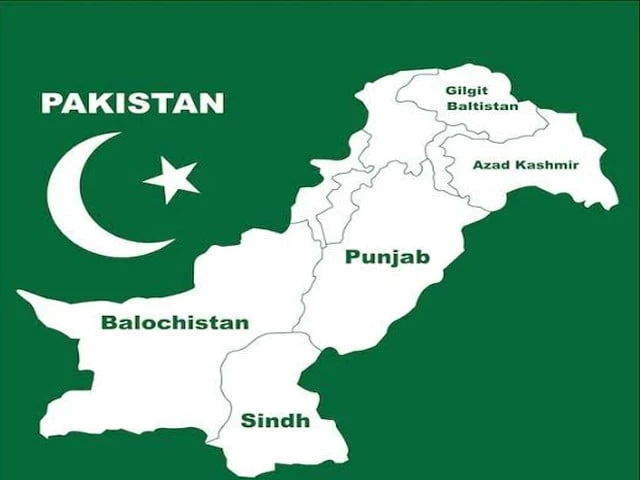
Interior Minister Mohsin Naqvi’s remarks that the creation of new provinces or administrative units could ultimately be decided through public opinion have triggered a debate over whether a referendum can constitutionally be used to create new provinces.
Article 48(6) of the Constitution provides that if the prime minister considers it necessary to hold a referendum on any matter of national importance, he may refer the matter to a joint sitting of Parliament.
If approved by a joint sitting, the prime minister may cause the matter to be referred to a referendum in the form of a question capable of being answered by either “Yes” or “No.”
It has been learnt that a proposed constitutional amendment is under serious consideration, with around two dozen constitutional articles likely to be amended as part of a broader restructuring of the system.
Following strong resistance from the PPP to any division of Sindh and to proposals involving reconsideration of provincial autonomy, Interior Minister Mohsin Naqvi on Saturday said the people would ultimately decide on the creation of provinces or new administrative units.
Constitutional experts believe Naqvi may be referring to a referendum as a means of ascertaining public opinion. However, they say a referendum itself cannot constitutionally create a new province, although a public vote could provide strong moral and democratic backing for such a move.
Advocate Abdul Moiz Jaferii said Article 239(4), by its very language, establishes a constitutional requirement that any amendment altering the limits of a province must first be passed by a two-thirds majority of the relevant provincial assembly before being presented for presidential assent.
“This procedure contains within it a second implied command: that this is the only way to alter the limits of a province,” he said. Jaferii further argued that where a specific constitutional provision exists, a general provision such as the power to hold a referendum cannot be used as a substitute for the prescribed constitutional procedure.
Read More: ‘Sindh is one, shall remain one’: Assembly passes resolution against division of province
“Also, when the federation can achieve its desired goal of more effective and localised administration through the empowerment of local government through adding flesh to the already existing Article 140A, it is hard to understand what they’re actually after here,” he said.
Jaferii said the division of Sindh would be a “minefield” that even the sturdiest of boots would find difficult to cross. “The PPP will be the least of their problems. It is the people of Sindh that reject the division of a boundary more ancient than our country, and one they look upon with pride and familial belonging. You disrespect this at your own peril,” he added.
Barrister Tariq Mahmood Khokhar pointed out that the Indian Constitution empowers Parliament to alter the country’s internal geography, with affected states having no veto power.
“In Pakistan, Parliament alone cannot alter provincial boundaries. It is Parliament and the affected provincial assembly. The affected states have veto power,” he said.
Khokhar said there was no constitutional requirement for a national referendum on the creation of new provinces. However, he added that referenda could provide democratic legitimacy if conducted transparently, freely and fairly.
“We have a history of farcical referenda under General Zia and General Musharraf. A replication of the same may escalate Pakistan’s existential crisis,” he warned.
Khokhar further argued that the federal and provincial legislatures are products of Form 47, and their constitutional and democratic legitimacy is contested within Pakistan and abroad.
“Crucially, the proposed constitutional amendment through the existing assemblies will be seen as a coerced parliamentary fig leaf. In my opinion, the issue of more provinces be deferred to future legislative assemblies, elected by the people of Pakistan in free and fair elections,” he said.
Former federal minister Fawad Chaudhry said Mohsin Naqvi’s speech was “confused, vague, and riddled with contradictions.” He said Naqvi was criticising a political and administrative system of which he himself is a part, but has offered no clear plan or objective.
Chaudhry questioned how Naqvi could propose a referendum when, according to him, no major political party appeared willing to own the proposal.
“Citing examples of New York Mayor Zohran Mamdani and London Mayor Mohammad Sadiq, both products of local government, further obscures whether he supports empowered local government or new provinces,” he added.
Advocate Hafiz Ahsaan Ahmad Khokhar said Pakistan’s debate over new provinces should primarily be approached as a question of governance reform.
“Before initiating a proposed 28th Constitutional Amendment, Parliament and the prime minister could consider a referendum to ascertain the public pulse on additional provinces, stronger units and local governments. The people’s will provides moral authority,” he said. However, Khokhar stressed that a referendum could not replace the constitutionally prescribed procedure.
“Articles 238 and 239 prescribe constitutional amendment procedures, while Article 239(5) requires approval by not less than two-thirds of the total membership of the relevant Provincial Assembly where an amendment alters provincial limits.
Also Read: Naqvi vows not to back down from demand for new provinces, says decision must reflect public will
“Article 239(4) regulates the process. Accordingly, a public mandate under Article 48(6) would strengthen legitimacy, while creation of provinces must comply with Article 239. The people’s will provides authority for reform,” he said.
Khokhar said restructuring should not merely result in the creation of additional provincial capitals. Instead, its objective should be decentralisation through a strong federation, manageable provinces, empowered regions and effective local governments.
He noted that Article 140A requires provinces to establish local government systems and devolve political, administrative and financial responsibility and authority to elected representatives.
“Articles 141 and 142 regulate legislative competence; Articles 153 and 154 establish the Council of Common Interests framework; Article 160 provides for the National Finance Commission; and Articles 162 to 164 contain further financial and legislative provisions.
“These arrangements should be revisited to improve governance and service delivery,” he said.
Ahmad said new provinces could be justified in the public interest on the basis of population, geography, accessibility, viability, equitable development, identity and representation.
“Before triggering a 28th Amendment, consultation should ascertain the people’s will. The broader agenda must address justice, administration, accountability and service delivery.
“Outdated centralised arrangements can delay decisions and distance government from citizens. Public demand for change should be recognised,” he said.
He said the objective should be a governance compact combining new provinces, strong regions, empowered local governments, justice reform and modernised institutions.
Such reforms, he said, should strengthen Pakistan’s unity and constitutional integrity.
Political analyst Tahir Malik said remarks by PML-N leader Khawaja Saad Rafique reflected the view that the failure to allow the parliamentary system and the Constitution to function was one of the biggest reasons behind the system’s failure.
“Mohsin Naqvi has remained consistent with his earlier narrative that the system is not delivering and that it has failed, and he has identified all the factors contributing to this failure. This time, however, he appears to have gone a little more defensive in his speech,” Malik said.
He said there appeared to be a hint that the matter was moving towards a referendum.
“When they talk about the people, they also know that creating new provinces under the Constitution is a difficult process. Perhaps the intention is to seek the people’s opinion on the matter, and a referendum could be the means to do that,” Malik added.







This material may not be published, broadcast, rewritten, redistributed or derived from. Unless otherwise stated, all content is copyrighted © 2026 The Express Tribune.




1727268465-0/Untitled-design-(42)1727268465-0-208x130.webp "sisyphus in the land of saviours")
COMMENTS (15)
Comments are moderated and generally will be posted if they are on-topic and not abusive.
For more information, please see our Comments FAQ