Chamber drafts changes to PERA, EPA laws
Updated 1 hour ago

Three-month extension proposed; enforcement could trigger Rs175,000 penalty
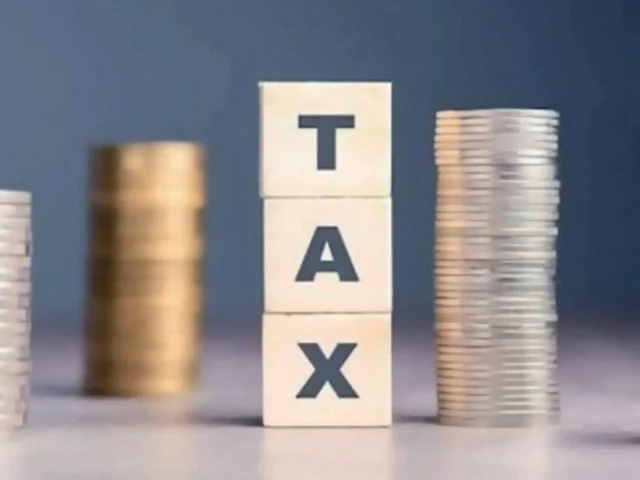
The government has digitally identified nearly 1.2 million shopkeepers who own a single shop but did not opt for the new scheme, including 6,000 traders who can be physically verified, but has not yet moved against them amid a view not to take adverse action for another three months.
The sources said tax authorities this week presented two options to Finance Minister Muhammad Aurangzeb, seeking his decision on whether to give a three-month extension in the scheme with a default surcharge now calculated at a maximum Rs85,000, which is still Rs90,000 less than under the normal tax regime.
The second option is that the government would move against the traders under the normal income tax law, which would immediately result in a minimum penalty of Rs175,000, exposure to tax audit and complete disclosure of the assets.
Early this week, Minister of State for Finance and Revenue Bilal Azhar Kayani informed the National Assembly Standing Committee on Finance that the government had decided to seek the opinion of the attorney general for Pakistan before taking any enforcement action. But he maintained that no extension would be given.
The government had launched the fixed income tax scheme for traders, offering them to pay only 1% tax on total sales in return for complete exemption from the audit and permission to deal in cash. It had hoped that at least one million retailers would join the scheme this year out of 3.8 million non-filers and would pay a minimum Rs50 billion in income tax.
However, only 222 new traders filed their returns and paid a negligible sum of money till the last date of October 31.
The sources said a key question before the government was whether, after the expiry of the twice-extended deadline to submit returns, a retailer should be asked to file a normal tax return, which would expose it to three penalties of Rs25,000, Rs50,000 for returns and Rs100,000 for the wealth statement.
This would result in issuing a first batch of tax notices to 6,000 shopkeepers whose physical verification has been done.
The sources said the government had managed to identify nearly 1.5 million retailers who fall within the purview of the fixed tax scheme. But out of these hardly 290,000 were already part of the tax system and the rest chose to stay away despite an all pro-trader scheme.
Out of the remaining nearly 1.2 million shopkeepers digitally verified by the tax authorities, there were nearly 390,000 registered retailers who opted not to file returns under the new scheme or the old law. There were another 772,000 unregistered retailers.
The sources said one option was that the government would not take any adverse action until January 31 with a slightly higher surcharge by exploiting a lacuna in the definition of the penalties.
At the launch of the scheme, the minister of state for finance and revenue had said that retailers who did not opt for it would be fined Rs10,000 during the first month, Rs25,000 in the second month and Rs50,000 in the third month.
Tax authorities have now come up with the idea that eligible shopkeepers may file returns up to the end of January 2027, subject to the Rule 10 surcharge. By end November they can pay a Rs10,000 fine, by end December Rs35,000 and by end January Rs85,000.
However, there is a legal question about the discrimination being meted out to other taxpayers who will have to pay a Rs25,000 fine for late filing of returns.
Rule 10 states that if a shopkeeper neither files a regular income tax return nor opts for this special procedure by the due date, penalties of Rs10,000 on the first default, Rs25,000 on the second and Rs50,000 on the third shall be imposed, with a gap of at least one month between each default proceeding.
Tax authorities are of the view that under Section 214A the government can give general condonation to small shopkeepers.
Section 214A states that where any time or period has been specified under any provision of the Ordinance or rules made thereunder within which any application is to be made or any act or thing is to be done, the Board may, at any time before or after the expiry of such time or period, in any case or class of cases, permit such application to be made or such act or thing to be done within such time or period as it may consider appropriate. Extension by the Board or commissioner is capped at two years in aggregate.
The scheme has failed despite a general exemption from audit, proceedings only with trade associations on third-party information, and no requirement for a sales tax point of sale or digital invoicing.
Early this week, the National Assembly Standing Committee on Finance expressed its disappointment over the failure of the fixed tax scheme for traders.
Kayani had clarified that there would be no further extension after it expired on October 31, and that the government was beginning a new phase of imposing fines and taking enforcement action.
Committee chairman Syed Naveed Qamar repeatedly asked whether Prime Minister Shehbaz Sharif and the federal cabinet were in favour of taking punitive action and would not budge when traders threatened to observe a strike.










This material may not be published, broadcast, rewritten, redistributed or derived from. Unless otherwise stated, all content is copyrighted © 2026 The Express Tribune.











COMMENTS
Comments are moderated and generally will be posted if they are on-topic and not abusive.
For more information, please see our Comments FAQ