Chamber drafts changes to PERA, EPA laws
Updated 1 hour ago

Country representative says Pakistan should increase revenue collection to 15% of GDP
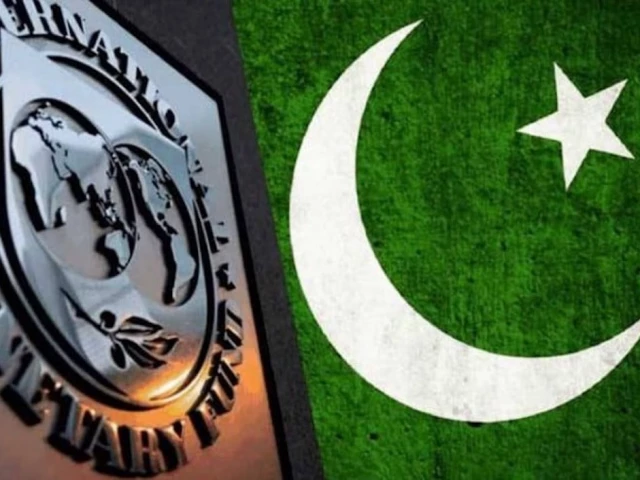
The International Monetary Fund (IMF) on Thursday called for a broader, simpler, fairer and more predictable taxation system in Pakistan to generate resources for human capital development, infrastructure and investment, saying this will help raise the country's gross domestic product (GDP) and improve living standards.
Speaking at a session titled "Where Reforms Matter the Most for Growth?" at the Sustainable Development Policy Institute's (SDPI) 29th Sustainable Development Conference, organised by the Ministry of Finance, the IMF's Pakistan representative, Dr Mahir Binici, praised the country's efforts to maintain economic stability amid recent global and domestic challenges, but stressed the need for deeper and broader reforms to put the economy on a sustainable growth path.
He said Pakistan had reached a critical juncture where the narrative needed to change, with discussions moving beyond taxation to focus on how reforms could translate into investment, economic activity, exports, employment and improved living standards. "I think Pakistan has already done the hard work and, from this point forward, it is really about how to cement that stabilisation and where we are right now, and move towards a direction where we have more investment, activity and better jobs," he said.
Binici outlined five key areas that could help improve the country's growth prospects, including preserving macroeconomic stability and strengthening the foundations needed to transform the economy from stabilisation to sustainable growth. He said fiscal and external sustainability, along with adequate buffers, were essential to maintaining a strong macroeconomic foundation.
Pakistan had demonstrated the importance of building buffers and maintaining stability in the face of recurring domestic and external shocks over the past two to three years, he said. He cited the recent Middle East conflict, recurring climate-related shocks and heightened global uncertainty stemming from trade, tariffs and geopolitics as challenges that underscored the need to maintain economic resilience. "Right now, we have seen that stability has been maintained given the most significant shock that is due to the war in the Middle East and recurring climate-related shocks, and extremely high global uncertainty, whether it is driven by trade, tariffs or geopolitics," he said.
Binici also stressed the need to maintain fiscal discipline and increase revenue collection as a share of GDP, particularly through taxation. "Our fund's research has shown that emerging developing economies like Pakistan need, at least, as a threshold, somewhere around 15% of GDP in revenue so that they can actually have a strong, well-functioning state and capacity that can provide services and enable better living standards," he said, adding that Pakistan was still far from that level. He said fiscal discipline needed to be supported by price stability and continued efforts to build buffers.
The IMF representative identified governance, the national tariff policy and the cost of doing business as key areas where Pakistan needed to secure a significant growth dividend. He said these were also central to the reform programme, particularly in the areas of energy and governance. Binici said governance should be treated as an economic policy, commending the authorities for completing the Governance and Corruption Diagnostic and preparing an economic governance reform plan.
While describing the country's performance over the past two to three years as a strong achievement given the challenging global and domestic environment, he said considerable work remained to place Pakistan on a stable and sustainable footing. He called for a growth-friendly fiscal system, saying there was broad stakeholder understanding of the need for a broader, more predictable tax regime. "We need a broader, simpler, fairer and more predictable taxation system for generating the resources that the country needs, whether for human capital, infrastructure or investment," he said.







This material may not be published, broadcast, rewritten, redistributed or derived from. Unless otherwise stated, all content is copyrighted © 2026 The Express Tribune.




COMMENTS
Comments are moderated and generally will be posted if they are on-topic and not abusive.
For more information, please see our Comments FAQ