PSX recovers 664 points after rate-driven sell-off
Updated 9 hours ago

Fiscal dependence emerges when borrowing becomes substitute for reform
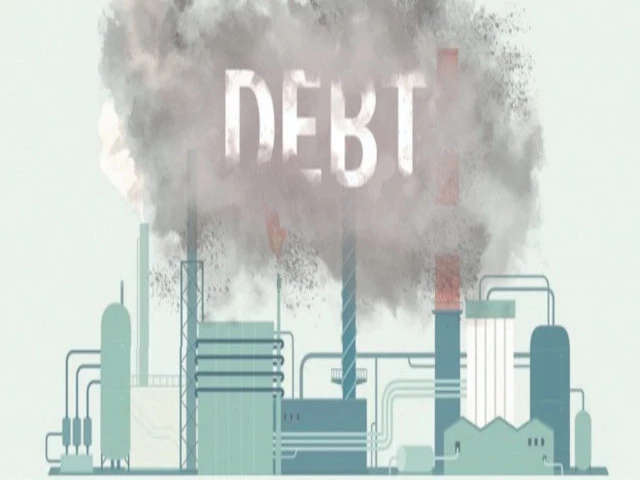
Every Independence Day invites us to reflect on Pakistan's political journey and the sacrifices through which the country acquired the sovereign right to determine its own future. Yet sovereignty is not exercised through political institutions alone. A country must also possess the fiscal capacity to finance its institutions, protect its people, invest in their future and respond to crises without repeatedly confronting the question of who will finance the resulting gap.
Nearly eight decades after independence, Pakistan's unfinished task is therefore to translate political sovereignty into greater fiscal sovereignty. Fiscal independence does not mean that Pakistan should never borrow, disengage from international financial institutions or attempt to finance every national requirement through taxation. Even the strongest economies borrow and participate in international financing arrangements. The real distinction lies between borrowing as a deliberate instrument of economic policy and borrowing as a recurring necessity to meet structural fiscal and external gaps.
Fiscal independence should instead be understood as the capacity of the state to raise adequate and sustainable domestic resources, meet its essential obligations, pursue national development priorities with reasonable policy autonomy and remain accountable for how public money is used.
Recent improvements in Pakistan's fiscal position deserve acknowledgement. According to the Pakistan Economic Survey 2025-26, tax revenue increased from 9.6% of GDP in FY2024 to 11.2% in FY2025, while the overall fiscal position also improved. This demonstrates that meaningful fiscal adjustment is possible. Nevertheless, one favourable period cannot by itself resolve structural vulnerabilities developed over decades. Nor can fiscal independence rest permanently on temporary expenditure compression or non-tax revenue streams that may not remain available at the same level every year. Persistent fiscal weakness restricts policy choice. When the state repeatedly confronts large financing requirements, it may be compelled to introduce emergency revenue measures, increase transactional taxes and levies, compress development expenditure, accumulate liabilities or borrow on terms dictated by immediate necessity. Domestic borrowing can also absorb resources that might otherwise finance private-sector investment and economic activity.
External financing programmes do not create Pakistan's underlying fiscal weaknesses; they respond to weaknesses that already exist. The erosion of policy space begins at home when difficult reforms are postponed, inefficient expenditure continues and the gap between sustainable revenue and public commitments remains unresolved. Fiscal dependence is therefore not created merely by the act of borrowing. It emerges when borrowing becomes a substitute for reform.
Taxation must necessarily form an important part of the solution. No modern state can provide security, justice, infrastructure, healthcare, education and social protection without collecting adequate revenue from its citizens. Pakistan requires greater revenue mobilisation, but the manner in which that revenue is raised is equally important.
When additional revenue is required immediately, the state naturally turns towards economic activity it can already see. Salaried individuals, formal businesses, manufacturers, importers and companies operating through documented supply chains are registered, visible through banking channels, subject to withholding and required to maintain records. Consequently, they frequently become the easiest sources from which further revenue can be extracted. This may be administratively convenient, but it is neither equitable nor sustainable.
Repeatedly increasing the burden on documented taxpayers makes formalisation more expensive. A registered business bears income tax, sales tax, withholding obligations, provincial levies and significant compliance costs, while an informal competitor may avoid many of these obligations and offer lower prices. In such an environment, compliance can become a competitive disadvantage.
The state cannot continuously penalise documentation and simultaneously expect the informal economy to volunteer for documentation. Nor can Pakistan tax its way to fiscal independence by repeatedly increasing the state's dependence on the same narrow group of taxpayers. Broadening the tax base must, however, mean more than increasing the number of registrations, return filers or names appearing on the Active Taxpayers List. A return filed without taxable income may represent administrative compliance, but it does not necessarily represent a meaningful expansion of the revenue base.
Success should instead be measured by the number of persons declaring taxable income for the first time, the tax actually contributed by new entrants, sector-wise growth in declared income and the continuation of compliance over subsequent years. A return filed is an administrative event; a taxpayer contributing fairly and consistently represents genuine base broadening.
This requires the state to identify untaxed economic capacity wherever it exists. The contribution associated with several areas of the economy does not appear commensurate with their income, assets, consumption or economic footprint. These may include segments of wholesale and retail trade, large agricultural enterprises, real estate, rental income, high-income professionals, informal manufacturing, cash-intensive businesses and emerging digital activities. The objective should not be to condemn entire sectors or indiscriminately issue notices. A subsistence farmer cannot be equated with a large commercial landholder, just as a neighbourhood shopkeeper cannot be treated like a sizeable retailer operating outside the documented system. Broadening must target economic capacity, not vulnerability.
Pakistan now possesses far more information about property ownership, vehicles, banking transactions, imports, utilities and business activity than it did in the past. The challenge is to convert that information into accurate risk analysis, fair assessments and sustained compliance. A data-driven system should identify material inconsistencies between declared income and economic activity while protecting citizens against incorrect information, automated harassment and arbitrary enforcement.
Tax reform alone, however, cannot deliver fiscal independence. Revenue is only one side of the equation. Every rupee raised through taxation carries an economic and social cost. It is a rupee no longer available to a family for consumption or saving, or to a business for investment and employment. The state therefore has a corresponding obligation to demonstrate that public resources are being used productively. Pakistan cannot collect its way out of inefficient expenditure, just as it cannot economise its way out of an inadequate tax base. Fiscal reform must confront losses and liabilities associated with inefficient state-owned enterprises, poorly targeted subsidies, duplication across government bodies, weak project selection, procurement inefficiencies and public spending that cannot be linked to measurable outcomes.
Expenditure discipline should not simply mean reducing development spending whenever fiscal pressures arise. Investment in education, healthcare, infrastructure and human capital is essential to expanding Pakistan's future productive capacity. The objective must be to eliminate waste while protecting expenditure that generates long-term economic and social returns.
Fiscal independence also depends upon economic growth. A stagnant economy cannot be taxed indefinitely into prosperity. Sustainable revenue grows when businesses invest, exports expand, productivity rises, employment is created and more people enter the formal economy. Tax policy must therefore encourage the creation of taxpayers rather than merely intensify collection from those who already exist. Stable rates, predictable legislation, fewer distortionary withholding taxes, faster refunds, simpler compliance and reduced regulatory duplication would help make formality economically viable. The most sustainable taxpayer is not one created through another notice, but one created through a growing formal economy.
The writer is a tax professional with extensive experience in corporate and international taxation in Pakistan










This material may not be published, broadcast, rewritten, redistributed or derived from. Unless otherwise stated, all content is copyrighted © 2026 The Express Tribune.


1727268465-0/Untitled-design-(42)1727268465-0-208x130.webp "the reverse renaissance")

COMMENTS
Comments are moderated and generally will be posted if they are on-topic and not abusive.
For more information, please see our Comments FAQ