Stocks swing between gains and losses amid uncertainty
Updated 3 hours ago

Punjab fills $3b food, agri-export target to KSA, investors urge policy consistency
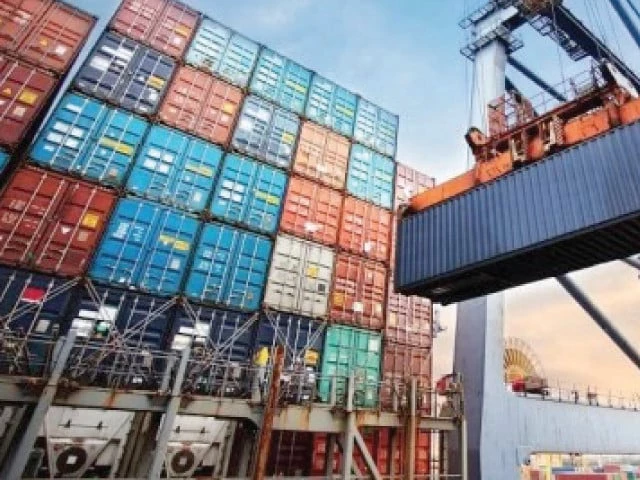
Punjab, long regarded as Pakistan's food basket, remains directly in the spotlight for international markets seeking long-term food security. Middle Eastern destinations, Central Asian economies and China continue to press local policymakers and private entities for diversified agricultural and livestock shipments. Yet a fundamental question lingers: as foreign demand swells, is Pakistan truly ready to step up as a global supplier without starving its own population?
Islamabad and Riyadh have set an ambitious target to scale Pakistan's food and agricultural exports to Saudi Arabia to $3 billion within the next two years. The priority sectors include rice, red meat, fruits, concentrates, green fodder and water-efficient farming technologies. Saudi Arabia currently imports about 169,000 tonnes of Pakistani rice worth $163 million and around 30,000 tonnes of red meat valued at $167 million annually, with plans to double meat imports rapidly.
China stands out as another massive seeker of Pakistani agricultural commodities. Total agro-food exports from Pakistan reached over $8 billion, driven heavily by record sesame seed shipments to China, exceeding $400 million in recent cycles, alongside expanding trade in frozen meat, seafood and rice. The United Arab Emirates (UAE) also remains a vital destination, absorbing over $33 million in animal fodder exports alone, while markets across Oman, Kuwait and Central Asia actively pull fresh produce and meat products from Pakistani fields.
Despite these lucrative opportunities, Punjab's agricultural machine has struggled to consistently match foreign expectations. High production costs, erratic fertiliser and diesel prices, shifting crop policies and razor-thin market returns have squeezed the average grower. Decades of low bank credit access have left smallholders operating on hand-to-mouth margins, lacking the capital to experiment with high-value crops. Climate change is compounding these issues through frequent floods and shifting temperature regimes, now threatening regional harvests nearly every year.
This vulnerability raises serious concerns over domestic food security. If international buyers ramp up purchases, will Pakistan face a local supply deficit, or can Punjab produce enough to feed both foreign markets and its own growing population?
"We do not say if Pakistan may see any food security due to increasing exports to such countries in future, as every year brings a crisis in at least one major crop, like wheat this year, though the government claims a bumper crop was harvested," said Muhammad Ali Ishtiaq, a meat exporter to the Middle East.
He emphasised that structural transformation is the only way forward. "The future, however, is value addition and using new technologies to increase per-acre yield, same is the case when it comes to the livestock sector. Processed meat, especially red meat, alone can lift the entire rural population one level up, but it needs commitment, finances, consistency and technology transfer. Only then we may see the real benefits."
Multinational firms and major domestic retail chains have already stepped into the space. By investing directly in corporate farming, providing financing and offering tech transfers, these enterprises guarantee procurement for entire harvests. While this integration provides farmers with guaranteed buyers, growers often receive below-market rates, leaving the bulk of processing profits with corporate intermediaries.
The primary challenge for the government is integrating small, genuine farmers directly into export supply chains. Allowing primary producers to share fairly in export profits gives them the capacity to build local processing infrastructure rather than remaining trapped at the bottom of the value chain.
Private sector leadership believes structural cooperation can bridge these gaps. Shahid Imran, convener of the Federation of Pakistan Chamber of Commerce and Industry (FPCCI) regional committee on food, noted that Pakistani businesses are eager to turn historic diplomatic ties into long-term commercial trade.
"Establishment of a Pakistan-Saudi Agri Investment Fund will be a milestone in the history of both brotherly countries to cement the bilateral trade ties in a befitting manner," Imran stated, adding that new private-sector agreements will significantly strengthen existing agricultural trade.
Wealthy agri and livestock stakeholders are thrilled with these opportunities, nevertheless the average stakeholder believes policy consistency is the key through which Punjab in particular and Pakistan in general can balance international commitments with national food security. "We observe a notification for sugar exports, trigger high domestic sugar prices, and in a bumper wheat crop, floor prices are skyrocketing. Who will guarantee that more export of red meat, rice and fodder will not create shortages at home in future?" they asked.
















This material may not be published, broadcast, rewritten, redistributed or derived from. Unless otherwise stated, all content is copyrighted © 2026 The Express Tribune.






COMMENTS
Comments are moderated and generally will be posted if they are on-topic and not abusive.
For more information, please see our Comments FAQ